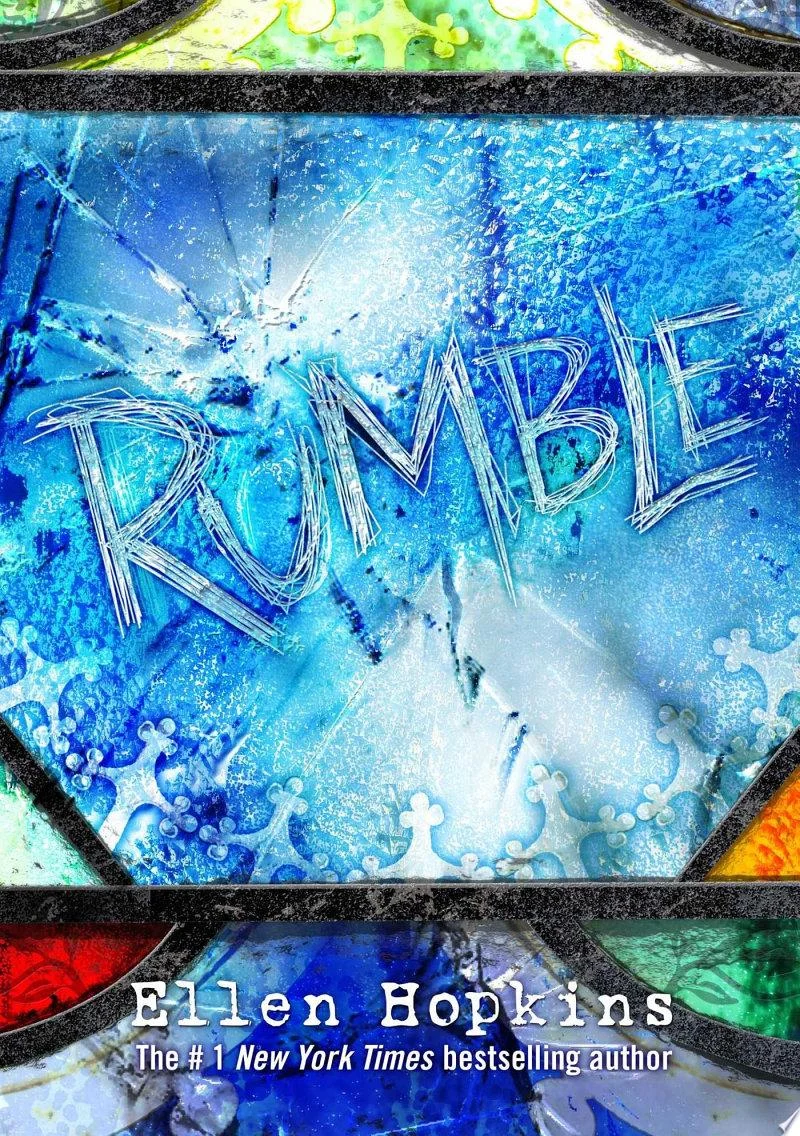
Rumble
- Publication Date:
- August 26th, 2014
- Publisher:
- Simon and Schuster
- ISBN-13:
- 9781442482845
- ISBN-10:
- 1442482842
- Pages:
- 560
Why Rumble Has Been Challenged
Objections to Rumble center on its treatment of religion and its handling of mature emotional content more broadly. See more ↓
Challenged or banned in 8 states across 21 school districts.
Overview
Ellen Hopkins built her reputation on unflinching verse novels that follow teenagers through the hardest passages of adolescence, and Rumble extends that project into the territory of belief itself. Its narrator is a young man who has stopped trusting in God, and the book follows him as circumstance forces him to reckon with that stance rather than simply hold it.
Told in Hopkins' signature free-verse style, the novel moves through interior monologue as much as external event, tracking a mind working through skepticism, grief, and the slow, uneven process of letting anger soften into something else. The emotional register stays close and immediate throughout, favoring psychological texture over plot mechanics.
As with Hopkins' other work, the story does not resolve its questions neatly. Doubt is treated as a legitimate position rather than a problem to be corrected, and whatever movement toward forgiveness occurs is earned slowly, not delivered as a tidy conversion.
Faith, Doubt, and the Verse Novel
Rumble sits within a body of work — including Hopkins' widely read Crank and Tricks — that uses the verse novel form to get inside teenage crisis without the narrative distance a conventional prose structure might impose. Where those earlier books centered addiction and exploitation, Rumble turns the same intensity toward religious doubt, asking whether skepticism and spiritual longing can coexist in the same person.
The book's title gestures toward its central tension: belief and unbelief in friction, producing something unsettled rather than resolved. That refusal to land on a single answer is characteristic of Hopkins' broader reputation as a writer who trusts teenage readers with ambiguity, even when the subject is as fraught as faith after loss. It is this willingness to sit with an unresolved question — rather than argue for or against religious conviction — that distinguishes the book within the young adult verse tradition it belongs to.
Why Rumble Has Been Challenged
Objections to Rumble center on its treatment of religion and its handling of mature emotional content more broadly. Because the narrator's atheism is presented sympathetically rather than as a position to be overcome, some challenges have framed the book as hostile to religious belief or inappropriate for the school settings where students of many faiths are present. Other objections point to the novel's frank engagement with grief, anger, and despair, concerns consistent with the scrutiny Hopkins' verse novels have generally drawn for their unfiltered depiction of teenage emotional and psychological struggle.
These concerns have led to the book being challenged or restricted in 8 states and 21 districts tracked in this catalog. As with much of Hopkins' catalog, the underlying dispute tends to be less about explicit content in the conventional sense and more about whether adolescent doubt, and the raw language used to express it, belongs in school libraries and classrooms.
Where to Buy


Affiliate links may generate a small commission at no extra cost to you, which helps support this site.
About Ellen Hopkins
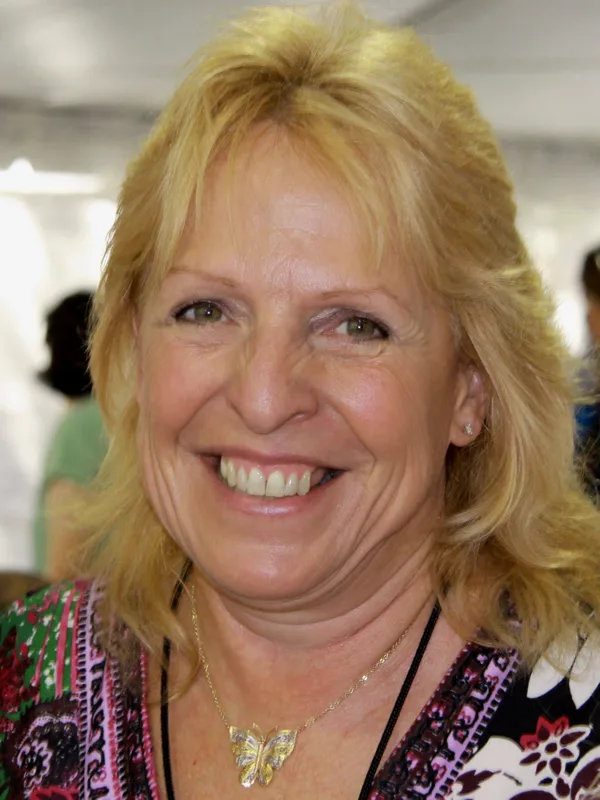
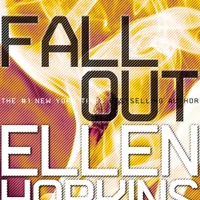
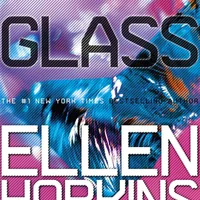
Ellen Hopkins is the author of more than a dozen bestselling verse novels for young adults, most inspired directly by her daughter's methamphetamine addiction. Her Crank trilogy—Crank, Glass, and Fallout—is based on real events in her family's life and is among the most challenged series in American schools. Four of her novels appear on the ALA's top 100 banned and challenged books of 2010–2019. She was inducted into the Nevada Writers Hall of Fame in 2015.
Also by Ellen Hopkins
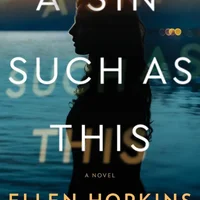
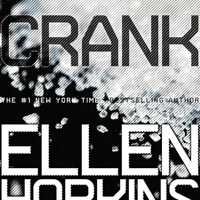
Banned in Schools
Banned or challenged in 8 states across 21 school districts.
Florida 4 districts
- Hillsborough County Public Schools Banned Pending Investigation
- Pinellas County Schools Banned by restriction
- Seminole County Public Schools Banned
- Union County School District Banned
Iowa 5 districts
- Adel DeSoto Minburn Community School District Banned
- Clarion-Goldfield-Dows Community School District Banned pending investigation
- Dallas Center-Grimes Community School District Banned pending investigation
- Knoxville Community School District Banned
- Ridge View Community School District Banned
Maine 1 district
- Hermon School Department Banned by restriction
North Carolina 1 district
- Burke County Public Schools Banned
Tennessee 2 districts
- Knox County Schools Banned
- Rutherford County Schools Banned
Texas 5 districts
- Conroe Independent School District Banned
- Fort Worth Independent School District Banned pending investigation
- Lamar Consolidated Independent School District Banned
- Nacogdoches Independent School District Banned by Restriction
- North East Independent School District Banned
Virginia 2 districts
- Hanover County Public Schools Banned
- King George County Schools Banned by Restriction
Wisconsin 1 district
- Elkhorn Area School District Banned pending investigation