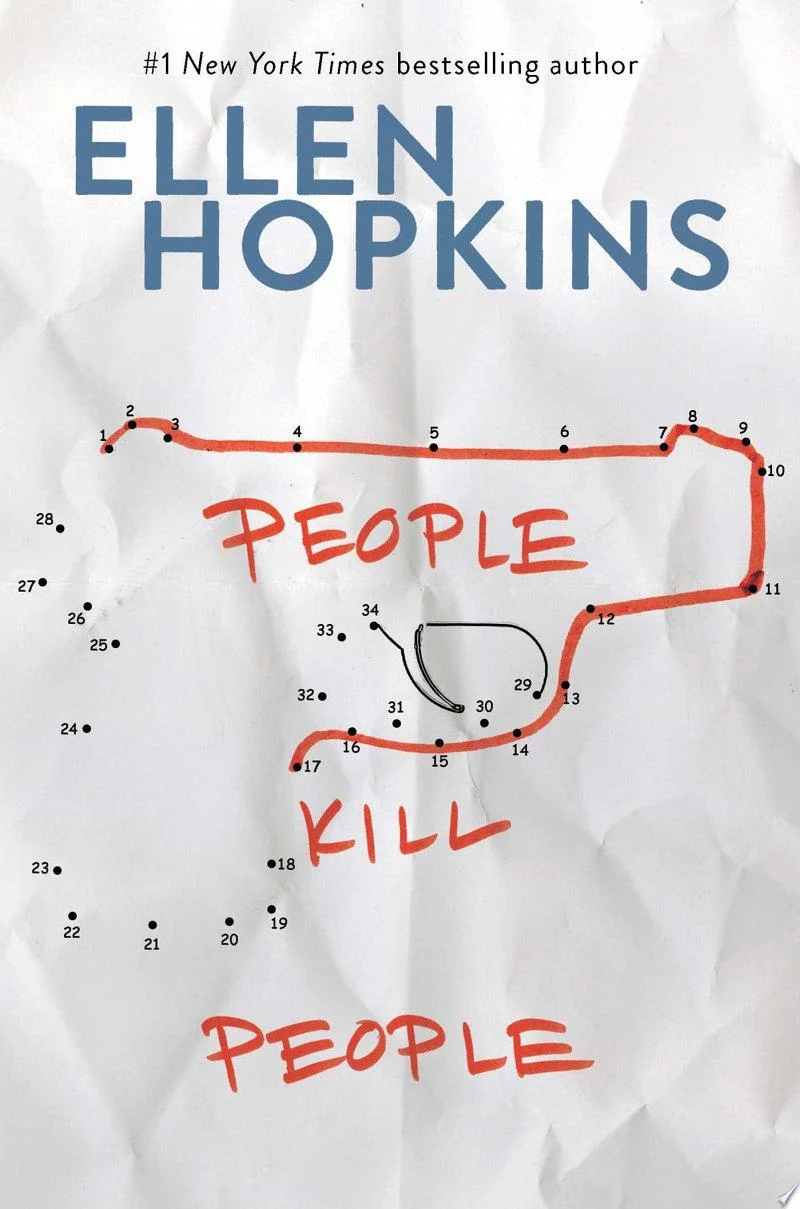
People Kill People
- Publication Date:
- September 4th, 2018
- Publisher:
- Simon and Schuster
- ISBN-13:
- 9781481442954
- ISBN-10:
- 1481442953
- Pages:
- 408
Why People Kill People Has Been Challenged
Objections to People Kill People, which has drawn 10 state-level and 29 district-level challenges recorded See more ↓
Challenged or banned in 10 states across 29 school districts.
Overview
People Kill People is structured around a single, unforgiving premise: a gun changes hands through a classified ad, and by the end of the week, it will have killed someone. Ellen Hopkins builds the novel around six teenagers whose lives intersect in one town under strain—Rand and Cami, a young married couple with a child; Silas and Ashlyn, involved with a white supremacist youth group; Daniel, who lives with the daily wariness of racial targeting while trying to hold onto his relationship with Grace; and Noelle, isolated by grief and depression after a life-altering accident.
Rather than assign the gun to one character from the outset, Hopkins lets it circulate, giving each person a plausible reason to reach for it. The novel builds tension less through plot twists than through accumulation—small humiliations, fears, and grievances stacking up until violence becomes almost procedural. The reader is left to weigh which of these ordinary pressures, and whose, ultimately pulls the trigger.
Told in Hopkins's characteristic free verse and shifting points of view, the book moves quickly between voices, using form to mirror the way six unrelated lives are pulled toward a shared, irreversible moment.
A Study in Convergence
Hopkins has built a career writing frankly about the pressures facing American teenagers, and People Kill People extends that project outward from individual crisis to collective consequence. Where much of her earlier work follows a single narrator through addiction or trauma, this novel disperses its attention across six, using the multiplicity of perspectives to argue that gun violence rarely has a single, simple cause. Marriage strain, ideological extremism, racialized fear, and untreated grief are each given weight, none treated as a cartoonish villain's motive.
The novel arrived amid ongoing national debate over gun policy and youth radicalization, and it reads as a deliberate refusal to offer easy answers. By declining to reveal which character ultimately fires the gun until the story requires it, Hopkins keeps the focus on the conditions that make violence possible rather than on any single perpetrator's psychology. It sits within her body of work as one of her more overtly political books, using an ensemble structure to broaden a genre often centered on one teenager's internal struggle into a wider portrait of a community under pressure.
Why People Kill People Has Been Challenged
Objections to People Kill People, which has drawn 10 state-level and 29 district-level challenges recorded in this catalog, center on its unflinching treatment of gun violence and the extremist ideology carried by some of its characters. Reviewers and challengers have raised concerns about the novel's frank depiction of a white supremacist youth organization, arguing that giving such characters interior voice and motive risks normalizing their views even when the narrative does not endorse them.
Additional objections focus on the book's violent content generally—its premise assumes a shooting will occur, and the narrative sustains tension around who will pull the trigger—as well as its handling of teen marriage, racial fear, and depression following trauma. Some challenges have grouped the book with other Hopkins titles as part of broader efforts to remove her verse novels from school libraries over mature themes and language, rather than objecting to this book's content in isolation.
Where to Buy




Affiliate links may generate a small commission at no extra cost to you, which helps support this site.
About Ellen Hopkins
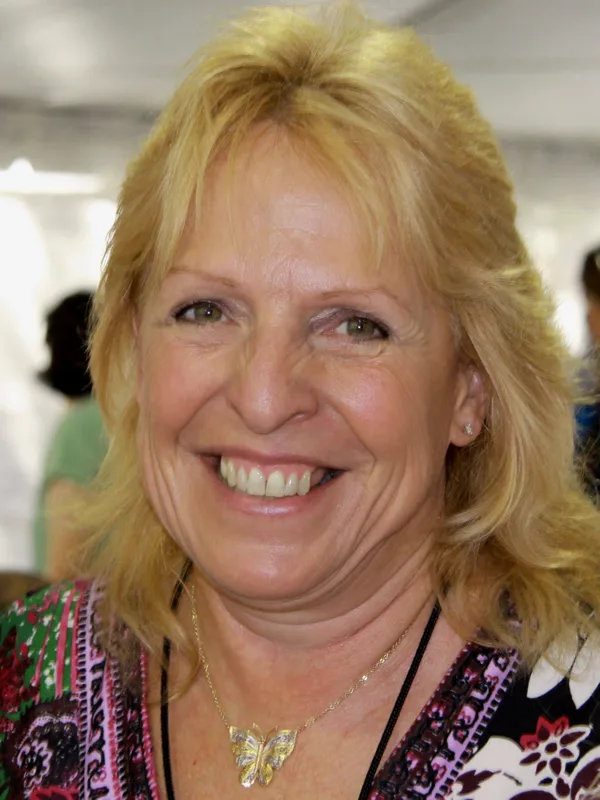
Ellen Hopkins is the author of more than a dozen bestselling verse novels for young adults, most inspired directly by her daughter's methamphetamine addiction. Her Crank trilogy—Crank, Glass, and Fallout—is based on real events in her family's life and is among the most challenged series in American schools. Four of her novels appear on the ALA's top 100 banned and challenged books of 2010–2019. She was inducted into the Nevada Writers Hall of Fame in 2015.
Also by Ellen Hopkins

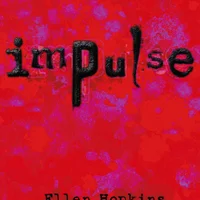
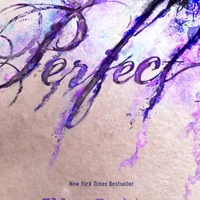


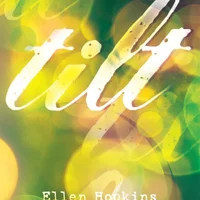
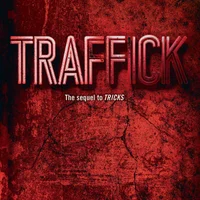
Banned in Schools
Banned or challenged in 10 states across 29 school districts.
Florida 10 districts
- Brevard Public Schools Banned
- Hillsborough County Public Schools Banned Pending Investigation
- Leon County Schools Banned
- Orange County Public Schools Banned pending investigation
- Pinellas County Schools Banned by restriction
- Polk County Public Schools Banned pending investigation
- Santa Rosa County Schools Banned pending investigation
- School District of Manatee County Banned pending investigation
- Seminole County Public Schools Banned
- Union County School District Banned
Iowa 7 districts
- Ankeny Community School District Banned pending investigation
- Carlisle Community School District Banned
- Cedar Falls Community School District Banned pending investigation
- Dallas Center-Grimes Community School District Banned pending investigation
- Knoxville Community School District Banned
- West Des Moines Community Schools Banned pending investigation
- Winterset Community School District Banned
Maine 1 district
- Hermon School Department Banned by restriction
Maryland 1 district
- Caroll County School District Banned pending investigation
New York 1 district
North Carolina 1 district
- Burke County Public Schools Banned
South Carolina 1 district
Tennessee 3 districts
- Knox County Schools Banned
- Rutherford County Schools Banned
- Wilson County Schools Banned
Texas 2 districts
- Fort Worth Independent School District Banned pending investigation
- Plano Independent School District Banned
Virginia 2 districts
- Hanover County Public Schools Banned
- King George County Schools Banned by Restriction