Iowa
1127 distinct titles banned across 119 districts

Districts
Banned Books
 #famous
 #MurderFunding
 101 Questions about Sex and Sexuality...With Answers for the Curious, Cautious, and Confused
 10th Anniversary
 1984
1984
 2 Days
 A Bend in the Road
 A Cave in the Clouds
 A Child Called "It"
 A Clash of Kings
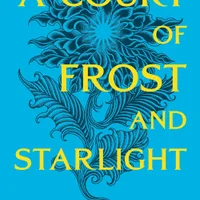 A Court of Frost and Starlight
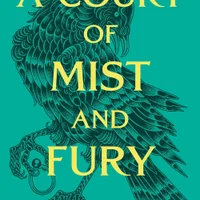 A Court of Mist and Fury
 A Court of Silver Flames
 A Court of Thorns and Roses
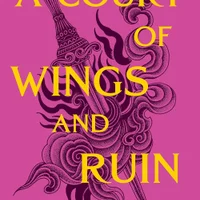
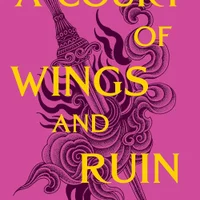 A Court of Wings and Ruin
 A Dance with Dragons
 A Day in the Life of Marlon Bundo
 A Family Is a Family Is a Family
 A Feast for Crows
 A Flicker in the Dark
 A Game of Thrones
 A Girl Like That
 A Heart in a Body in the World
 A High Five for Glenn Burke
 A Home for Goddesses and Dogs
 A Knight of the Seven Kingdoms
 A Long Walk to Water
 A Million Junes
 A Million Suns
 A Northern Light
 A Painted House
 A Queer History of the United States
 A Queer History of the United States for Young People
 A Reaper at the Gates
 A Scatter of Light
 A Separate Peace
 A Sin Such as This
 A Sky Beyond the Storm
 A Stolen Life
 A Storm of Swords
 A Tale of Magic...
 A Tale of Sorcery...
 A Tale of Witchcraft...
 A Taxonomy of Love
 A Thousand Splendid Suns
 A Torch Against the Night
 A Very, Very Bad Thing
 A Visit from the Goon Squad
Book Bans in Iowa
Iowa's tracking data shows 1,127 distinct banned or challenged titles spread across 119 school districts that have recorded at least one removal. That is a large number of districts for a single state, suggesting the practice is not confined to a handful of isolated cases but has touched school libraries statewide.
At the same time, the volume of titles is not evenly distributed. Two districts stand out well above the rest: Nevada Community School District, with 242 tracked titles, and Clear Creek-Amana Community School District, with 226. Together these two districts account for roughly four in ten of all titles tracked statewide, despite being just two of the 119 districts with any recorded activity. A second tier of districts — including West Burlington, Clear Lake, Winterset, Bondurant-Farrar, Cedar Falls, and Shenandoah — each show meaningfully lower counts, ranging from roughly 80 to 141 titles. The overall pattern is one of broad geographic reach combined with a steep concentration at the top, where a small number of districts have removed or restricted titles at a pace far exceeding the statewide norm.
Context
Iowa has enacted state-level legislation directly bearing on school library holdings. Under Iowa Senate File 496 (2023) (bill text), districts must review instructional and library materials for age-appropriateness and remove those depicting certain sexual content, among other requirements affecting curriculum transparency and parental notification. Legislation of this kind provides a statewide framework that districts are expected to apply, though as the data above shows, individual districts appear to have implemented that framework with very different levels of intensity.
That gap between statewide policy and district-level outcomes is worth noting on its own terms. A law that applies uniformly across all public school districts might be expected to produce a more even distribution of removals if applied similarly everywhere. Instead, the concentration of activity in a small number of districts — most notably Nevada and Clear Creek-Amana — points to meaningful local variation in how reviews are conducted, how broadly "age-appropriate" or similar standards are interpreted, and how aggressively individual districts have acted relative to their peers. Readers interested in the underlying causes of that variation should consult local district records and board meeting minutes, since the tracking data here reflects outcomes rather than the specific rationale behind any single district's review process.