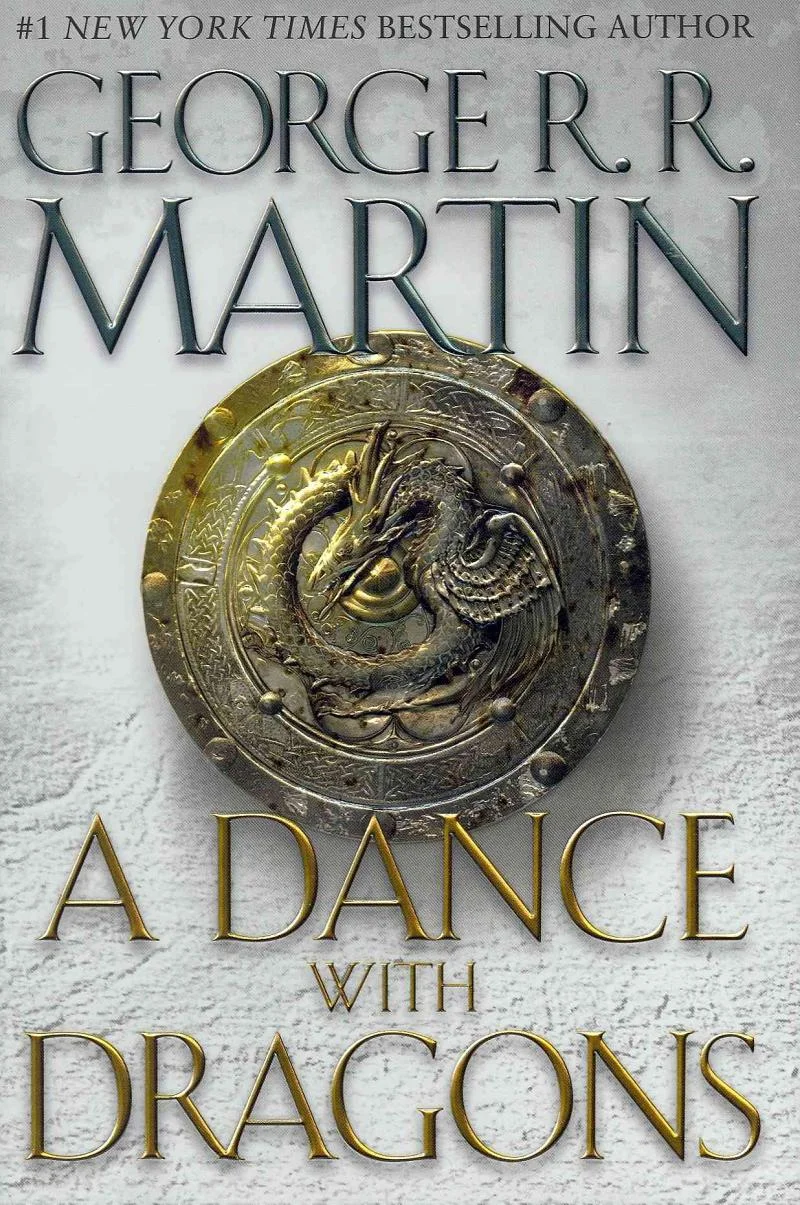
A Dance with Dragons
- Publication Date:
- January 1st, 2011
- Publisher:
- Spectra
- ISBN-13:
- 9780553801477
- ISBN-10:
- 0553801473
- Pages:
- 1016
Why A Dance with Dragons Has Been Challenged
Critics of the novel have taken aim less at its fantasy premise than at how far it is willing to go in depicting bodily harm, coercion, and the corrupting effects of power. See more ↓
Challenged or banned in 4 states across 8 school districts.
Overview
A Dance with Dragons picks up the sprawling narrative of George R. R. Martin's fantasy saga at the point where much of the realm's action has splintered between two fronts. In the frozen north, a fragile watch faces pressure from beyond the Wall even as political intrigue eats away at any chance of a unified defense. Far to the south and east, exiled claimants and scattered heirs maneuver toward power through alliances, betrayals, and outright war.
Rather than advancing strictly forward in time, the book runs in parallel with its predecessor, filling in the experiences of characters who were largely absent from that volume. This structural choice lets Martin widen the scope of the story, showing how decisions made in one corner of the world ripple outward to affect everyone else, even when the characters involved are unaware of one another's existence.
The result is less a single climax than a slow tightening of converging storylines, as separate struggles for survival and legitimacy edge closer to collision.
A Saga of Fractured Power
Across the series, Martin has used the machinery of a fantasy world to examine how authority is won, justified, and lost. This installment continues that preoccupation, but with an emphasis on the costs of leadership rather than the spectacle of conquest. Characters who hold or seek power are shown wrestling with compromises that curdle their original ideals, and the book spends considerable time in the perspectives of figures once treated as peripheral or villainous, complicating easy moral readings established earlier in the series.
That willingness to linger in ambiguity, paired with the sheer scale of the cast and settings, has made the novel a touchstone for discussions about how long-running genre fiction can carry literary weight. It also marks a turning point in the series' pacing, as the story's many threads begin to demand resolution rather than mere expansion.
Why A Dance with Dragons Has Been Challenged
Readers and critics have often praised the book for the unflinching way it portrays war, cruelty, and moral compromise without softening their consequences, but that same candor is precisely what has drawn scrutiny from those seeking to restrict its availability. The objections tend to center on the novel's graphic violence, including torture and battlefield brutality described in direct, unsparing detail, as well as its frank treatment of sexual content involving adult characters in positions of power. Some challengers have also pointed to the book's morally ambiguous portrayal of authority figures, arguing that its refusal to draw clear lines between good and evil sends the wrong message to younger readers who might encounter it given the series' broad popularity. In the catalog tracked here, the book has been challenged or restricted in 4 states and 8 districts, reflecting how these concerns have surfaced in schools and libraries across different regions rather than in any single, isolated dispute.
Where to Buy




Affiliate links may generate a small commission at no extra cost to you, which helps support this site.
About George R. R. Martin
George R. R. Martin is an American author of fantasy, science fiction, and horror best known for A Song of Ice and Fire, the epic series adapted into the HBO drama Game of Thrones. He is a multiple Hugo, Nebula, and Locus Award winner and a former TV writer-producer for shows including The Twilight Zone and Beauty and the Beast.
Also by George R. R. Martin

Banned in Schools
Banned or challenged in 4 states across 8 school districts.
Florida 2 districts
- Escambia County Public Schools Banned pending investigation
- Orange County Public Schools Banned by restriction
Iowa 2 districts
- Melcher-Dallas Community School District Banned pending investigation
- Western Dubuque Community School District Banned
Tennessee 3 districts
- Monroe County Schools Banned
- Oak Ridge Schools Banned
- Wilson County Schools Banned