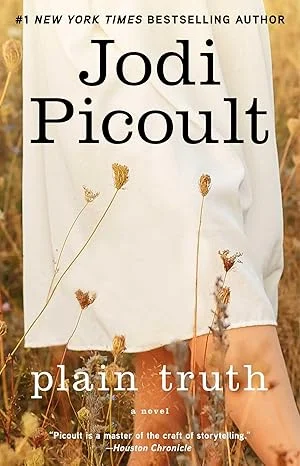
Plain Truth
by Jodi Picoult
- Publication Date:
- August 7th, 2007
- Publisher:
- Simon and Schuster
- ISBN-13:
- 9781416547815
- ISBN-10:
- 1416547819
- Pages:
- 437
Why Plain Truth Has Been Challenged
Plain Truth has been challenged in 2 states and 5 districts tracked in this catalog. See more ↓
Challenged or banned in 2 states across 5 school districts.
About Plain Truth
A dead newborn is found in the barn of an Amish farm outside Paradise, Pennsylvania. Katie Fisher, the eighteen-year-old daughter of the family, denies she was ever pregnant. The physical evidence says otherwise. When Philadelphia attorney Ellie Hathaway takes Katie's case, she discovers that defending her client will require understanding a community with entirely different assumptions about truth, family, shame, and obligation—and agreeing to live among them while she does it.
Published by Simon & Schuster in 2000, Plain Truth is built around a genuine epistemological problem: what does it mean to tell the truth when the cultural context that shapes your experience of an event is so foreign to the legal system processing it? Ellie is not hostile to the Amish community, but she is a woman whose entire professional identity depends on a legal framework that does not accommodate the way Katie understands what happened to her. The novel earns its title because the plain truth is harder to establish than either side expects.
The Amish setting is not used as local color. Picoult researched the community carefully, and the texture of daily life—the literal and social structures that organize Amish existence, the community's relationship to shame and forgiveness, the specific pressures on an unmarried young woman—is present with enough specificity to make the setting do real work in the novel.
Two Legal Systems and One Community
Katie is caught between the expectations of her community—where an unmarried pregnancy carries specific, severe social consequences—and a criminal justice system that requires her to perform her own history in a language and framework she doesn't fully share. Her apparent inability to tell a story the courtroom can process isn't deception; it's the collision of two genuinely different relationships to the idea of confession, consequence, and truth.
Ellie's arc is a gradual learning about the cost of that gap—both for her client and for herself. Her time living with the Fisher family changes her in ways the novel handles without sentimentality.
Why Plain Truth Has Been Challenged
Plain Truth has been challenged in 2 states and 5 districts tracked in this catalog. Objections most frequently cite the novel's subject matter—an infanticide case, pregnancy outside marriage—and some mature content. The novel's treatment of the Amish community is occasionally cited as well; it does not flatten or romanticize. A story that requires readers to understand justice from inside a radically different cultural framework is exactly the kind of book that builds the capacity for empathy that most objectors would claim to support.
Where to Buy



Affiliate links may generate a small commission at no extra cost to you, which helps support this site.
About Jodi Picoult
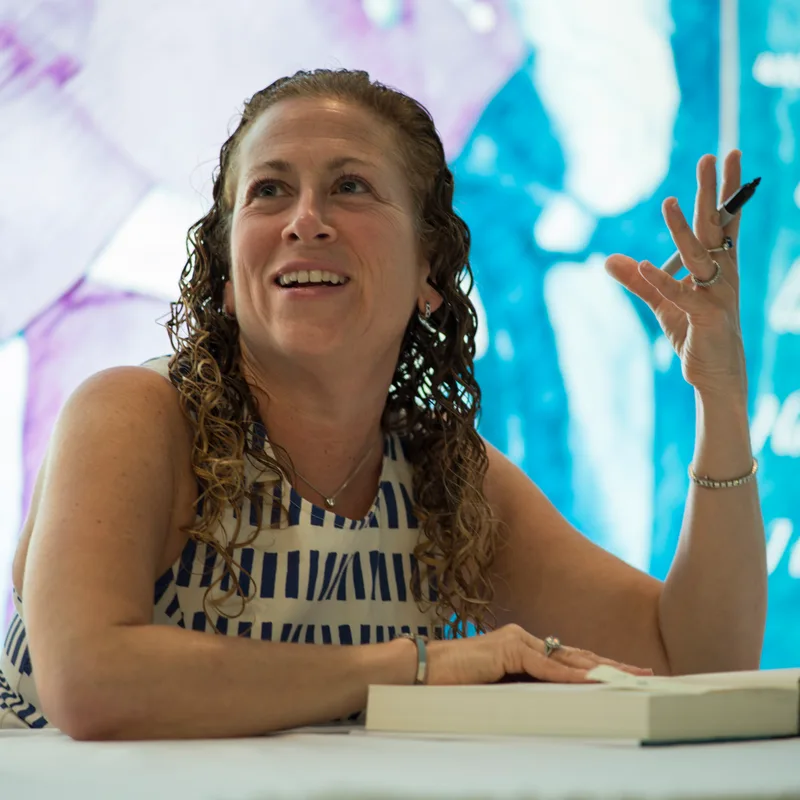
Jodi Picoult is a New York Times bestselling author of more than 28 novels exploring moral dilemmas, family crises, and social justice. With over 40 million copies in print and translations into 34 languages, she is one of the most widely read American novelists working today. Her books have been challenged and banned in school districts across the United States, and she is an outspoken advocate against book bans.
Also by Jodi Picoult
 A Spark of Light
 Between the Lines
 Change of Heart
 Handle with Care
 Harvesting the Heart
 House Rules
 Keeping Faith
 Leaving Time
 Lone Wolf
 Mad Honey: A GMA Book Club Pick
 Mercy
Mercy
 My Sister's Keeper
 Nineteen Minutes
 Perfect Match
 Picture Perfect
 Salem Falls
 Second Glance
 Sing You Home
 Small Great Things
 Songs of the Humpback Whale
 The Pact: A Love Story
 The Storyteller
 The Tenth Circle
 Vanishing Acts
Banned in Schools
Banned or challenged in 2 states across 5 school districts.
Florida 4 districts
- Escambia County Public Schools Banned pending investigation
- Hillsborough County Public Schools Banned Pending Investigation
- Lee County Schools Banned by restriction
- Union County School District Banned