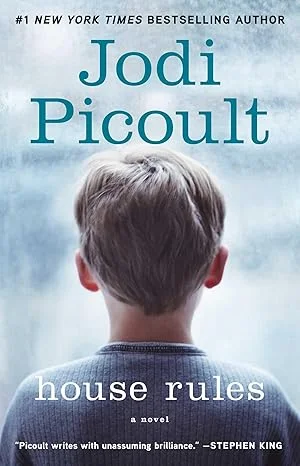
House Rules
by Jodi Picoult
- Publication Date:
- November 9th, 2010
- Publisher:
- Simon and Schuster
- ISBN-13:
- 9780743296441
- ISBN-10:
- 0743296443
- Pages:
- 532
Why House Rules Has Been Challenged
House Rules has been challenged in 2 states and 6 districts tracked in this catalog. See more ↓
Challenged or banned in 2 states across 6 school districts.
About House Rules
Jacob Hunt is eighteen years old, has Asperger's syndrome, and is obsessed with forensic science. He follows police scanners, reconstructs crime scenes with an accuracy that unsettles professionals, and watches forensic investigation shows with the focused intensity other teenagers direct at sports. When his social skills tutor Jess is found dead and Jacob is placed near the scene, the police read his inability to make eye contact and his flat emotional affect as evidence of guilt. They arrest him for murder.
House Rules is simultaneously a wrongful-accusation thriller and a forensic examination of what the American justice system does to defendants who are neurologically different. Picoult spent years researching autism spectrum disorder for the novel, consulting with families, therapists, and autistic individuals. Jacob is rendered with specificity rather than as a type, and the "house rules" of the title—the precise behavioral protocols his mother Emma maintains to keep Jacob regulated and functional—are described with the texture of lived family experience.
Published in 2010 by Simon & Schuster, the book arrived at a moment when public awareness of autism was expanding rapidly while the legal system's accommodation of neurodivergent defendants had barely begun to develop. The gap between those two realities is the space the novel inhabits.
Autism and the Machinery of Justice
The novel's central argument is not that Jacob is innocent or that the police are malicious—it's that a system built to read behavior as evidence will misread behaviors that don't conform to its baseline assumptions. Jacob's inability to perform guilt or innocence in recognizable ways doesn't mean he has neither. The officers interrogating him aren't villains; they're operating exactly as trained. Their training simply doesn't account for him.
Emma's perspective is the emotional spine of the book. She has organized her entire household around Jacob's needs for over a decade—every meal, every schedule, every interaction calibrated for him. Watching those years of careful labor fail to protect him from an institution that cannot see him clearly is the novel's hardest passage. Her grief is specific and earned.
Why House Rules Has Been Banned
House Rules has been challenged in 2 states and 6 districts tracked in this catalog. Objections center on mature thematic content, depictions of a teenager being jailed and interrogated at length, and some language. The representation of autism is occasionally cited—some challengers feel the portrayal is harmful. The novel has received recognition from autism advocacy organizations, and autistic readers have noted its attention to detail. Whether any fictional portrayal fully satisfies every community is a separate question from whether a thoughtfully researched book belongs in school libraries.
Where to Buy



Affiliate links may generate a small commission at no extra cost to you, which helps support this site.
About Jodi Picoult
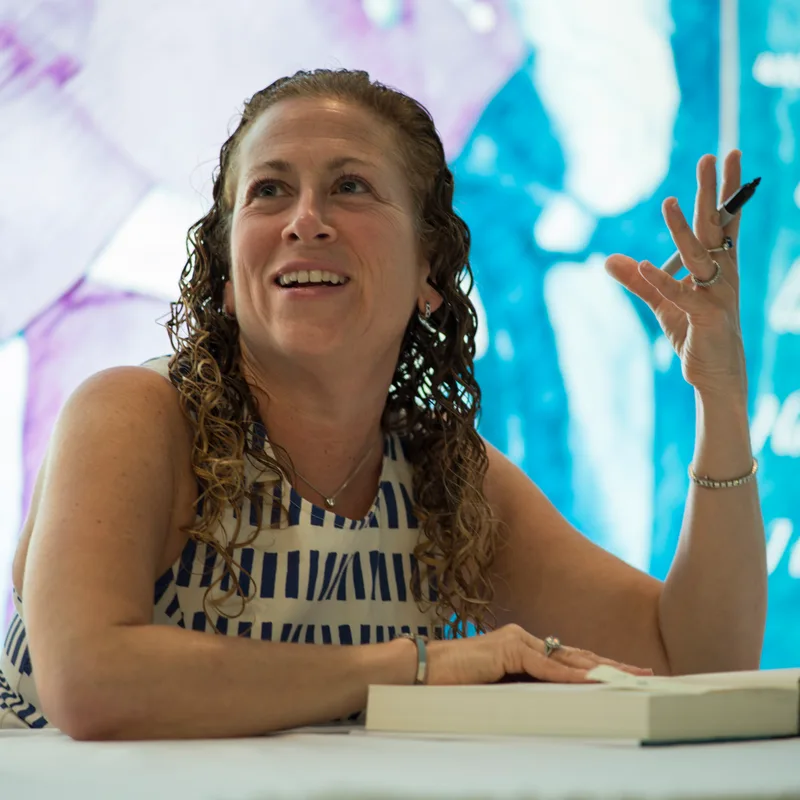
Jodi Picoult is a New York Times bestselling author of more than 28 novels exploring moral dilemmas, family crises, and social justice. With over 40 million copies in print and translations into 34 languages, she is one of the most widely read American novelists working today. Her books have been challenged and banned in school districts across the United States, and she is an outspoken advocate against book bans.
Also by Jodi Picoult
 A Spark of Light
 Between the Lines
 Change of Heart
 Handle with Care
 Harvesting the Heart
 Keeping Faith
 Leaving Time
 Lone Wolf
 Mad Honey: A GMA Book Club Pick
 Mercy
Mercy
 My Sister's Keeper
 Nineteen Minutes
 Perfect Match
 Picture Perfect
 Plain Truth
 Salem Falls
 Second Glance
 Sing You Home
 Small Great Things
 Songs of the Humpback Whale
 The Pact: A Love Story
 The Storyteller
 The Tenth Circle
 Vanishing Acts
Banned in Schools
Banned or challenged in 2 states across 6 school districts.
Florida 4 districts
- Clay County School District Banned
- Hillsborough County Public Schools Banned Pending Investigation
- Orange County Public Schools Banned by restriction
- Union County School District Banned