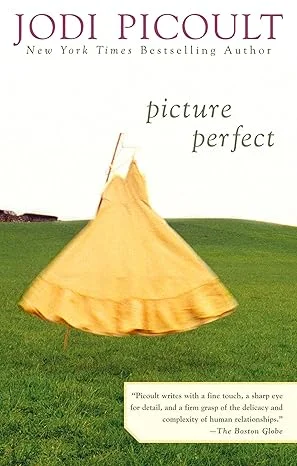
Picture Perfect
by Jodi Picoult
- Publication Date:
- July 2nd, 2002
- Publisher:
- Penguin
- ISBN-13:
- 9780425185506
- ISBN-10:
- 0425185508
- Pages:
- 385
Why Picture Perfect Has Been Challenged
Picture Perfect has been challenged in 2 states and 5 districts tracked in this catalog. See more ↓
Challenged or banned in 2 states across 5 school districts.
About Picture Perfect
Cassie Barrett wakes up in a Los Angeles cemetery with no memory of who she is. A police officer finds her and, over the following hours, her identity begins to come back: she is a respected anthropologist, she has done fieldwork in Africa, and she is married to Alex Rivers—one of the most famous actors in Hollywood. The wedding footage is everywhere. The marriage, publicly, is a fairy tale.
Published by Penguin in 1995, Picture Perfect is Picoult's examination of intimate partner violence. Alex Rivers is not a straightforward villain. He loves Cassie genuinely and is completely incapable of controlling himself. The novel takes the specific mechanics of abusive relationships seriously—the cycles of explosion and contrition, the way Cassie's self-perception has been restructured over years, the genuine tenderness that coexists with the violence and makes leaving harder than an outsider would expect.
A parallel plot follows Will Flying Horse, a police officer from the Oglala Lakota people who found Cassie in the cemetery and who sees her clearly in a way that Alex, because of what he needs from her, cannot. Will's presence is not simply a romantic counterpoint; his background and heritage introduce a different framework for thinking about what it means to truly know another person.
Why Leaving Is Not Simple
One of the novel's primary contributions is its refusal to let Cassie's situation read as simply a failure of will or self-respect. She is brilliant, accomplished, and has built her professional identity on careful observation of human behavior—and none of that makes her immune to the pattern she is living inside. The psychology Picoult depicts is grounded in the actual dynamics of abuse as understood by researchers and survivors, and it gives readers a vocabulary for why people stay in situations that look, from the outside, like something they should just leave.
The novel's structure—opening with Cassie after an episode she can't remember—keeps the reader slightly disoriented alongside her, which is the right place to be to understand the story.
Why Picture Perfect Has Been Challenged
Picture Perfect has been challenged in 2 states and 5 districts tracked in this catalog. Objections cite depictions of domestic violence, sexual content, and language. The violence in the novel is not gratuitous—it is specific and functional, present to show what Cassie's life actually looks like rather than to sensationalize it. Fiction that depicts intimate partner violence honestly is more useful than fiction that flinches from it, both for readers who have experienced it and for those who haven't yet understood what it is.
Where to Buy




Affiliate links may generate a small commission at no extra cost to you, which helps support this site.
About Jodi Picoult
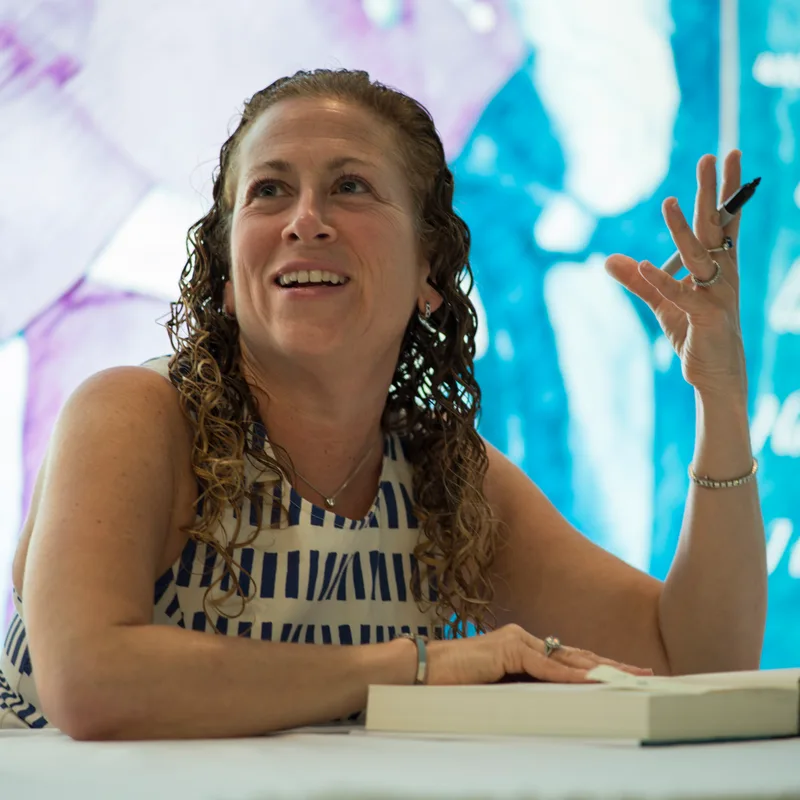
Jodi Picoult is a New York Times bestselling author of more than 28 novels exploring moral dilemmas, family crises, and social justice. With over 40 million copies in print and translations into 34 languages, she is one of the most widely read American novelists working today. Her books have been challenged and banned in school districts across the United States, and she is an outspoken advocate against book bans.
Also by Jodi Picoult
 A Spark of Light
 Between the Lines
 Change of Heart
 Handle with Care
 Harvesting the Heart
 House Rules
 Keeping Faith
 Leaving Time
 Lone Wolf
 Mad Honey: A GMA Book Club Pick
 Mercy
Mercy
 My Sister's Keeper
 Nineteen Minutes
 Perfect Match
 Plain Truth
 Salem Falls
 Second Glance
 Sing You Home
 Small Great Things
 Songs of the Humpback Whale
 The Pact: A Love Story
 The Storyteller
 The Tenth Circle
 Vanishing Acts
Banned in Schools
Banned or challenged in 2 states across 5 school districts.
Florida 4 districts
- Clay County School District Banned
- Hillsborough County Public Schools Banned Pending Investigation
- Orange County Public Schools Banned by restriction
- Union County School District Banned