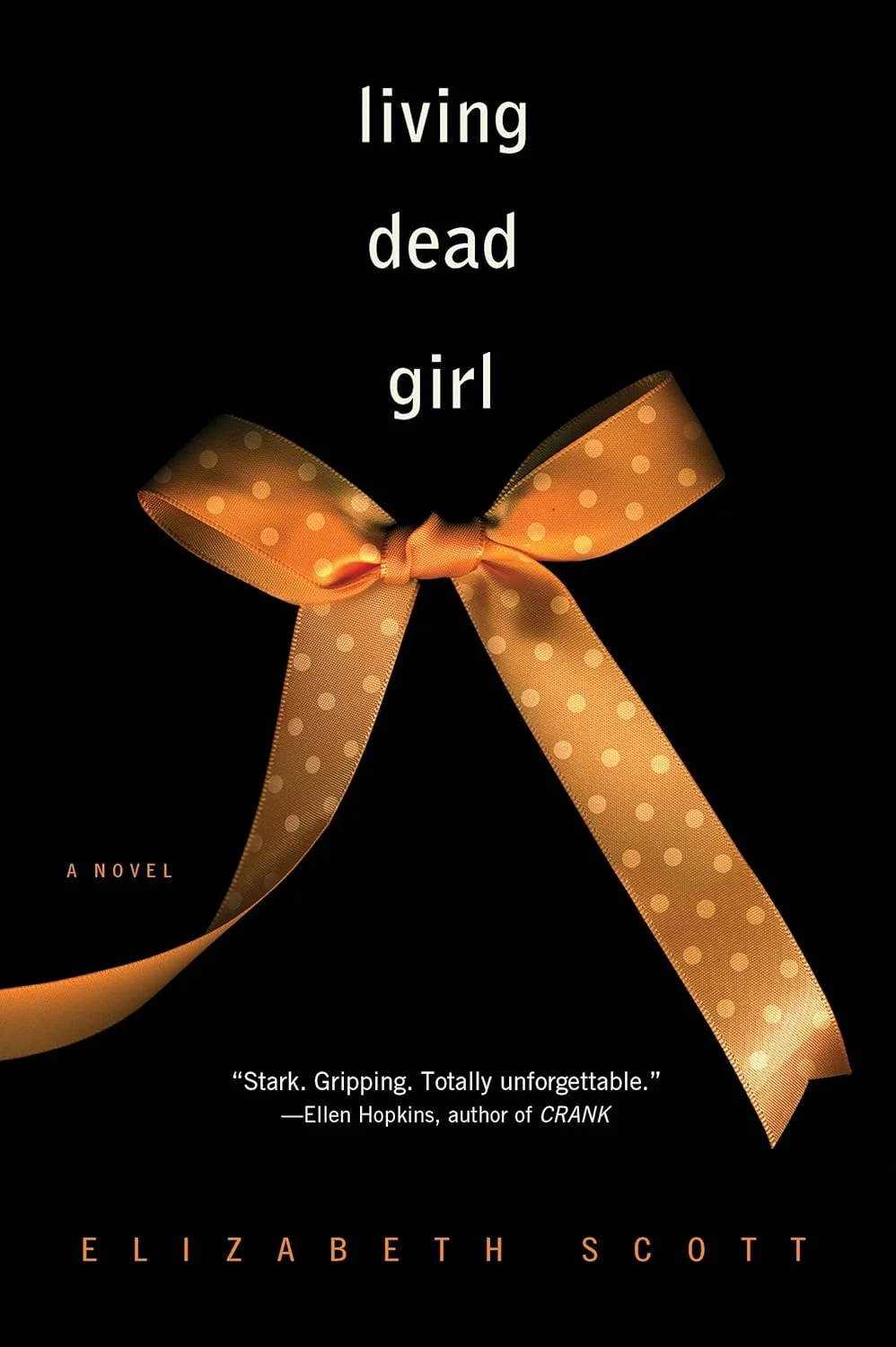
Living Dead Girl
- Publication Date:
- September 8th, 2009
- Publisher:
- Simon and Schuster
- ISBN-13:
- 9781416960607
- ISBN-10:
- 1416960600
- Pages:
- 180
About Living Dead Girl
Living Dead Girl is a 2008 novel by Elizabeth Scott, published by Simon Pulse. It is narrated by a girl who was taken at age ten by a man she calls Ray, and who has been held captive and systematically abused for the five years since. Ray has renamed her Alice — the name of the girl he had before her, who is dead. Alice knows that she too will be killed and replaced when she gets older. The novel opens at the point when this is becoming imminent: Ray has decided it is time, and he instructs Alice to find him a new girl.
The novel is 180 pages long and written in close, stripped-down first person. Alice's voice is flat, dissociated, exhausted — the deadened inner voice of someone whose sense of self has been systematically destroyed over years of captivity. She has been isolated from every possible source of help: her family believes she is dead, she has been conditioned to distrust everyone, and she has no financial resources or documents. The novel tracks her efforts to find Ray's replacement, her grief for the child she was before, and her growing understanding that the only escape that will actually save her involves her own death or Ray's.
Scott writes without a redemptory frame. The novel does not offer hope as consolation or rescue as a tidy resolution. It is among the most uncompromising depictions of long-term child abuse in American young adult literature — which is part of why it has been so frequently challenged and also why it matters.
Purpose and Reception
Living Dead Girl was written, Scott has said, because the stories of children held captive and abused over long periods — stories that were beginning to appear regularly in news coverage — were being described as unimaginable, as aberrations, when they were in fact the outcomes of specific failures: failures of attention, of intervention, of the systems meant to protect children. The novel makes the experience imaginable in the only way fiction can — by placing the reader inside it.
The book received strong critical attention on publication and has remained in print. For readers who have experienced abuse or who know someone who has, its unflinching honesty has been described as recognition rather than exploitation. For readers without that experience, it is one of the most effective available tools for developing empathy with what captivity and prolonged abuse actually do to a person.
Why Living Dead Girl Has Been Banned
Living Dead Girl has been banned or challenged in 11 states across 57 school districts. The challenges cite sexual content — the abuse Alice suffers is described in explicit terms throughout — as well as the novel's extreme darkness and the absence of a redemptory ending. Some challenges have characterized the book as gratuitous or inappropriate given its subject matter.
The question of whether a book this dark belongs in a school library is not frivolous. It is, however, a question that reads differently depending on whose experience you center. For students who are living within abusive situations — or who are trying to understand what happened to them — the argument that the book is too dark collapses into the argument that their experience is too dark to acknowledge. Advocates for the book argue that the young people most likely to need what it offers are exactly the ones least served by its removal.
Where to Buy


Affiliate links may generate a small commission at no extra cost to you, which helps support this site.
Banned in Schools
Banned or challenged in 11 states across 57 school districts.
Alaska 1 district
- Matanuska-Susitna Borough School District Banned pending investigation
Florida 15 districts
- Broward County Public Schools Banned Pending Investigation
- Duval County Public Schools Banned pending investigation
- Flagler Schools Banned
- Hillsborough County Public Schools Banned
- Indian River County Schools Banned
- Lake County Schools Banned by restriction
- Lee County Schools Banned
- Orange County Public Schools Banned pending investigation
- Pasco County Schools Banned
- Pinellas County Schools Banned
- Santa Rosa County Schools Banned pending investigation
- School District of Osceola County Banned
- School District of Palm Beach County Banned
- Seminole County Public Schools Banned
- Union County School District Banned
Iowa 28 districts
- AGWSR Community School District Banned
- Boone Community School District Banned
- Carlisle Community School District Banned
- Cedar Falls Community School District Banned pending investigation
- Central Lyon Community School District Banned
- Central Springs School District Banned
- Clarinda Community School District Banned
- Edgewood-Colesburg Community School District Banned
- Estherville Lincoln Central Community School District Banned
- Forest City Community School District Banned
- Gilbert Community School District Banned
- Grundy Center Community School District Banned
- Hudson Community School District Banned
- Knoxville Community School District Banned
- Louisa-Muscatine Community School District Banned pending investigation
- Martensdale-St. Marys Community School District Banned
- Mid-Prairie Community School District Banned
- New Hampton Community Schools Banned
- North Polk Community School District Banned pending investigation
- Northeast Community School District Banned pending investigation
- Riceville Community School District Banned
- Ridge View Community School District Banned
- Rudd-Rockford-Marble Rock Community School District Banned
- Sigourney Community School District Banned
- Springville Community School District Banned
- St. Ansgar Community School District Banned
- Union Community School District Banned
- Winterset Community School District Banned
North Carolina 1 district
- Burke County Public Schools Banned
South Carolina 1 district
Tennessee 2 districts
- Rutherford County Schools Banned
- Wilson County Schools Banned
Texas 5 districts
- Conroe Independent School District Banned
- Fort Bend Independent School District Banned - Professionally Weeded
- Fort Worth Independent School District Banned pending investigation
- Katy Independent School District Banned
- Nacogdoches Independent School District Banned by Restriction
Utah 1 district
- Davis School District Banned
Virginia 1 district
- King George County Schools Banned by Restriction
Wisconsin 1 district
- Menomonee Falls Schools Banned
Wyoming 1 district
- Laramie County School District No. 1 Banned by restriction