Kurt Vonnegut
7 titles banned
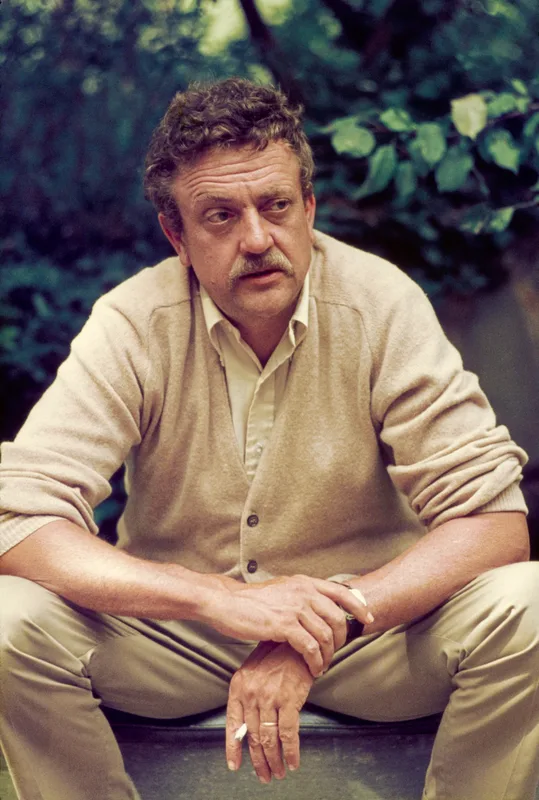
About Kurt Vonnegut
Kurt Vonnegut was born on November 11, 1922, in Indianapolis, Indiana, the youngest of three children in a prominent family of German-American heritage. He studied biochemistry at Cornell University before enlisting in the U.S. Army during World War II. In December 1944, he was captured by German forces during the Battle of the Bulge and held as a prisoner of war in Dresden. He survived the February 1945 Allied firebombing of the city—which killed tens of thousands of civilians—by sheltering in an underground meat locker. That experience would become the central subject of his most famous and enduring work.
After the war, Vonnegut studied anthropology at the University of Chicago and worked as a publicist for General Electric before the success of his fiction freed him to write full time. His early novels—Player Piano (1952), The Sirens of Titan (1959), and Cat's Cradle (1963)—established his reputation as a darkly comic science-fiction writer. But it was Slaughterhouse-Five (1969) that brought him mainstream fame. Published when anti-war sentiment was high, the novel reached number one on the New York Times bestseller list within weeks of its release and became an emblem of the counterculture era.
Slaughterhouse-Five and Censorship
Slaughterhouse-Five tells the story of Billy Pilgrim, a World War II veteran who becomes "unstuck in time" and ricochets between his wartime imprisonment in Dresden, his postwar life in suburban upstate New York, and a distant planet called Tralfamadore. The novel's unconventional structure, antiwar stance, and frank content have made it one of the most challenged books in American schools and libraries. It has been objected to or removed in at least 18 documented instances, including a 1973 case in Drake, North Dakota, where copies were burned following a school board order. Vonnegut responded to that burning with a now-famous letter to the school board.
Beyond Slaughterhouse-Five, Vonnegut's bibliography includes 14 novels—among them Breakfast of Champions (1973), Slapstick (1976), and Galapagos (1985)—as well as short-story collections, essays, and plays. He received a Guggenheim Fellowship and taught at the Iowa Writers' Workshop, Harvard, and the City College of New York. He was elected vice president of the National Institute of Arts and Letters. His final book, A Man Without a Country (2005), was a collection of essays and became a late-career bestseller. He died in New York City on April 11, 2007, at the age of 84, from brain injuries following a fall at his Manhattan home.
Books by Kurt Vonnegut Jr.
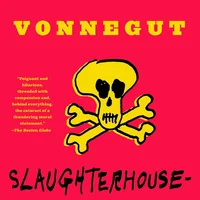 Slaughterhouse-Five
Banned in Schools
Books by Kurt Vonnegut Jr. have been banned or challenged in 12 states across 50 school districts.
Florida 13 districts
- Alachua County Public Schools
- Bay District Schools
- Charlotte County Public Schools
-
Clay County School District
- Cat's Cradle
- Collier County Public Schools
- Duval County Public Schools
-
Hillsborough County Public Schools
- Slaughterhouse-Five
- Slaughterhouse-Five: The Graphic Novel
- Lee County Schools
-
Okaloosa County School District
- Slaughterhouse-Five: The Graphic Novel
-
Orange County Public Schools
- Slaughterhouse-Five
- Slaughterhouse-Five: The Graphic Novel
-
Polk County Public Schools
- Slaughterhouse-Five
- Slaughterhouse-Five: The Graphic Novel
-
Santa Rosa County Schools
- Slaughterhouse-Five: The Graphic Novel
-
Union County School District
- Slaughterhouse-Five
- Slaughterhouse-Five: The Graphic Novel
Iowa 18 districts
-
Bondurant-Farrar Community School District
- Slaughterhouse-Five
- Slaughterhouse-Five: The Graphic Novel
- Boone Community School District
- Cedar Falls Community School District
- Clear Lake Community School District
- Dubuque Community School District
- East Union Community School District
- Forest City Community School District
- Linn-Mar Community School District
- Martensdale-St. Marys Community School District
- Nevada Community School District
- Ridge View Community School District
- Shenandoah Community School District
- Sigourney Community School District
- Union Community School District
- Waverly-Shell Rock Community School District
- West Burlington Independent School District
- West Des Moines Community Schools
- Winterset Community School District
Maine 1 district
-
Hermon School Department
- Breakfast of Champions
- Cat's Cradle
- God Bless You, Mr. Rosewater Or Pearls Before Swine
- Player Piano
- Slaughterhouse-Five
- Timequake
Tennessee 4 districts
- Knox County Schools
- Monroe County Schools
- Oak Ridge Schools
-
Wilson County Schools
- Slaughterhouse-Five: The Graphic Novel
Texas 7 districts
- Conroe Independent School District
-
Fort Worth Independent School District
- Slaughterhouse-Five
- Slaughterhouse-Five: The Graphic Novel
- Katy Independent School District
- Lamar Consolidated Independent School District
- Nacogdoches Independent School District
- North East Independent School District
- Plano Independent School District
Utah 1 district
-
Davis School District
- Slaughterhouse-Five
- Slaughterhouse-Five: The Graphic Novel