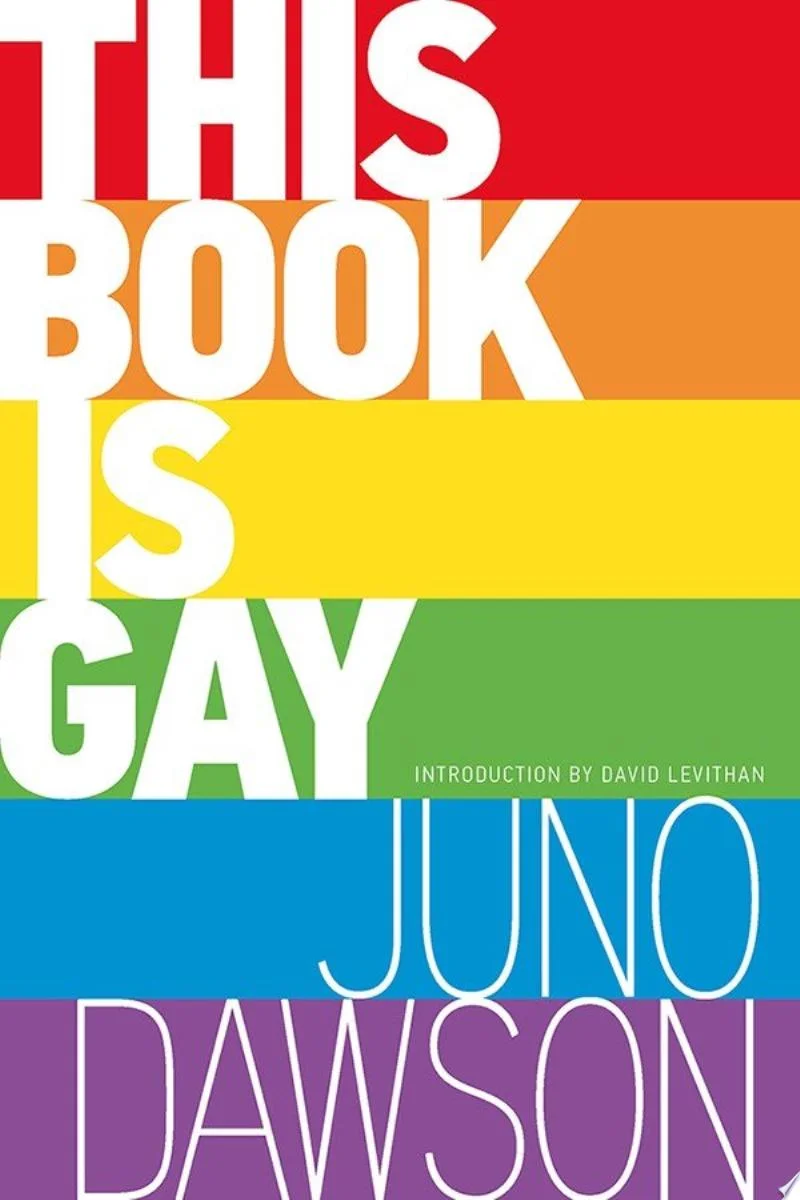
This Book Is Gay
by Juno Dawson
- Publication Date:
- June 2nd, 2015
- Publisher:
- Sourcebooks, Inc.
- ISBN-13:
- 9781492617846
- ISBN-10:
- 1492617849
- Pages:
- 277
Why This Book Is Gay Has Been Challenged
Objections to "This Book Is Gay" center overwhelmingly on its sexual content. See more ↓
Challenged or banned in 10 states across 18 school districts.
Overview
"This Book Is Gay" is a work of young adult nonfiction by British author Juno Dawson, structured as a wide-ranging guide to sexual orientation and gender identity. Rather than following a single narrative, the book moves through topics that many LGBTQ+ teenagers encounter but rarely see addressed directly: recognizing and naming one's identity, navigating the process of coming out to family and peers, and finding community with others who share similar experiences.
Dawson writes in a conversational, often irreverent register, mixing practical guidance with humor and illustration. The book also incorporates first-person testimony from a range of contributors, lending it the feel of an oral history alongside its instructional content. Sections on dating, relationships, and physical intimacy are included as part of its broader effort to be comprehensive rather than clinical.
Since its original publication, the book has been positioned as a resource not only for LGBTQ+ youth themselves but for parents and teachers seeking a starting point for understanding. Its tone is deliberately informal, aiming to demystify subjects that more traditional health or advice texts often treat with clinical distance or avoid altogether.
Context and Reception
Dawson's book arrived amid a broader expansion of LGBTQ+-focused young adult publishing, joining a small but growing shelf of nonfiction titles aimed explicitly at queer teenagers rather than at general audiences learning about them secondhand. Its direct, question-and-answer approach reflects a specific pedagogical choice: treating readers as capable of handling frank information about their own bodies and identities, rather than filtering that information through euphemism.
The book has been read in schools and libraries as a reference text, often shelved alongside other adolescent health and identity resources. Its popularity with young readers and its recognition within youth literature circles reflect an audience that found in it a rare combination of humor and directness on subjects usually handled with more caution. That same directness — particularly its willingness to discuss sex explicitly rather than obliquely — is central to understanding why the book has also drawn sustained scrutiny from schools and library boards, discussed below.
Why This Book Is Gay Has Been Challenged
Objections to "This Book Is Gay" center overwhelmingly on its sexual content. Passages addressing physical intimacy between same-sex partners are the most frequently cited concern, with challengers arguing that this material is too explicit for the shelves accessible to minors, regardless of its educational framing. Because the book addresses sex directly and without euphemism, it is often grouped by challengers with other works flagged for sexually explicit content, even though its stated purpose is informational rather than narrative or literary.
A second and related line of objection concerns the book's subject matter itself: its focus on LGBTQ+ identity, coming out, and gender variance has led some challengers to argue that the material is inappropriate for a general school or library audience, or that it promotes viewpoints they believe should not be presented to children without parental oversight. In many cases, these two threads — concern about sexual content and concern about the book's LGBTQ+ subject matter — are raised together, making it difficult to separate objections to explicitness from objections to the topic itself.
Within this catalog, "This Book Is Gay" has been documented as challenged or banned in 10 states and 18 districts, figures that place it among the more frequently contested nonfiction titles addressing LGBTQ+ topics in recent years.
Where to Buy
Affiliate links may generate a small commission at no extra cost to you, which helps support this site.
Banned in Schools
Banned or challenged in 10 states across 18 school districts.
California 1 district
Florida 5 districts
- Broward County Public Schools Banned Pending Investigation
- Pinellas County Schools Banned
- Santa Rosa County Schools Banned
- School District of Palm Beach County Banned
- Union County School District Banned
Georgia 2 districts
- Cobb County School District Banned
- Marietta City Schools Banned
Iowa 3 districts
- Carlisle Community School District Banned
- Iowa City Community School District Banned pending investigation
- Lewis Central Community School District Banned
Nation 1 district
Tennessee 1 district
- Oak Ridge Schools Banned
Texas 2 districts
Virginia 1 district
Wisconsin 1 district
Wyoming 1 district
- Laramie County School District No. 1 Banned by restriction