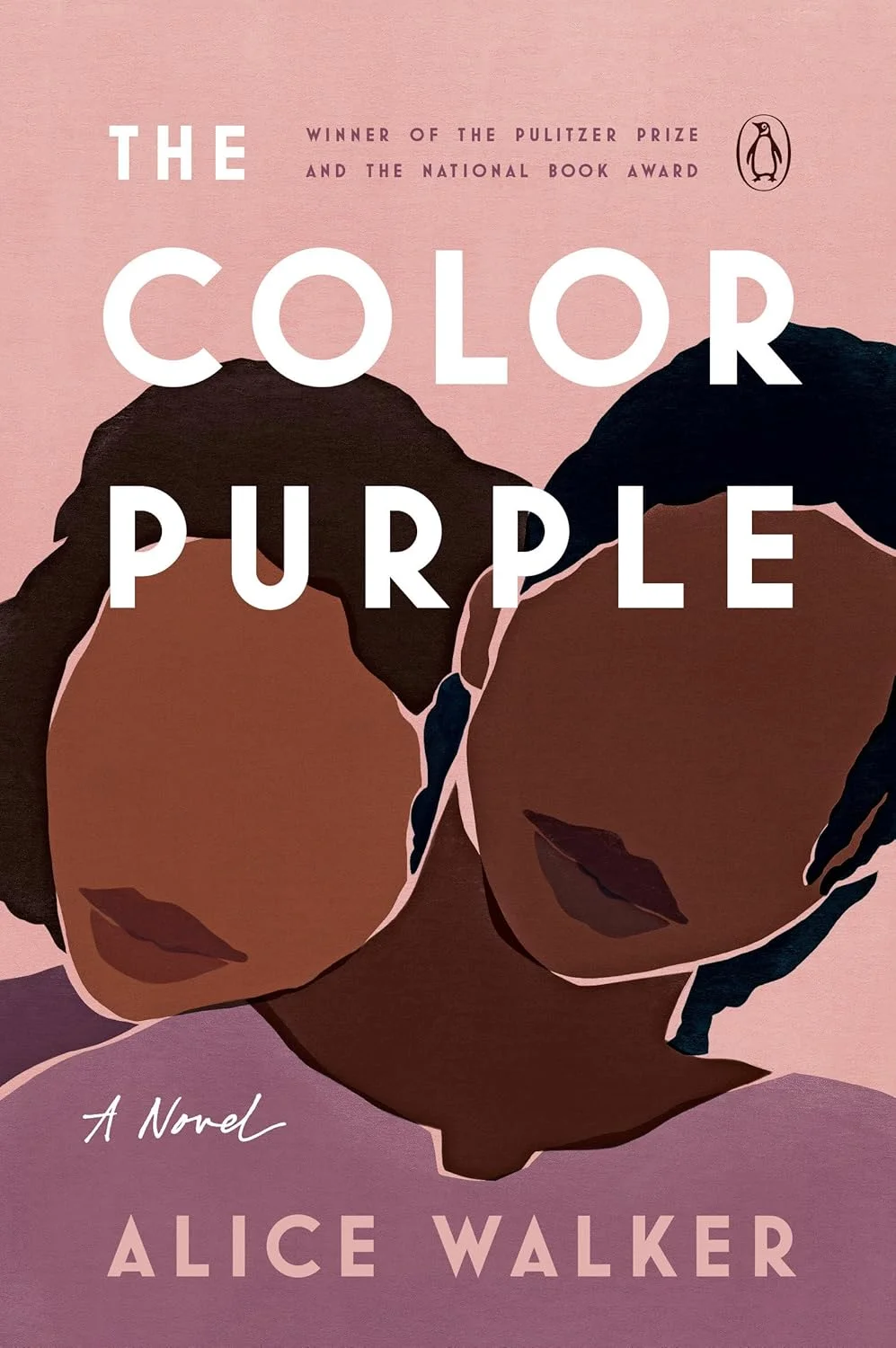
The Color Purple
by Alice Walker
- Publication Date:
- December 10th, 2019
- Publisher:
- National Geographic Books
- ISBN-13:
- 9780143135692
- ISBN-10:
- 0143135694
About The Color Purple
The Color Purple is a novel by Alice Walker, first published in 1982 by Harcourt Brace Jovanovich. It won the Pulitzer Prize for Fiction and the National Book Award in 1983, making Walker the first Black woman to win the Pulitzer in that category. The novel is written in an epistolary form — as a series of letters — primarily from the perspective of Celie, a poor Black woman in rural Georgia in the early decades of the twentieth century. Celie writes first to God, whom she addresses because she has no one else who will listen, and later to her sister Nettie, from whom she has been separated for years.
Celie's letters document her life under conditions of extreme violence and exploitation. She is sexually abused by the man she believes is her father, bears two children who are taken from her, and is given in marriage to a man she knows only as Mister — a man who beats her routinely and who separated her from Nettie to punish Celie for not being the woman he wanted. The first third of the novel makes the reader feel the weight of Celie's endurance. The second and third thirds document her transformation: through her friendship with the blues singer Shug Avery, who becomes her lover, and through the gradual return of Nettie's letters, which reveal what became of her children and expand the novel's moral landscape far beyond Georgia.
Walker writes Celie's voice in a dialectical English that is specific, musical, and deeply human — the voice of a woman of particular intelligence who was denied the education that might have given her different words but not a different understanding. The dialect is not comic or diminishing; it is precise.
Cultural Impact and Adaptation
The Color Purple was adapted into a film by Steven Spielberg in 1985, starring Whoopi Goldberg, Oprah Winfrey, and Danny Glover. The film was nominated for eleven Academy Awards without winning any — a snub that has remained controversial. A stage musical adaptation opened on Broadway in 2005 and was revived in 2015, winning the Tony Award for Best Revival of a Musical. A new film adaptation of the musical was released in 2023.
The book is one of a small number of twentieth-century American novels to have sustained continuous cultural presence across four decades. Its themes — the treatment of Black women under systems of patriarchy and racism, the spiritual resources of marginalized communities, the transformative possibilities of love between women — have kept it in active conversation with every generation of readers who encounter it.
Why The Color Purple Has Been Banned
The Color Purple has been banned or challenged across 6 states in 60 school districts. Challenges most commonly cite the novel's explicit depictions of sexual violence — including the abuse Celie experiences at the hands of her stepfather — its language, and its positive depiction of a lesbian relationship between Celie and Shug Avery. Some challenges have characterized the novel as presenting a negative or degrading portrayal of Black men.
Defenders of the book have argued consistently that it does not portray Black men negatively as a class — it portrays specific men acting with specific violence in specific historical conditions, and also portrays men who grow and change. The lesbian relationship at the novel's center has been the subject of challenges in school contexts since the book was first published, though it is also precisely what many readers have found most important: Celie's discovery of her own capacity for love and pleasure in the aftermath of a life of coercion. The American Library Association has consistently listed it among the most challenged books in American libraries.
Where to Buy



Affiliate links may generate a small commission at no extra cost to you, which helps support this site.
Banned in Schools
Banned or challenged in 6 states across 60 school districts.
Florida 7 districts
- Collier County Public Schools Banned
- Hillsborough County Public Schools Banned Pending Investigation
- Lee County Schools Banned by restriction
- Martin County Schools Banned by restriction
- Orange County Public Schools Banned pending investigation
- Union County School District Banned pending investigation
- Volusia County Schools Banned Pending Investigation
Iowa 45 districts
- Adel DeSoto Minburn Community School District Banned
- Albia Community School District Banned
- Ankeny Community School District Banned pending investigation
- Bondurant-Farrar Community School District Banned pending investigation
- Boone Community School District Banned
- Cardinal Community School District Banned
- Cedar Falls Community School District Banned pending investigation
- Central Lyon Community School District Banned
- Clear Lake Community School District Banned
- Council Bluffs Community School District Banned pending investigation
- Decorah Community School District Banned pending investigation
- Dubuque Community School District Banned
- Indianola Community School District Banned
- Interstate 35 Community School District Banned
- Iowa City Community School District Banned pending investigation
- Keota Community School District Banned
- Lake Mills Community School District Banned
- Lewis Central Community School District Banned
- Madrid Community School District Banned
- Marion Independent School District Banned pending investigation
- Marshalltown Community School District Banned
- Mason City Community Schools Banned pending investigation
- Melcher-Dallas Community School District Banned pending investigation
- Missouri Valley Community School District Banned
- Muscatine Community School District Banned
- Nevada Community School District Banned
- Northwood Kensett Community School District Banned
- Norwalk Community School District Banned pending investigation
- Ottumwa Community School District Banned
- Pocahontas Area Community School District Banned
- Red Oak School District Banned
- Ridge View Community School District Banned
- Roland-Story Community School District Banned
- Saydel Community School District Banned
- Shenandoah Community School District Banned
- South Tama County Community School District Banned
- Southeast Polk Community School District Banned
- Spencer Community School District Banned
- Twin Cedars Community School District Banned pending investigation
- Urbandale Community School District Banned pending investigation
- Waterloo Community School District Banned pending investigation
- Waukee Community School District Banned pending investigation
- West Burlington Independent School District Banned
- West Des Moines Community Schools Banned pending investigation
- Winterset Community School District Banned
Missouri 1 district
- Cameron R-1 School District Banned by restriction
Tennessee 3 districts
- Monroe County Schools Banned
- Oak Ridge Schools Banned
- Wilson County Schools Banned
Texas 3 districts
Wisconsin 1 district
- Elkhorn Area School District Banned pending investigation