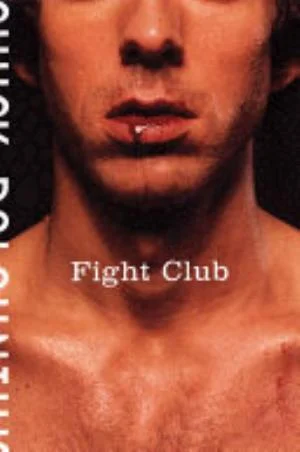
Fight Club
- Publication Date:
- May 1st, 2004
- Publisher:
- Holt Paperbacks
- ISBN-13:
- 9780805076479
- ISBN-10:
- 0805076476
- Pages:
- 224
Why Fight Club Has Been Challenged
Critics have pushed back against the novel's unfiltered depiction of violence and its narrator's descent into anarchic extremism, worried that the book glamorizes rather than critiques the behavior it portrays. See more ↓
Challenged or banned in 5 states across 8 school districts.
Overview
Chuck Palahniuk's debut novel follows an unnamed narrator trapped in the numbing rhythms of corporate work, insomnia, and support-group tourism, searching for some feeling that his furnished apartment and steady paycheck can't supply. That search takes a sharp turn when he meets Tyler Durden, a soap salesman and provocateur who seems to have already seen through every illusion the narrator is still clinging to.
Together they found Fight Club, a bare-knuckle ritual conducted in bar basements after hours, where men strip away politeness and physical caution to feel something real. What begins as an underground release valve for a handful of disaffected clerks and waiters hardens into something far more organized, and far more dangerous, as Tyler's vision expands well beyond a weekly brawl.
Palahniuk's prose is clipped, aphoristic, and darkly comic, building a narrative that is as much a diagnosis of a particular strain of modern male alienation as it is a story about fighting.
A Novel of Disillusionment and Its Afterlife
Fight Club arrived as a rejoinder to a decade preoccupied with branding, self-improvement, and the idea that consumption could substitute for meaning. Its narrator's crisis isn't poverty or hardship but the suspicion that a life assembled entirely from catalog choices has left him with nothing to actually hold onto, and the novel treats that suspicion as a legitimate, even urgent, problem rather than a punchline.
The book's satire cuts in more than one direction. Tyler Durden functions simultaneously as liberator and warning: his critique of consumer complacency is persuasive precisely because the narrator (and many readers) find it appealing, which is what makes his subsequent turn toward organized destruction so unsettling rather than triumphant. That ambiguity is central to why the novel has remained a subject of debate since its release, and why Palahniuk himself has periodically weighed in on how differently audiences have read his intentions, particularly after the story reached a much wider public through film.
Read within Palahniuk's larger body of work, Fight Club established the preoccupations he would return to throughout his career: bodies under duress, institutions treated with suspicion, and narrators whose reliability is always in question.
Why Fight Club Has Been Challenged
The basement matches at the center of the novel are described with a bluntness that doesn't soften the damage being done, and the story's later turn toward organized sabotage and violence carries that same directness into territory some readers find genuinely alarming rather than instructive. Objections raised against the book tend to focus on this refusal to look away: extended passages of physical brutality, drug use among the characters, and a plot that moves from consensual fighting to premeditated destruction with little narratorial judgment attached to any of it.
A related concern is that the novel's satirical frame can be missed or ignored, particularly by younger readers, leaving only the surface appeal of Tyler Durden's charisma and his rejection of rules and authority. Where some readers see a cautionary portrait of radicalization, others worry the book instead offers a template, and that concern has driven challenges in the 5 states and 8 districts where this title has been formally contested. Sexual content and language cited alongside the violence have also factored into individual objections, though the recurring thread across most challenges remains the book's graphic treatment of physical harm and its unresolved stance toward extremism.
Where to Buy




Affiliate links may generate a small commission at no extra cost to you, which helps support this site.
About Chuck Palahniuk
Chuck Palahniuk is an American author of transgressive fiction best known for his 1996 novel Fight Club, which was adapted into a celebrated 1999 film by David Fincher. His darkly satirical work explores violence, consumerism, identity, and masculinity and has earned him the Pacific Northwest Booksellers Award and the Oregon Book Award.
Also by Chuck Palahniuk
Banned in Schools
Banned or challenged in 5 states across 8 school districts.
Florida 4 districts
- Hillsborough County Public Schools Banned Pending Investigation
- Pinellas County Schools Banned
- Seminole County Public Schools Banned
- Union County School District Banned
Iowa 1 district
- Cedar Falls Community School District Banned pending investigation
Tennessee 1 district
- Wilson County Schools Banned
Utah 1 district
- Washington County Schools Banned
Wisconsin 1 district
- Elkhorn Area School District Banned pending investigation