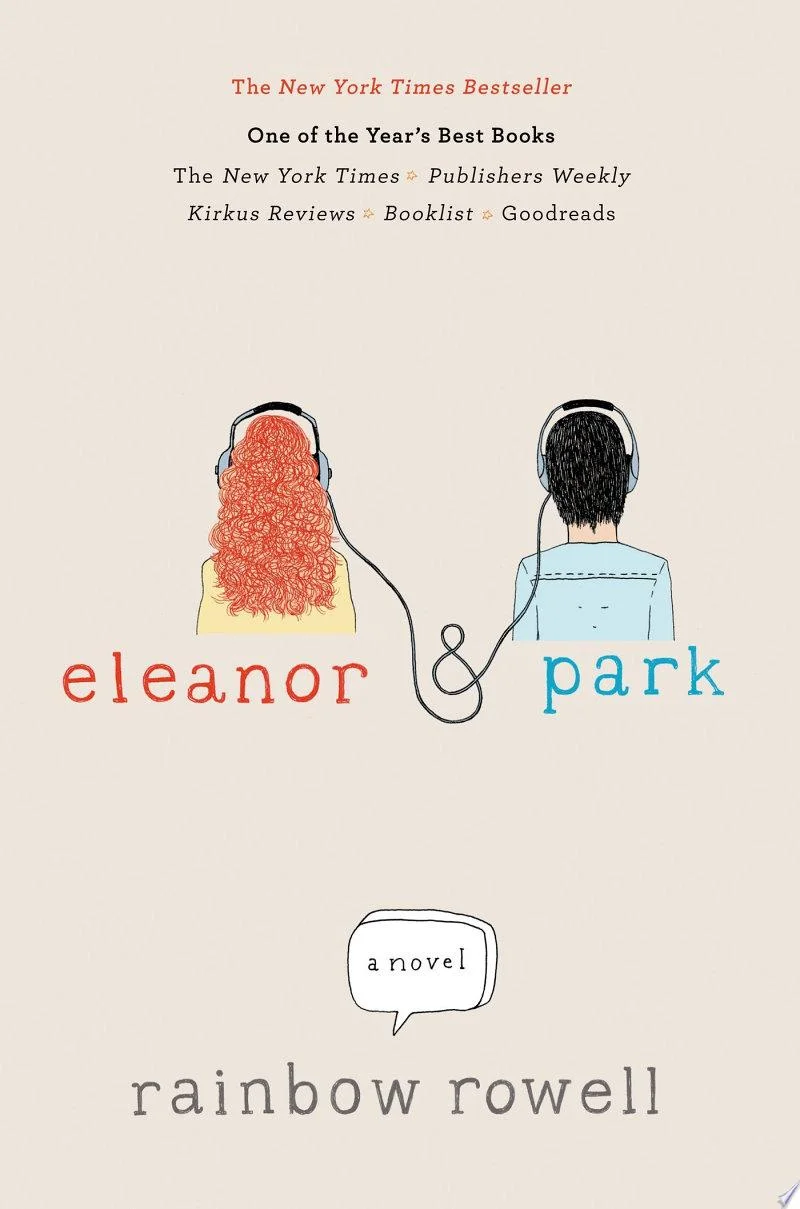
Eleanor & Park
- Publication Date:
- February 26th, 2013
- Publisher:
- St. Martin's Griffin
- ISBN-13:
- 9781250031211
- ISBN-10:
- 1250031214
- Pages:
- 253
Why Eleanor & Park Has Been Challenged
Objections to "Eleanor & Park" have generally centered on its frank treatment of teenage life rather than any single scene or plot turn. See more ↓
Challenged or banned in 8 states across 26 school districts.
Overview
Rainbow Rowell's "Eleanor & Park" traces a single school year in 1986, when two teenagers who don't fit the usual mold find each other on a school bus and, slowly, fall in love. Eleanor is the new girl, unpredictable in dress and guarded in manner, carrying troubles at home that she reveals only in fragments. Park is quieter, caught between the comic books and mixtapes he loves and the pressure to blend in. Their courtship builds in glances, shared headphones, and silence before either of them risks saying anything aloud.
Rowell resists the tidy shape of a typical romance. The novel keeps circling back to the asymmetry between the two leads: Park's relatively stable household against Eleanor's precarious one, his growing confidence against her instinct to brace for disappointment. That imbalance gives the love story its tension, since both teenagers seem to know, even as they fall for each other, how little control they have over what happens next.
The book earned wide critical recognition after its 2013 release, including recognition as a Printz Honor selection and multiple year-end best-of lists, and it's often cited alongside other core entries in the young-adult romance canon for how plainly it depicts teenage vulnerability.
Context and Reception
Much of the critical conversation around "Eleanor & Park" centers on how unglamorously it renders both love and hardship. Rowell doesn't romanticize Eleanor's home life, and she doesn't let Park's affection function as a rescue. Reviewers have pointed to this restraint as the book's defining quality: it treats first love as something urgent and disorienting rather than as a fairy tale, and it treats poverty and family dysfunction as ordinary facts of a character's life rather than as dramatic devices.
The novel also sits at an interesting point in Rowell's career, arriving early in her run of YA and adult fiction and helping establish the voice — wry, closely observed, attentive to music and pop culture as shorthand for character — that recurs across her later work. Its persistent presence on library and classroom reading lists reflects how frequently it's used to introduce teenage readers to a more unvarnished version of the coming-of-age story, one where the ending is neither guaranteed nor clean.
Why Eleanor & Park Has Been Challenged
Objections to "Eleanor & Park" have generally centered on its frank treatment of teenage life rather than any single scene or plot turn. Complaints have pointed to the book's language, including profanity used in dialogue meant to sound like how real teenagers talk, as well as its depiction of a romantic and physical relationship between the two leads. Eleanor's home situation, which touches on an abusive stepfather and the instability that follows from it, has also drawn objection from those who consider the material too dark or too mature for the students likely to encounter it on school shelves. Some challenges have framed the book more broadly as inappropriate for a school setting, arguing that its content belongs in the hands of parents rather than teachers or librarians. Taken together, these challenges reflect a recurring disagreement over how much unfiltered realism belongs in books written for teenagers, a debate this catalog tracks through 8 states and 26 districts where the title has faced formal challenges or restrictions.
Where to Buy


Affiliate links may generate a small commission at no extra cost to you, which helps support this site.
About Rainbow Rowell
Rainbow Rowell is an American author of young adult and adult fiction who worked as a journalist and advertising copywriter before publishing her debut novel in 2011. She is best known for Eleanor and Park and Fangirl, and has also written for Marvel Comics including Runaways and She-Hulk.
Banned in Schools
Banned or challenged in 8 states across 26 school districts.
Florida 12 districts
- Charlotte County Public Schools Banned
- Duval County Public Schools Banned pending investigation
- Escambia County Public Schools Banned pending investigation
- Hernando County Schools Banned pending investigation
- Hillsborough County Public Schools Banned Pending Investigation
- Lee County Schools Banned by restriction
- Martin County Schools Banned
- Nassau County School District Banned
- Okaloosa County School District Banned pending investigation
- School District of Manatee County Banned by restriction
- Seminole County Public Schools Banned by restriction
- Union County School District Banned
Iowa 4 districts
- Clear Creek-Amana Community School District Banned pending investigation
- Nevada Community School District Banned pending investigation
- Shenandoah Community School District Banned
- Spencer Community School District Banned pending investigation
Missouri 1 district
- Cameron R-1 School District Banned by restriction
North Carolina 1 district
- Moore County Schools Banned
South Carolina 1 district
Tennessee 2 districts
- Rutherford County Schools Banned
- Wilson County Schools Banned
Texas 4 districts
- Conroe Independent School District Banned by restriction
- Lamar Consolidated Independent School District Banned
- Nacogdoches Independent School District Banned by Restriction
- North East Independent School District Banned
Wisconsin 1 district
- Elkhorn Area School District Banned pending investigation