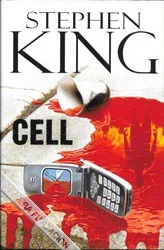
Cell
by Stephen King
- Publication Date:
- March 24th, 2006
- Publisher:
- Scribner
- ISBN-13:
- 9788467217148
- ISBN-10:
- 8467217146
- Pages:
- 368
Why Cell Has Been Challenged
Critics have pushed back on this title mainly over its unflinching depictions of violence and bodily harm, arguing the material is too intense for the school-age readers who might encounter it on a library shelf. See more ↓
Challenged or banned in 2 states across 6 school districts.
Overview
Stephen King's "Cell" opens on an ordinary afternoon in Boston, where a graphic novelist named Clayton Riddell is trying to savor the news that he's sold his first book. Within minutes, that ordinary world ends: a signal pulsed through cell phones scrambles the minds of nearly everyone who was on a call, turning them into something closer to predatory animals than people.
What follows is a journey narrative. Clay falls in with a small group of the unaffected — among them a teenager and a middle-aged man clinging to his own routines — and the group tries to make its way north, on foot and by back roads, toward the son Clay is desperate to find.
King builds the novel around the unraveling of a specific, familiar piece of technology, and around the question of what, if anything, survives in people once the thin structure of civilization gets pulled away.
Technology, Panic, and the Hive Mind
"Cell" belongs to a lineage of plague and collapse fiction, but its trigger is distinctly of its moment: not a virus but a signal, carried by a device most readers already kept in their pocket. Published in 2006, as cell phones were becoming constant companions rather than occasional tools, the novel taps into a particular unease about always-on connectivity and what it might be doing to the people using it.
As the story progresses, the afflicted don't simply turn violent and stay that way — they begin to exhibit something like a shared consciousness, moving and "thinking" in coordinated ways that suggest a new, alien social order replacing the human one. That shift turns the book from a straightforward survival tale into a meditation on identity and the erosion of the self, concerns that recur throughout King's catalog of ordinary people confronted with forces that unmake them from the inside out.
Why Cell Has Been Challenged
Most of the objections raised against "Cell" center on its appropriateness for middle and high school readers, with critics arguing that its sustained, often graphic violence goes beyond what students in that age range should encounter in a school library or classroom collection. The novel's opening sequence, in which the transformation spreads through a crowded city street, and later scenes of brutality among the afflicted, are frequently singled out as more visceral than instructional value could justify. Some challenges also point to the book's bleak tone and its matter-of-fact treatment of death and bodily harm as reasons it should be restricted or removed from shelves accessible to younger students. Within this catalog, the title has drawn recorded challenges in 2 states and 6 districts, reflecting a pattern of concern that tracks closely with broader scrutiny of King's horror fiction in school settings generally.
Where to Buy




Affiliate links may generate a small commission at no extra cost to you, which helps support this site.
About Stephen King
Stephen King is an American author widely known as the 'King of Horror,' having written more than 60 novels and 200 short stories since his 1974 debut with Carrie. He is a recipient of the National Book Award's Medal for Distinguished Contribution to American Letters and the National Medal of Arts, and has won the Bram Stoker, World Fantasy, O. Henry, and Edgar Awards.
Also by Stephen King
 1922
 Apt Pupil
 Bag of Bones
 Billy Summers
 Black House
 Blaze
 Blockade Billy
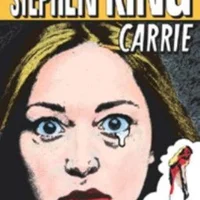 Carrie
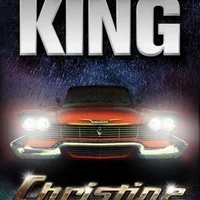 Christine
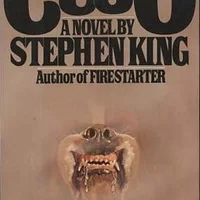 Cujo
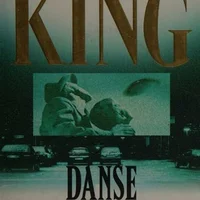 Danse Macabre
 Doctor Sleep
 Dreamcatcher
 Duma Key
 Elevation
 End of Watch
 Everything's Eventual
 Finders Keepers
 Firestarter
 Four Past Midnight
 From a Buick 8
 Full Dark, No Stars
 Gerald's Game
 Gwendy's Button Box
 Gwendy's Final Task
 Hearts In Atlantis
 If It Bleeds
 Insomnia
 It
 Joyland
 Just After Sunset
 Lisey's Story
 Misery
 Mr. Mercedes
 Needful Things
 Pet Sematary
Banned in Schools
Banned or challenged in 2 states across 6 school districts.
Florida 5 districts
- Clay County School District Banned
- Escambia County Public Schools Banned pending investigation
- Hillsborough County Public Schools Banned Pending Investigation
- Santa Rosa County Schools Banned pending investigation
- Union County School District Banned