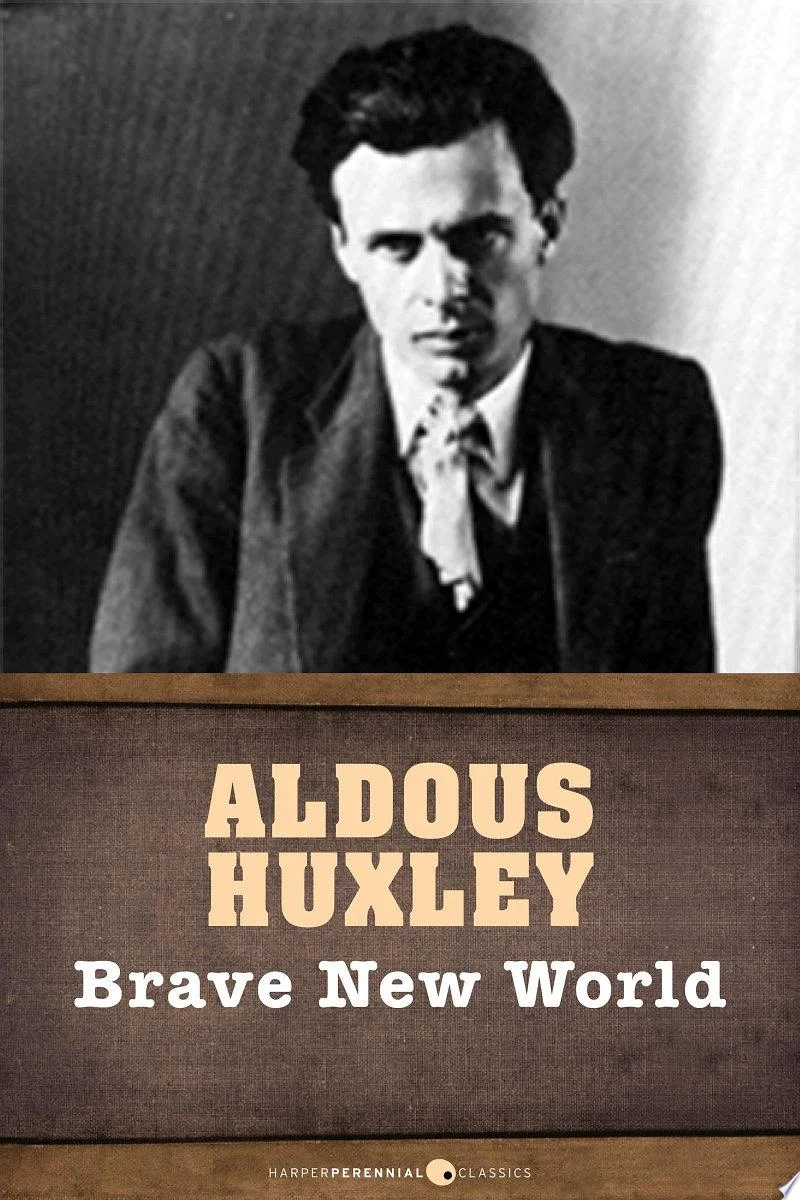
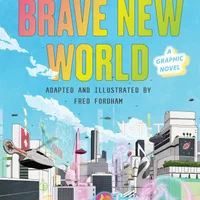
Brave New World
- Publication Date:
- January 1st, 2014
- Publisher:
- Harper Collins
- ISBN-13:
- 9781443432351
- ISBN-10:
- 1443432350
- Pages:
- 250
Why Brave New World Has Been Challenged
Objections to Brave New World have centered less on its dystopian premise than on the specific content Huxley uses to depict his engineered society. See more ↓
Challenged or banned in 6 states across 35 school districts.
Overview
Aldous Huxley's Brave New World unfolds centuries from now, in a civilization built on the promise that suffering has been engineered out of existence. Citizens are decanted rather than born, sorted at the cellular level into castes, and conditioned from infancy to desire exactly the life assigned to them. Stability, not liberty, is the highest virtue, and nearly everyone is content within its bounds.
Bernard Marx is the exception. A misfit within his own privileged caste, he chafes against the frictionless conformity around him and cannot shake the sense that something essential has been traded away for comfort. His restlessness carries him beyond the borders of the engineered world to one of the surviving Savage Reservations, where disease, aging, and unregulated emotion still define human experience.
The collision between these two worlds—one sterilized and serene, the other messy and mortal—forms the spine of the novel, forcing a reckoning with what, if anything, is lost when suffering itself is abolished.
A Warning Dressed as Utopia
Huxley wrote against the grain of his era's fascination with utopian fiction, which tended to imagine technological and social progress as an unambiguous good. His inversion of that optimism produced one of the twentieth century's defining dystopias, pairing the genre with a distinctly satirical edge aimed at consumerism, mass production, and the manipulation of desire. Where other cautionary novels of the period feared totalitarian force, Huxley feared engineered pleasure—a population controlled not through pain but through the removal of any reason to resist.
That distinction has given the novel unusual staying power in cultural conversation. It is frequently read alongside other mid-century dystopias as a counterpoint: a society that keeps its citizens docile through comfort, distraction, and chemically assisted happiness rather than surveillance and punishment. Decades on, the book continues to be cited in discussions of consumer culture, biotechnology, and the ethics of engineering human behavior, a testament to how much of its speculative anxiety has migrated from fiction into ordinary debate.
Why Brave New World Has Been Challenged
Objections to Brave New World have centered less on its dystopian premise than on the specific content Huxley uses to depict his engineered society. The novel's frank treatment of sexuality—including its portrayal of promiscuity as a socially engineered norm rather than a moral failing—has drawn scrutiny from those who consider the material inappropriate for younger readers. Its depiction of widespread drug use, embodied in the population's reliance on the pacifying substance soma, has similarly been flagged as normalizing chemical escape from reality. Some challenges have also pointed to the book's bleak treatment of religion, family structures, and individual autonomy, arguing that its vision of engineered contentment undermines traditional values even as it critiques them. Across the catalog tracked here, these concerns have resulted in the book being challenged or restricted in 6 states and 35 school districts, reflecting a persistent tension between the novel's canonical status as a work of literary and cultural criticism and discomfort with the explicit means by which it delivers that critique.
Where to Buy


Affiliate links may generate a small commission at no extra cost to you, which helps support this site.
About Aldous Huxley
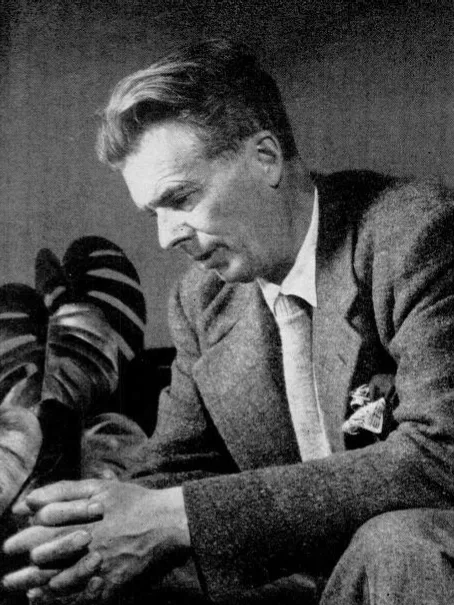
Aldous Huxley (1894–1963) was an English writer and philosopher best known for his 1932 dystopian novel Brave New World, one of the most influential works of science fiction of the twentieth century. Educated at Balliol College, Oxford, he wrote nearly fifty books spanning fiction, essays, and screenplays before settling in Los Angeles, where he also explored psychedelics and Eastern philosophy. Brave New World has been challenged in schools across the catalog tracked here, most often over its frank treatment of sexuality and drug use. He was nominated for the Nobel Prize in Literature nine times.
Also by Aldous Huxley
Banned in Schools
Banned or challenged in 6 states across 35 school districts.
Florida 4 districts
- Collier County Public Schools Banned
- Escambia County Public Schools Banned pending investigation
- Lee County Schools Banned by restriction
- Orange County Public Schools Banned pending investigation
Iowa 27 districts
- Albia Community School District Banned
- Boone Community School District Banned
- Central Lyon Community School District Banned
- Clarinda Community School District Banned
- Clear Lake Community School District Banned
- East Union Community School District Banned
- Highland Community School District Banned
- Indianola Community School District Banned
- Keota Community School District Banned
- Lake Mills Community School District Banned
- Lewis Central Community School District Banned
- Maquoketa Valley Community School District Banned
- Mid-Prairie Community School District Banned
- Nevada Community School District Banned
- Northwood Kensett Community School District Banned
- Oskaloosa Community School District Banned
- Ottumwa Community School District Banned
- Roland-Story Community School District Banned
- Saydel Community School District Banned
- Shenandoah Community School District Banned
- South Tama County Community School District Banned
- Spencer Community School District Banned pending investigation
- Twin Cedars Community School District Banned pending investigation
- Urbandale Community School District Banned
- Van Buren County Community School District Banned
- West Burlington Independent School District Banned
- Winterset Community School District Banned
Tennessee 1 district
- Monroe County Schools Banned
Texas 1 district
Virginia 1 district
- King George County Schools Banned by Restriction
Wisconsin 1 district
- Elkhorn Area School District Banned pending investigation