Aldous Huxley
3 titles banned
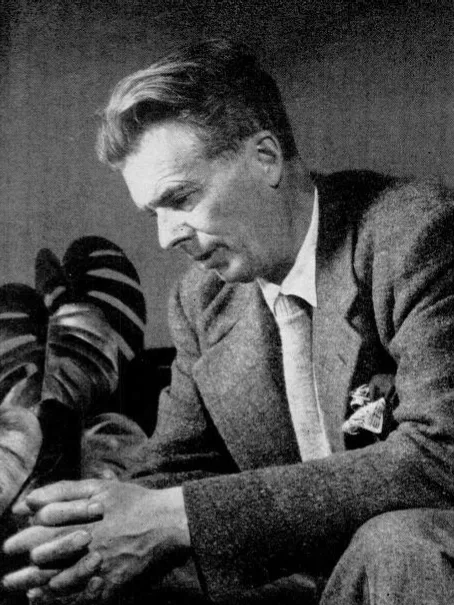
About Aldous Huxley
Aldous Huxley was born in Godalming, England, in 1894, into a family already steeped in science and letters—his grandfather was the biologist Thomas Henry Huxley, and his brother Julian became a prominent scientist in his own right. Educated at Eton and Balliol College, Oxford, where he graduated with first-class honors in English literature, Huxley found his path altered after an illness in adolescence left him partially blind, ruling out the medical career he had once imagined. He turned instead to writing, publishing nearly fifty books over more than four decades—novels, essays, poetry, and travel writing—in addition to screenplays for Hollywood studios after relocating to Los Angeles in 1937.
Huxley's intellectual interests ranged widely, from pacifism to mysticism to the nature of consciousness itself. In the early 1950s he began experimenting with mescaline under psychiatric supervision, an experience he recounted in The Doors of Perception (1954), and he later corresponded with and advised early researchers into psychedelic drugs. He was nominated for the Nobel Prize in Literature nine times without ever winning.
Brave New World and Its Legacy
Published in 1932, Brave New World imagines a future society that has engineered away suffering through genetic conditioning, mass production, and a drug called soma that keeps its population placid and content. Rather than a totalitarian state ruled by force, Huxley's dystopia controls its citizens by giving them everything they think they want—a vision many readers consider more unsettling, and more prescient, than the fear-based control found in other classic dystopian novels. The book's satire of consumerism and manufactured desire has made it a fixture of literature courses and a recurring reference point in debates over technology, biotechnology, and mass culture.
Why Brave New World Has Been Challenged
Objections to Huxley's work have centered on its frank depiction of sexuality and normalized drug use, along with its bleak treatment of religion and family structures. Across the titles by Huxley tracked in this catalog, his books have been challenged or restricted in 6 states and 37 school districts, a reflection of the same tension that has followed Brave New World since its publication: its status as a canonical work of literary and social criticism set against discomfort with the explicit means by which it delivers that critique.
Books by Aldous Huxley
Banned in Schools
Books by Aldous Huxley have been banned or challenged in 6 states across 37 school districts.
Florida 4 districts
Iowa 27 districts
- Albia Community School District
- Boone Community School District
- Central Lyon Community School District
- Clarinda Community School District
- Clear Lake Community School District
- East Union Community School District
- Highland Community School District
- Indianola Community School District
- Keota Community School District
- Lake Mills Community School District
- Lewis Central Community School District
- Maquoketa Valley Community School District
- Mid-Prairie Community School District
- Nevada Community School District
- Northwood Kensett Community School District
- Oskaloosa Community School District
- Ottumwa Community School District
- Roland-Story Community School District
- Saydel Community School District
- Shenandoah Community School District
- South Tama County Community School District
- Spencer Community School District
- Twin Cedars Community School District
- Urbandale Community School District
- Van Buren County Community School District
- West Burlington Independent School District
- Winterset Community School District