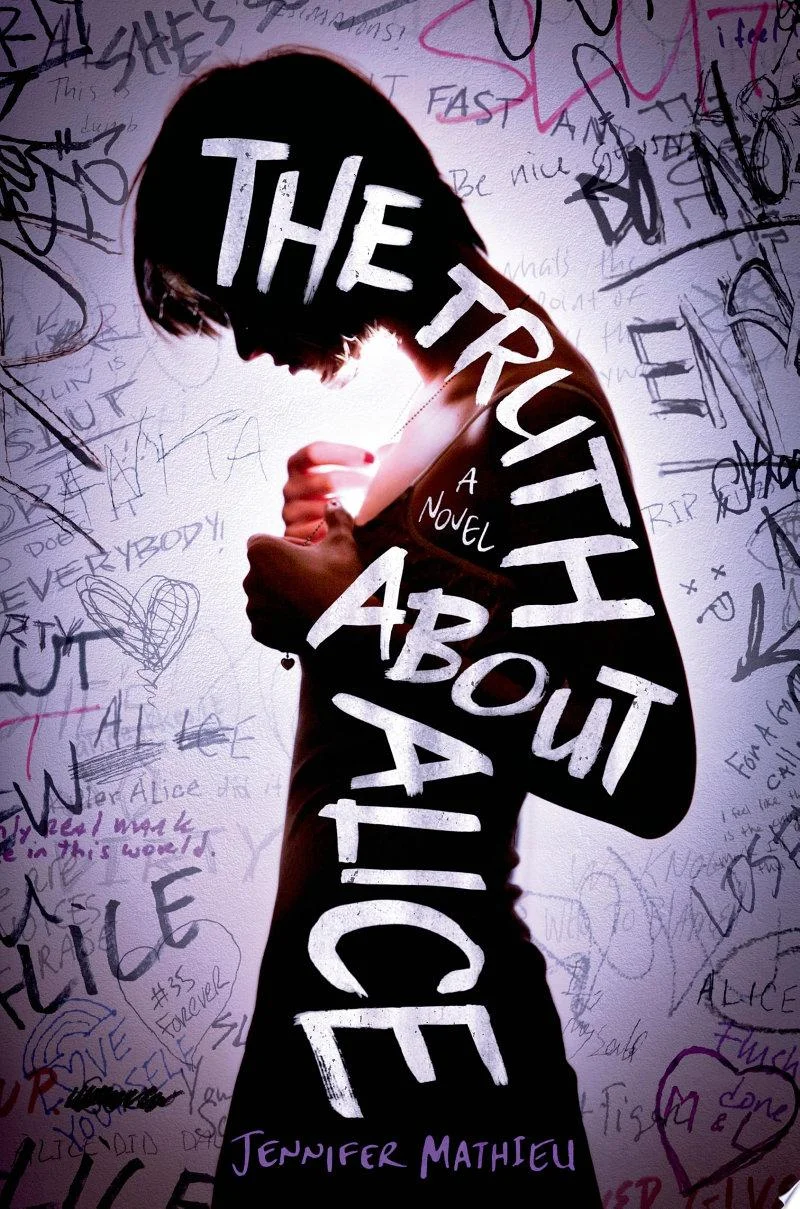
The Truth About Alice
- Publication Date:
- June 3rd, 2014
- Publisher:
- Macmillan
- ISBN-13:
- 9781596439092
- ISBN-10:
- 1596439092
- Pages:
- 209
Why The Truth About Alice Has Been Challenged
Objections to the novel have centered on its frank treatment of teenage sexuality, including references to sex, sexting, and the double standards applied to girls versus boys in the aftermath of a sexual encounter. See more ↓
Challenged or banned in 7 states across 22 school districts.
Overview
Jennifer Mathieu's novel opens in the aftermath of a tragedy: a local teenager is killed in a car accident, and in the absence of clear answers, his classmates and neighbors fill the silence with speculation. At the center of that speculation is Alice Franklin, a girl already trailing whispers about her sexual history, who becomes the person the town decides to blame.
Rather than following a single narrator, the story is built from the voices of the people around Alice—classmates, former friends, and others in her orbit—each offering a version of events shaped by their own assumptions, guilt, or self-interest. Alice herself remains largely offstage, spoken about far more than she is allowed to speak.
The structure turns the book into an exercise in unreliable consensus: readers are handed a chorus of conflicting testimony and left to sort rumor from fact, watching how a reputation can calcify into something treated as truth long before anyone verifies it.
A Portrait of How Reputations Are Built and Destroyed
Mathieu's novel sits within a body of young adult fiction concerned less with plot mechanics than with the social machinery of small communities—how gossip travels, who gets to define a person's character, and how easily a young woman's worth gets reduced to rumors about her body. The multi-narrator format is the book's central device, deliberately withholding Alice's own perspective for most of the story so that readers experience, secondhand, the same distortion and erasure she experiences firsthand.
That structural choice has made the book a frequent point of discussion in conversations about slut-shaming, victim-blaming, and the aftermath of loss in tight-knit communities, where grief can curdle into scapegoating. Critics and readers have noted its resemblance to later "chorus of voices" YA novels that use shifting perspectives to interrogate a single, contested event, and it is often read alongside other titles that examine how a teenage girl's sexuality becomes public property for a community to judge.
Why The Truth About Alice Has Been Challenged
Objections to the novel have centered on its frank treatment of teenage sexuality, including references to sex, sexting, and the double standards applied to girls versus boys in the aftermath of a sexual encounter. Some challenges have also cited underage drinking and party culture depicted in the book, as well as language used by the teenage characters, which some parents and community members have deemed inappropriate for school libraries or classrooms.
Other objections reflect discomfort with the book's unresolved, morally ambiguous ending and its refusal to deliver a clean verdict on Alice's guilt or innocence—an approach some reviewers see as the point, since the novel is more interested in exposing the mechanics of rumor than in adjudicating the truth of any single claim. In the catalog tracked here, the title has been the subject of 22 district-level challenges across 7 states, reflecting how often its subject matter has drawn scrutiny in school and library settings.
Where to Buy



Affiliate links may generate a small commission at no extra cost to you, which helps support this site.
About Jennifer Mathieu

Jennifer Mathieu is an American author of young adult fiction and a former journalist who now teaches English in Texas, where she lives with her family. Her novels, including The Truth About Alice (2014) and Moxie (2017), examine how small communities police girls' reputations and sexuality, often through multiple narrators or intimate first-person voices. Moxie was adapted into a 2021 Netflix film. The Truth About Alice has faced numerous school and library challenges over its frank treatment of teenage sexuality and rumor.
Banned in Schools
Banned or challenged in 7 states across 22 school districts.
Florida 9 districts
- Charlotte County Public Schools Banned
- Flagler Schools Banned by restriction
- Hernando County Schools Banned
- Hillsborough County Public Schools Banned Pending Investigation
- Nassau County School District Banned
- Santa Rosa County Schools Banned pending investigation
- School District of Manatee County Banned by restriction
- Seminole County Public Schools Banned
- Union County School District Banned
Iowa 3 districts
South Carolina 1 district
Tennessee 3 districts
- Monroe County Schools Banned
- Rutherford County Schools Banned
- Wilson County Schools Banned
Texas 4 districts
- Conroe Independent School District Banned
- Lamar Consolidated Independent School District Banned
- Nacogdoches Independent School District Banned by Restriction
- North East Independent School District Banned
Virginia 1 district
- King George County Schools Banned by Restriction
Wisconsin 1 district
- Elkhorn Area School District Banned by restriction