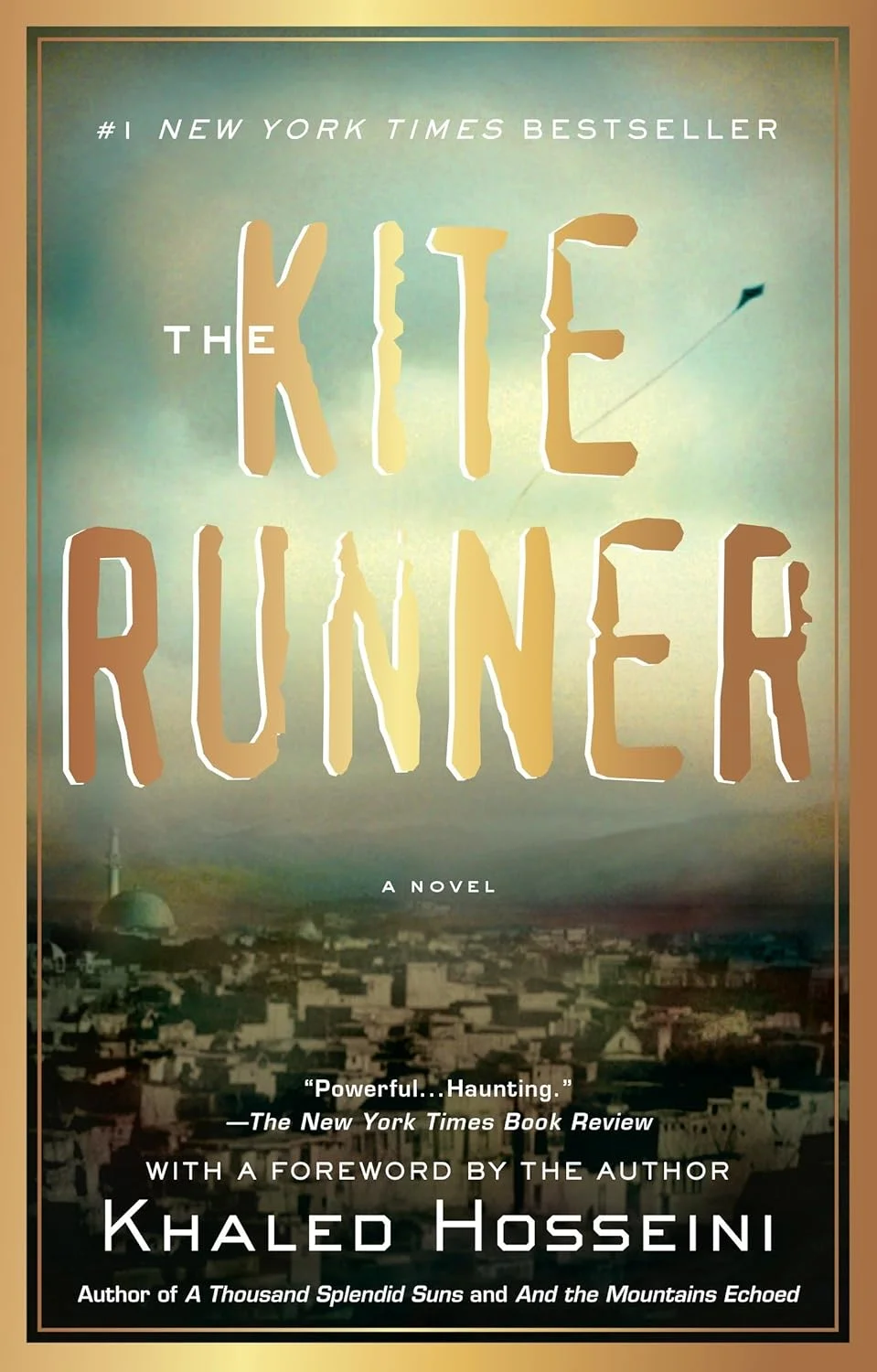
The Kite Runner
- Publication Date:
- March 5th, 2013
- Publisher:
- National Geographic Books
- ISBN-13:
- 9781594631931
- ISBN-10:
- 159463193X
About The Kite Runner
The Kite Runner is the debut novel of Khaled Hosseini, published in 2003 by Riverhead Books. It is narrated by Amir, the son of a wealthy Pashtun man in Kabul, who looks back on his childhood friendship with Hassan — the son of his father's Hazara servant — and on a moment of catastrophic moral failure that haunted the rest of his life. One afternoon in a Kabul alley, Amir witnesses Hassan's rape and does nothing to stop it. He then engineers Hassan's expulsion from the household out of guilt he cannot face squarely.
The novel follows Amir from pre-Soviet Kabul to his life as an immigrant in California, then back to Taliban-controlled Afghanistan, where he returns to rescue Hassan's son Sohrab — an attempt at belated redemption for a betrayal that cost a child everything. Hosseini charts not just one man's moral reckoning but the longer arc of Afghan history: the comfortable prosperity of the 1970s, the Soviet invasion, the civil war, the Taliban's rise, and the terror and destruction of the 1990s. The novel gives Western readers an intimate window into a country they knew mostly from news headlines.
Hosseini's prose is accessible and emotionally direct. He writes about class, ethnicity, and religious prejudice — the treatment of Hazaras by Pashtun Afghans runs like a quiet current through the entire book — without making these themes feel like a lecture. The relationship between Amir and Hassan carries the weight of all of it.
Literary Recognition and Cultural Impact
The Kite Runner spent over two years on the New York Times bestseller list and has been translated into more than seventy languages. It was adapted into a 2007 film directed by Marc Forster. Hosseini's follow-up novels — A Thousand Splendid Suns (2007) and And the Mountains Echoed (2013) — were also major bestsellers, cementing his place as one of the most widely read authors of his generation.
For many American readers, The Kite Runner was their first encounter with Afghan culture and history told from the inside. For Afghan readers in diaspora, it was an act of witness — a novel that named the beauty and the brokenness of a country the world often reduced to geopolitics. Its account of the Taliban's brutality, rendered in human-scale detail, has proven more affecting for many readers than any documentary account.
Why The Kite Runner Has Been Banned
The Kite Runner has been banned or challenged in 13 states across 85 school districts. Challenges most commonly cite the novel's depiction of the rape of Hassan, its sexual content, and its offensive language. Some objections have also targeted the book's portrayal of Islam and Afghan religious culture, though Hosseini himself is Muslim and the novel's treatment of faith is complex rather than hostile.
The scene that generates the most complaints is the one at the novel's moral center: the rape of Hassan, which Amir witnesses and fails to prevent. The scene is not gratuitous — its horror is understood rather than described in clinical detail — but it is unflinching. That unflinching quality is what makes the novel morally serious. Amir's failure in that alley is the hinge on which the entire arc of guilt, distance, and eventual reckoning turns. To remove the scene would be to remove the novel's reason for existing. Critics of the bans have argued, consistently, that what is truly at stake in challenges to The Kite Runner is discomfort with moral ambiguity, not the protection of young readers.
Where to Buy



Affiliate links may generate a small commission at no extra cost to you, which helps support this site.
About Khaled Hosseini

Khaled Hosseini is an Afghan-American physician and author whose debut novel The Kite Runner (2003) became an international bestseller and introduced millions of readers worldwide to Afghanistan's history, culture, and people.
Banned in Schools
Banned or challenged in 13 states across 85 school districts.
Alaska 1 district
- Matanuska-Susitna Borough School District Banned pending investigation
Colorado 1 district
- Elizabeth School District Banned
Florida 12 districts
- Charlotte County Public Schools Banned
- Citrus County School District Banned
- Flagler Schools Banned
- Hernando County Schools Banned
- Hillsborough County Public Schools Banned Pending Investigation
- Nassau County School District Banned
- Orange County Public Schools Banned pending investigation
- Santa Rosa County Schools Banned pending investigation
- School District of Manatee County Banned by restriction
- Seminole County Public Schools Banned by restriction
- Union County School District Banned pending investigation
- Volusia County Schools Banned
Iowa 54 districts
- Adel DeSoto Minburn Community School District Banned
- Albia Community School District Banned
- Alta-Aurelia Community Schools Banned pending investigation
- Bondurant-Farrar Community School District Banned pending investigation
- Boone Community School District Banned
- Cardinal Community School District Banned
- Cedar Falls Community School District Banned pending investigation
- Central Lyon Community School District Banned
- Central Springs School District Banned
- Chariton Community School District Banned pending investigation
- Clarinda Community School District Banned
- Clear Lake Community School District Banned
- Dallas Center-Grimes Community School District Banned pending investigation
- East Union Community School District Banned
- Forest City Community School District Banned
- Grundy Center Community School District Banned
- Highland Community School District Banned
- Indianola Community School District Banned
- Keota Community School District Banned
- Lewis Central Community School District Banned
- Linn-Mar Community School District Banned pending investigation
- Lisbon Community School District Banned
- Louisa-Muscatine Community School District Banned pending investigation
- Maquoketa Valley Community School District Banned
- Martensdale-St. Marys Community School District Banned pending investigation
- Mason City Community Schools Banned
- Mediapolis Community School District Banned
- Melcher-Dallas Community School District Banned pending investigation
- Montezuma School District Banned
- Muscatine Community School District Banned
- Northeast Community School District Banned pending investigation
- Norwalk Community School District Banned pending investigation
- Ogden Community Schools Banned pending investigation
- Ottumwa Community School District Banned
- Ridge View Community School District Banned
- Roland-Story Community School District Banned
- Rudd-Rockford-Marble Rock Community School District Banned
- Saydel Community School District Banned
- Shenandoah Community School District Banned
- Sioux Center Community School District Banned
- South Hamilton Community School District Banned
- South Tama County Community School District Banned
- Southeast Polk Community School District Banned
- Spencer Community School District Banned pending investigation
- Spirit Lake Community School District Banned
- St. Ansgar Community School District Banned
- Tripoli Community School District Banned
- Twin Cedars Community School District Banned
- Urbandale Community School District Banned
- Van Buren County Community School District Banned
- Van Meter Community School District Banned
- Waterloo Community School District Banned pending investigation
- West Marshall Community School District Banned
- Winterset Community School District Banned
Maine 1 district
- Hermon School Department Banned by restriction
Maryland 1 district
- Caroll County School District Banned pending investigation
Minnesota 1 district
- St. Francis Area Schools Banned Pending Investigation
Missouri 1 district
- Cameron R-1 School District Banned by restriction
North Carolina 1 district
- Moore County Schools Banned by restriction
South Carolina 1 district
Tennessee 3 districts
- Knox County Schools Banned
- Monroe County Schools Banned
- Oak Ridge Schools Banned
Texas 5 districts
- Conroe Independent School District Banned
- Katy Independent School District Banned
- Lamar Consolidated Independent School District Banned
- Nacogdoches Independent School District Banned by Restriction
- North East Independent School District Banned
Wisconsin 3 districts
- Elkhorn Area School District Banned pending investigation
- Howard-Suamic School District Banned
- Menomonee Falls Schools Banned