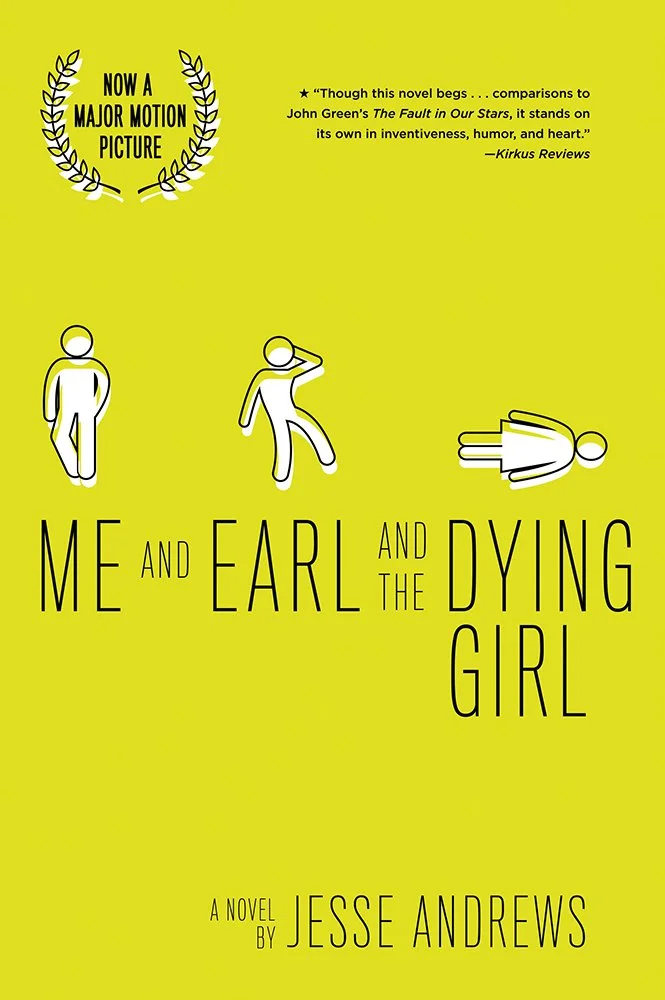
Me and Earl and the Dying Girl
- Publication Date:
- April 21st, 2015
- Publisher:
- Harry N. Abrams
- ISBN-13:
- 9781419719608
- ISBN-10:
- 1419719602
- Pages:
- 305
About Me and Earl and the Dying Girl
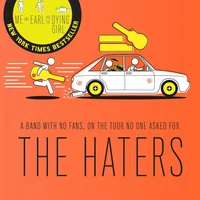
Me and Earl and the Dying Girl is Jesse Andrews's debut novel, originally published in 2012 by Harry N. Abrams. It follows Greg Gaines, a high school senior in Pittsburgh who has spent years developing a strategy for surviving school: stay friendly with every social group, join no group, make no strong impressions, keep all relationships at a comfortable remove. His only real friendship is with Earl Jackson, his co-conspirator in making deliberately terrible art-film parodies they never show anyone.
The plan is destroyed when Greg's mother forces him to spend time with Rachel Kushner, a classmate who has just been diagnosed with leukemia. Greg narrates the entire novel from the future, insisting that it is not a love story, that he is not an inspirational character, and that everything turned out badly. He is right on all three counts, more or less. The novel's tension comes from the gap between what Greg claims he feels and what the reader watches him actually feeling.
Earl is the novel's other crucial figure. He is Black and poor and brilliant, from a neighborhood dramatically different from Greg's, and he exists in Greg's narration with a kind of affectionate resentment — Greg understands that he needs Earl, cannot quite articulate how much, and spends the novel hovering on the edge of actually understanding his own life. Their friendship, and the terrible films they make together, is where the book's emotional core sits.
Structure, Voice, and Dark Humor
Me and Earl and the Dying Girl is structured as a confessional written by Greg after the events of the novel. He compulsively undercuts his own narration — dismissing his own feelings, warning readers away from fictional sentimentality, mocking the conventions of the very genre he's operating in. This structure is funny, but it's also precise: Greg's compulsive ironic deflection is exactly the kind of self-protection the novel is quietly dismantling.
The book is genuinely funny in a way that many YA novels about illness are not, and that humor is not a defense against its emotional weight but the vehicle through which the emotional weight arrives. Andrews makes readers laugh at Greg repeatedly before asking them to look at what Greg has actually lost, and what he never quite let himself have.
The 2015 film adaptation won the Audience Award and the Grand Jury Prize at Sundance, bringing significant attention to the novel. The film preserves much of Andrews's voice and structural approach while adapting the story for a medium that cannot maintain ironic narrative distance the same way prose can.
Why Me and Earl and the Dying Girl Has Been Banned
Me and Earl and the Dying Girl has been banned or challenged in 52 school districts across 12 states. The challenges cite the novel's language — which is frank, colloquial, and includes profanity — sexual references in Greg's narration, and in some cases the general subject matter of a teenager dealing with a friend's terminal illness.
Greg's voice is deliberately rough and resistant to uplift, which is what the novel requires. He is not trying to teach anyone anything, and the book is not trying to be a lesson. His language is the language of a real teenager avoiding the feelings he can't bear to have, and the refusal to clean that language up is part of honoring what the novel is about: the specific, un-sanitized texture of adolescent grief.
Where to Buy


Affiliate links may generate a small commission at no extra cost to you, which helps support this site.
About Jesse Andrews
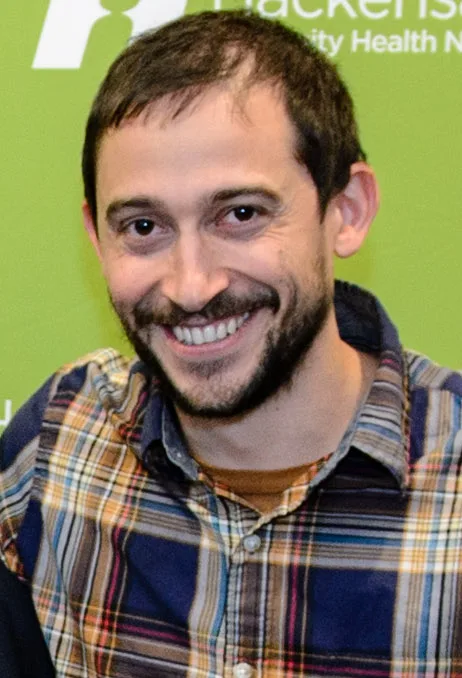
Jesse Andrews is an American novelist and screenwriter born in Pittsburgh, Pennsylvania, and a graduate of Harvard University. His debut novel, Me and Earl and the Dying Girl (2012), won the Cybils Award for Young Adult Fiction and was adapted into a Sundance Film Festival grand jury prize–winning film. He also wrote the screenplays for Pixar's Luca (2021) and the upcoming Hoppers.
Also by Jesse Andrews
Banned in Schools
Banned or challenged in 12 states across 52 school districts.
Florida 12 districts
- Charlotte County Public Schools Banned
- Duval County Public Schools Banned pending investigation
- Escambia County Public Schools Banned pending investigation
- Highlands School District Banned
- Hillsborough County Public Schools Banned Pending Investigation
- Leon County Schools Banned
- Nassau County School District Banned
- Okaloosa County School District Banned pending investigation
- Orange County Public Schools Banned pending investigation
- Pinellas County Schools Banned by restriction
- Seminole County Public Schools Banned
- Union County School District Banned
Georgia 3 districts
- Cobb County School District Banned
- Fulton County Schools Banned
- Marietta City Schools Banned
Iowa 19 districts
- Adel DeSoto Minburn Community School District Banned
- Bondurant-Farrar Community School District Banned pending investigation
- Central Lyon Community School District Banned
- Chariton Community School District Banned pending investigation
- Indianola Community School District Banned
- Lewis Central Community School District Banned
- Marshalltown Community School District Banned
- Nevada Community School District Banned
- Ottumwa Community School District Banned
- Red Oak School District Banned
- River Valley Community School District Banned
- Roland-Story Community School District Banned
- Rudd-Rockford-Marble Rock Community School District Banned
- Saydel Community School District Banned
- Shenandoah Community School District Banned
- Solon Community School District Banned
- Spencer Community School District Banned pending investigation
- Urbandale Community School District Banned
- Western Dubuque Community School District Banned
Maine 2 districts
- Hermon School Department Banned by restriction
- Maine School Administrative District #6 Banned by restriction
Minnesota 1 district
- St. Francis Area Schools Banned Pending Investigation
Missouri 1 district
- Cameron R-1 School District Banned by restriction
North Carolina 1 district
- Burke County Public Schools Banned
South Carolina 1 district
Tennessee 3 districts
- Knox County Schools Banned
- Rutherford County Schools Banned
- Wilson County Schools Banned
Texas 5 districts
- Conroe Independent School District Banned
- Lamar Consolidated Independent School District Banned
- Midland Independent School District Banned
- Nacogdoches Independent School District Banned by Restriction
- Plano Independent School District Banned
Virginia 3 districts
- Fluvanna School District Banned pending investigation
- King George County Schools Banned by Restriction
- Spotsylvania County Public Schools Banned
Wyoming 1 district
- Laramie County School District No. 1 Banned by restriction