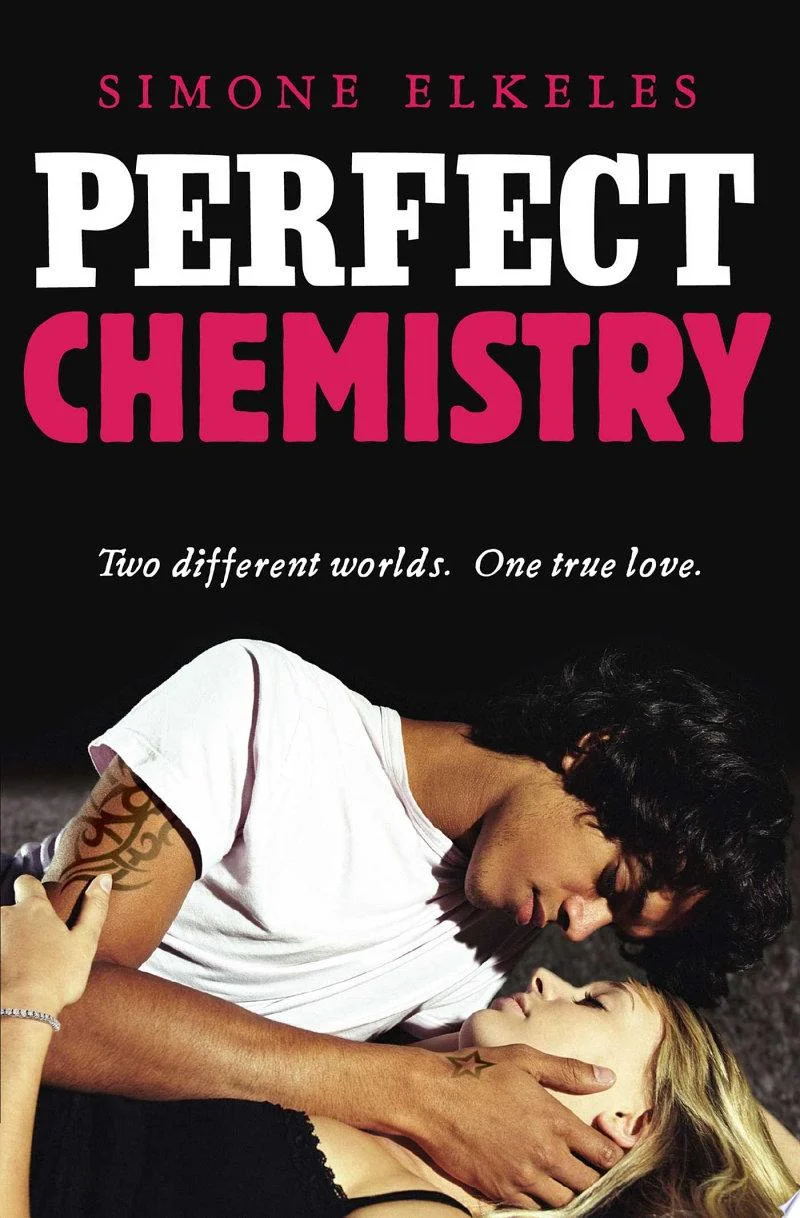
Perfect Chemistry
- Publication Date:
- November 10th, 2011
- Publisher:
- Simon and Schuster
- ISBN-13:
- 9780857076632
- ISBN-10:
- 0857076639
- Pages:
- 364
Why Perfect Chemistry Has Been Challenged
Objections to Perfect Chemistry have centered on its frank treatment of teenage sexual activity and romantic relationships, material that some parents and school boards consider inappropriate for the age group most likely to encounter the book in a school library. See more ↓
Challenged or banned in 5 states across 18 school districts.
Overview
Perfect Chemistry opens on the first day of senior year, when Brittany Ellis is assigned a lab partner she never would have chosen for herself: Alex Fuentes, a young man from the opposite side of town with gang ties and a reputation that precedes him. Brittany has spent years constructing an image of effortless success, and the pairing threatens to unsettle the careful surface she presents to her school and her boyfriend.
Alex, for his part, treats the assignment as a joke at first, even accepting a bet from friends that positions Brittany as a conquest rather than a person. Elkeles builds the novel around the slow collapse of that premise, as proximity forces both characters to drop their guard.
What follows is less a story about opposites attracting than about two people discovering that the images they project, of privilege on one side and toughness on the other, are covering for private struggles neither had planned to share.
A Story of Assumed Identities
Elkeles structures the novel around a familiar romantic setup, the good girl and the bad boy, but uses it to interrogate how thoroughly people can misjudge one another based on class, neighborhood, and reputation. Brittany's home life is not the picture of order her classmates assume, and Alex's involvement with gang culture is presented as circumstance rather than choice, a survival strategy shaped by his environment rather than a fixed character trait.
The book helped launch a long-running series and found a devoted readership among teen romance fans drawn to its dual narration and its willingness to let both leads carry real vulnerability rather than serving as foils for each other. Its popularity has also made it a recurring point of reference in discussions of how young adult romance handles class difference, gang life, and teenage sexuality without softening those subjects for a younger audience.
Why Perfect Chemistry Has Been Challenged
Objections to Perfect Chemistry have centered on its frank treatment of teenage sexual activity and romantic relationships, material that some parents and school boards consider inappropriate for the age group most likely to encounter the book in a school library. The novel's depiction of gang affiliation and related violence has drawn separate concern, with critics arguing that it normalizes or romanticizes behavior tied to criminal activity even as the narrative frames Alex's circumstances sympathetically. Language considered coarse or explicit has also been cited in challenge records. Taken together, these objections reflect broader debates over how much latitude YA romance should have in portraying sex, crime, and hardship realistically for teen readers. The book has been challenged or restricted in 5 states and 18 districts tracked in this catalog.
Where to Buy


Affiliate links may generate a small commission at no extra cost to you, which helps support this site.
Banned in Schools
Banned or challenged in 5 states across 18 school districts.
Florida 9 districts
- Clay County School District Banned
- Duval County Public Schools Banned pending investigation
- Escambia County Public Schools Banned pending investigation
- Hillsborough County Public Schools Banned Pending Investigation
- Martin County Schools Banned
- Orange County Public Schools Banned pending investigation
- Santa Rosa County Schools Banned pending investigation
- Union County School District Banned
- Volusia County Schools Banned Pending Investigation
Iowa 2 districts
- Chariton Community School District Banned pending investigation
- Northeast Community School District Banned pending investigation
North Carolina 1 district
- Burke County Public Schools Banned by restriction
Tennessee 2 districts
- Oak Ridge Schools Banned
- Rutherford County Schools Banned
Texas 4 districts
- Conroe Independent School District Banned
- Fort Worth Independent School District Banned
- Lamar Consolidated Independent School District Banned
- Nacogdoches Independent School District Banned by Restriction