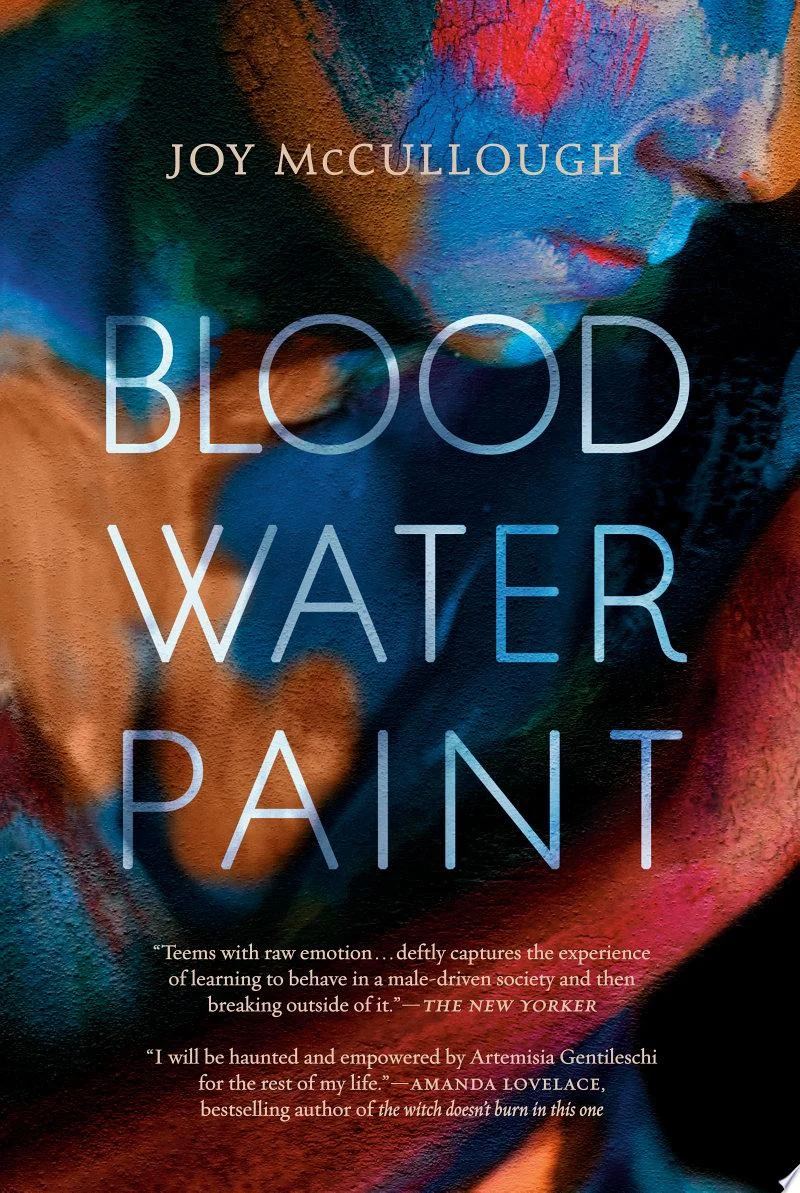
Blood Water Paint
- Publication Date:
- March 5th, 2019
- Publisher:
- Penguin
- ISBN-13:
- 9780735232136
- ISBN-10:
- 073523213X
- Pages:
- 322
Why Blood Water Paint Has Been Challenged
Some parents and administrators have pushed back on this title over its graphic rendering of sexual violence and its unvarnished portrayal of a legal system that scrutinized the victim more than her attacker. See more ↓
Challenged or banned in 3 states across 8 school districts.
Overview
Told in verse, this novel imagines the early life of Artemisia Gentileschi, a real painter working in Rome in the early seventeenth century. Orphaned by her mother's death, she is left with an unusual choice for a girl of her station: enter a convent or apprentice herself to her father's painting trade, grinding pigments and, eventually, picking up a brush herself. She proves far more gifted than the men around her are willing to admit.
The story turns on an assault Artemisia suffers and the reckoning that follows, as she must decide whether to stay silent or speak a truth that will cost her socially and personally. Her response is to keep painting, channeling her experience into work that outlasts the men who tried to diminish her.
Woven through her narrative are the biblical figures of Susanna and Judith, women whose stories of resisting and outlasting violence become both subject matter for Artemisia's canvases and a kind of companionship across centuries, giving her language for an experience she is otherwise told to keep quiet.
A Portrait Shaped by Silence and Speech
The verse format does much of the book's thematic work: short, fractured lines mirror a mind working through trauma in real time, giving the narrative an intimacy that denser prose might dilute. McCullough is less interested in relitigating a historical trial than in tracing how a young artist metabolizes violence into vision, insisting that making art can be both a private survival strategy and a public act of defiance.
The book also sits inside a broader conversation about how contemporary literature revisits historical women whose talents were minimized or erased by the men who controlled their circumstances. By pairing Artemisia with Susanna and Judith, the narrative suggests that women's testimony has always been doubted and always found ways to persist anyway, linking a seventeenth-century painter to present-day conversations about believing survivors. Its critical reception, including recognition from major literary awards, has largely centered on how unflinchingly it handles that material without losing its lyricism.
Why Blood Water Paint Has Been Challenged
High school readers are most often cited as the intended audience for objections, with critics arguing that the book's frank verse depiction of sexual assault is too graphic or emotionally intense for teenage readers, even within an assigned literary or historical context. Some challenges point specifically to the passages describing the attack and its aftermath, arguing they linger on details that go beyond what is necessary to convey the character's experience.
Other objections focus on the book's unflinching treatment of a legal and social system that interrogated the victim rather than her attacker, with some readers uncomfortable seeing that dynamic presented without softer framing for a young audience. Still others have raised general concerns about sexual content in school libraries, without distinguishing between exploitative depictions and ones meant to illuminate historical injustice. In this catalog, the book has been formally challenged in 3 states and 8 districts, reflecting how contested its subject matter has become in curriculum and library debates even as it continues to draw praise from literary critics.
Where to Buy




Affiliate links may generate a small commission at no extra cost to you, which helps support this site.
Banned in Schools
Banned or challenged in 3 states across 8 school districts.
Florida 5 districts
- Brevard Public Schools Banned
- Hillsborough County Public Schools Banned Pending Investigation
- Lake County Schools Banned pending investigation
- Union County School District Banned
- Volusia County Schools Banned Pending Investigation