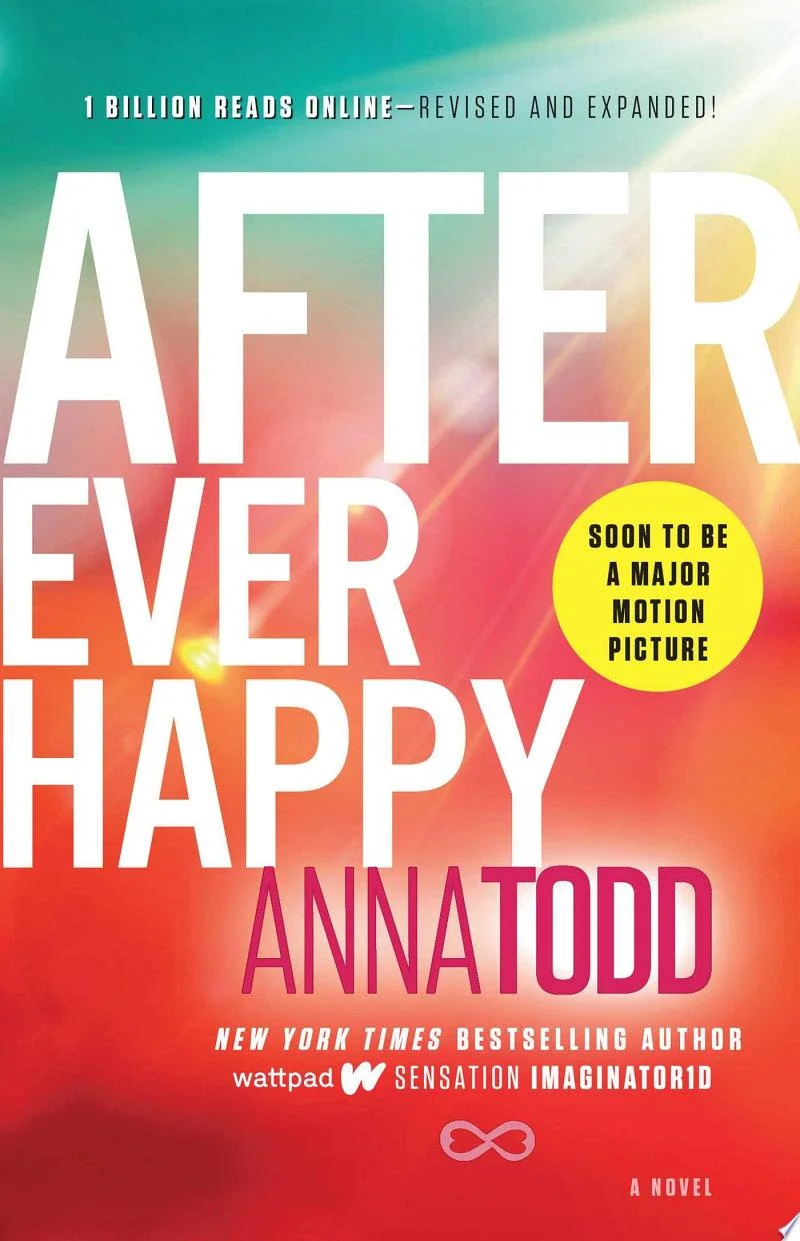
After Ever Happy
by
Anna Todd
2015
Simon and Schuster
512 pages
English
- Publication Date:
- February 24th, 2015
- Publisher:
- Simon and Schuster
- ISBN-13:
- 9781501106415
- ISBN-10:
- 1501106414
- Pages:
- 512
Why After Ever Happy Has Been Challenged
Critics of the novel worry that its portrayal of an intense, sometimes controlling romance sends the wrong message to the teenage readers drawn to it, compounding concerns about its graphic content and heavy subject matter.
See more ↓
Challenged or banned in
3 states
across
4 school districts.
<h2>Overview</h2>
<p>"After Ever Happy" is the fourth entry in Anna Todd's "After" series, a saga that grew out of online fan fiction before becoming a publishing phenomenon and film franchise. The book picks up the on-again, off-again romance of Tessa Young and Hardin Scott at its most fractured point, as revelations about both of their families force each character to confront where their anger, insecurity, and need for control actually come from.</p>
<p>Where earlier books in the series leaned on the drama of will-they-won't-they attraction, this installment pushes further into the emotional wreckage that follows two young people who have already hurt each other repeatedly. A sudden loss in Tessa's life collides with long-hidden truths about Hardin's past, and the novel spends much of its length asking whether their bond is a source of strength or a shared wound neither of them knows how to heal.</p>
<p>By this point in the series, Todd has largely abandoned the idea that Tessa is a passive, steadying presence for Hardin. Instead, the book traces how much she has changed to accommodate him, and whether that change has come at too high a cost.</p>
<h2>Context and Reception</h2>
<p>The "After" series occupies an unusual place in contemporary publishing history: it began as reader-generated content shared chapter by chapter on a fan fiction platform, accumulating an enormous, devoted online readership before a traditional publisher picked it up. That origin shaped both its style, serialized and emotionally immediate, and its audience, largely young adult and new adult readers who followed Tessa and Hardin's relationship in real time before it ever appeared in bookstores.</p>
<p>Critically, the series has drawn a sharp divide. Admirers point to its raw, unfiltered depiction of young love and its success in capturing an obsessive, all-consuming relationship dynamic that resonates with readers who came of age reading it online. Detractors argue that the same qualities romanticize a relationship built on volatility and possessiveness, a tension that becomes more pronounced in "After Ever Happy" as the characters' pasts, and the damage those pasts inflict on their present, take center stage. The book sits at the intersection of romance publishing's commercial power and ongoing debates about what young adult and new adult fiction should model for its readers.</p>
<h2>Why After Ever Happy Has Been Challenged</h2>
<p>A recurring complaint brought before review committees is that the novel presents an unhealthy relationship as aspirational rather than cautionary, with parents arguing that scenes of jealousy, control, and emotional volatility between Tessa and Hardin are framed as passion rather than warning signs for the teen readers who make up much of the book's audience. Reviewers have also flagged its explicit sexual content and coarse language as inappropriate for school library shelves, particularly in districts where the "After" series is shelved alongside titles intended for younger teens. Additional objections center on the book's frank treatment of trauma, family dysfunction, and substance abuse, material that some committees have judged too mature or too bleak for adolescent readers without additional context or guidance. Taken together, these concerns have led to the title being challenged in 3 states and 4 districts tracked in this catalog, reflecting the broader debate over how explicit romantic fiction should be handled in school settings.</p>
Where to Buy
Affiliate links may generate a small commission at no extra cost to you, which helps support this site.
Banned in Schools
Banned or challenged in
3 states
across
4 school districts.