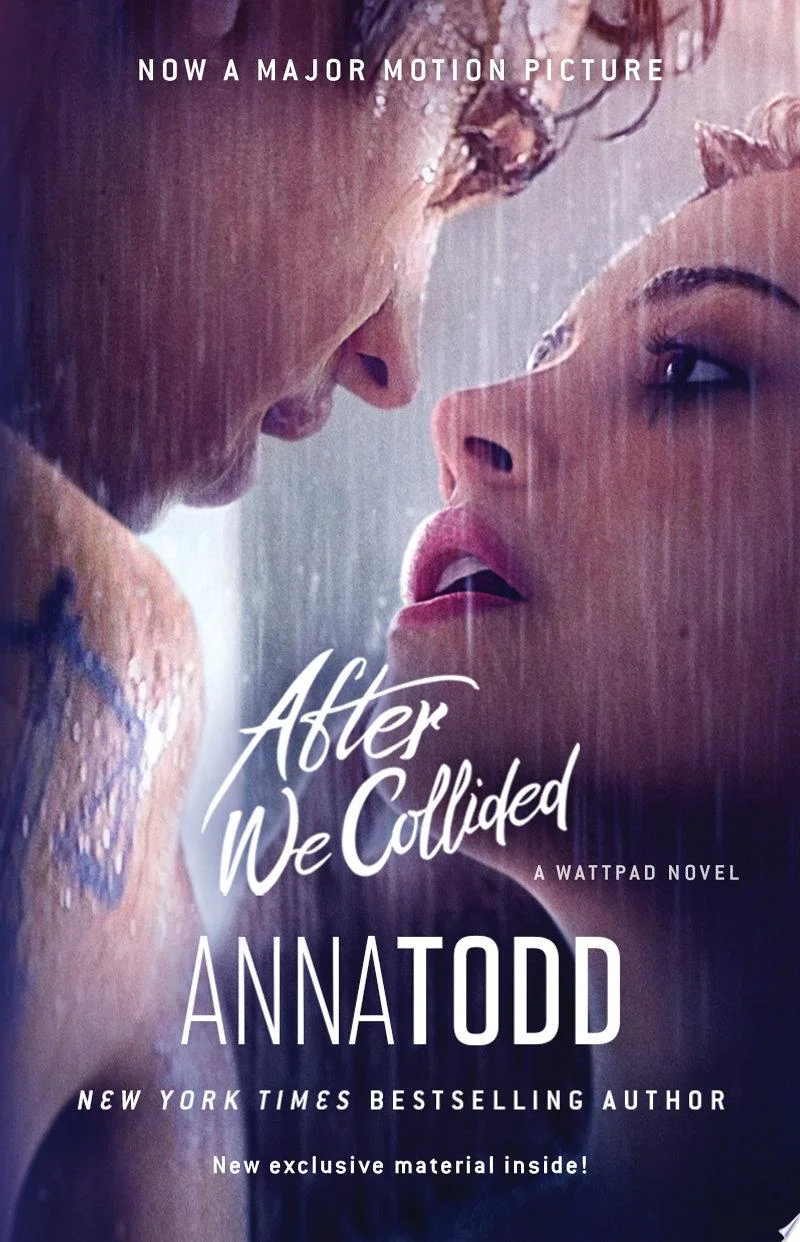
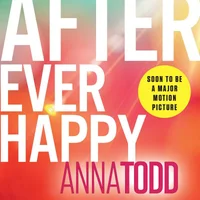
After We Collided
by Anna Todd
- Publication Date:
- November 25th, 2014
- Publisher:
- Simon and Schuster
- ISBN-13:
- 9781476792491
- ISBN-10:
- 1476792496
- Pages:
- 704
Why After We Collided Has Been Challenged
Critics have taken issue less with the story itself than with its reach, arguing that a novel built around explicit intimacy and a turbulent, sometimes controlling romance lands disproportionately in the hands of readers too young for it. See more ↓
Challenged or banned in 3 states across 3 school districts.
Overview
After We Collided picks up the story of Tessa Young in the wake of the breakup that closed the first After novel, following her as she tries to rebuild a version of college life that doesn't revolve around Hardin. That effort doesn't last. Anna Todd keeps the two circling back toward each other, and the novel spends most of its length tracing the push and pull between Tessa's attempts at independence and the gravitational force Hardin continues to exert on her choices.
The book leans further into Hardin's instability than its predecessor did, giving him a rotating cast of complications — new arrivals in his orbit, old grudges, and a temper that Tessa keeps absorbing and excusing. Much of the tension comes from watching Tessa recalibrate what she's willing to tolerate in the name of love, often against the visible objections of the friends and family around her.
As a middle volume in a longer series, the book is less concerned with resolution than with escalation: new entanglements are introduced, old wounds reopen, and the central relationship becomes more consuming rather than more stable, setting up the conflicts that carry into the later installments.
A Fandom Story Grown Into a Franchise
After We Collided can't really be separated from its origins. The After series began as Wattpad fan fiction built around the members of One Direction, and Todd's decision to file off the real-world names and reshape it into original fiction is part of what makes the books interesting as a case study — they carry the pacing, intensity, and reader-feedback loops of serialized online fiction into a traditionally published format. That history helps explain some of the novel's defining traits: the heavy emphasis on emotional extremity, the compressed timeline of intimacy and conflict, and a devotion to the central couple's chemistry over subplot or worldbuilding.
The book's popularity also says something about its audience. It found an enormous readership among teenage and young-adult readers who discovered it online before it reached shelves, which has made it something of a fixture in conversations about what "new adult" fiction is and who actually reads it. That gap — between where the book is shelved and who arrives to read it — runs through much of the discussion around the series, including the disagreements it has generated wherever it's been placed in library collections.
Why After We Collided Has Been Challenged
Much of the friction around After We Collided centers less on whether the book should exist than on where it belongs — objectors have generally argued it's mismatched to the shelves and age groups it's often placed with rather than arguing for its removal outright. The core complaint is that the novel's frank descriptions of sex and its depiction of an often manipulative, emotionally volatile relationship are being handed to readers younger than the material anticipates, given how heavily the series is marketed toward and consumed by teenagers. Some challenges also point to the book's substance abuse references and its portrayal of a relationship marked by jealousy, control, and recurring emotional harm, arguing that the story presents that dynamic with more sympathy than scrutiny. Records maintained by this catalog show the title has drawn formal challenges in 3 states and 3 school districts, reflecting a recurring disagreement over its suitability for younger or school-based audiences rather than any consensus that the book should be unavailable altogether.
Where to Buy


Affiliate links may generate a small commission at no extra cost to you, which helps support this site.
Also by Anna Todd
Banned in Schools
Banned or challenged in 3 states across 3 school districts.
Florida 1 district
- Escambia County Public Schools Banned pending investigation
Iowa 1 district
Tennessee 1 district
- Wilson County Schools Banned