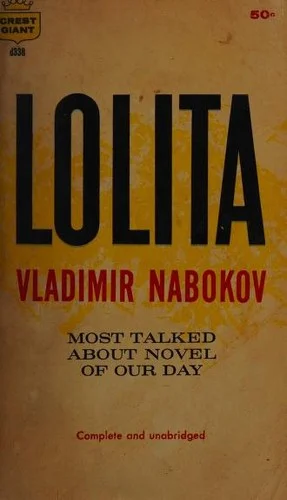
Lolita
- Publication Date:
- January 1st, 2018
- Publisher:
- Independently Published
- ISBN-13:
- 9781977065346
- ISBN-10:
- 1977065341
Why Lolita Has Been Challenged
Critics argue the novel's seductive prose style risks softening a reader's moral footing on what is, underneath the artistry, an account of a child's exploitation. See more ↓
Challenged or banned in 4 states across 5 school districts.
Overview
Vladimir Nabokov's novel is narrated entirely by Humbert Humbert, a European literature professor whose cultivated voice and love of wordplay carry the reader through an account of his years-long sexual obsession with Dolores Haze, the twelve-year-old girl who becomes his stepdaughter. "Lolita" is Humbert's own private name for her, and the novel is structured as his retrospective confession, written with the fluency of a man trying to talk his way out of judgment.
Nabokov composed the book in English, a language he had adopted later in life, and it first reached readers through a Paris publisher in 1955 after American houses declined it. He later produced a Russian-language version himself, released in New York more than a decade afterward, treating the translation as its own act of authorship rather than a simple conversion of the text.
The novel is frequently anthologized alongside Nabokov's other work from the same period, reflecting how central it became to his standing as a novelist working in English.
A Narrator's Voice and Its Afterlife
Much of the critical conversation around the novel centers on the distance between Humbert's eloquence and the acts he describes. His narration is dense with literary allusion, dark humor, and self-aware wordplay, qualities that invite readers to admire the telling even as the events being told demand condemnation. Scholars have long treated this tension as the novel's central device: Nabokov builds an unreliable narrator so persuasive that the reader must actively resist being charmed by him, turning the act of reading into a test of moral attention.
That design is also why the book unsettled its earliest audiences and continues to do so. Its initial rejection by American publishers and its arrival through a press better known for erotica shaped its reputation before most readers had encountered a single page. Over time, the novel's standing shifted from scandal to staple of university syllabi, where it is now commonly read for its narrative structure and prose style as much as for its subject. Within Nabokov's broader output, it sits alongside other works built around elaborate, deceptive narrators and layered wordplay, making it a frequent reference point for discussions of his technique even among readers wary of its content.
Why Lolita Has Been Challenged
The passages most often cited in objections are Humbert's extended, euphemistic descriptions of his sexual contact with Dolores, rendered in the same polished, digressive style he uses for everything else in his confession. Because the abuse is filtered through his self-pitying, self-justifying perspective rather than described with explicit condemnation, objectors argue the prose can read as an attempt to elicit sympathy for the abuser, or even to romanticize the relationship, rather than as a clear-eyed account of harm done to a child. The concern is less about isolated graphic language than about tone: a narrator who frames predation as love, and whose voice is engineered to be persuasive.
These objections have translated into real restrictions on access. The novel has drawn challenges in four states and five school districts tracked in this catalog, with critics typically citing its sexual content involving a minor and the fear that its literary sophistication could obscure rather than illuminate the nature of the abuse for younger or less critical readers. Defenders counter that the novel's entire architecture depends on readers recognizing and rejecting Humbert's self-serving account, making it a study of manipulation rather than an endorsement of it. That disagreement over how to read an unreliable narrator's testimony remains at the heart of the book's ongoing controversy.
Where to Buy




Affiliate links may generate a small commission at no extra cost to you, which helps support this site.
Banned in Schools
Banned or challenged in 4 states across 5 school districts.
Florida 1 district
- Duval County Public Schools Banned pending investigation
North Carolina 1 district
- Catawba County Schools Banned by restriction
Texas 2 districts
- Fort Bend Independent School District Banned - Professionally Weeded
- Nacogdoches Independent School District Banned by Restriction