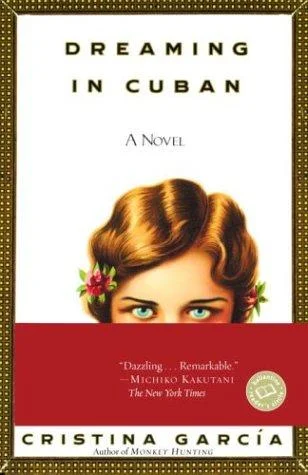
Dreaming in Cuban
- Publication Date:
- January 1st, 1993
- Publisher:
- Espasa Calpe
- ISBN-13:
- 9788423979035
- ISBN-10:
- 8423979032
- Pages:
- 322
Why Dreaming in Cuban Has Been Challenged
Objections to the novel have generally centered on its frank treatment of sexuality and its unfiltered depiction of women's desires, along with passages involving intimate relationships that some reviewers of school reading lists have deemed inappropriate for younger students. See more ↓
Challenged or banned in 3 states across 3 school districts.
Overview
Cristina García's debut novel traces one family's fracture across the Florida Strait, following a grandmother, mother, and daughter whose loyalties to Cuba and to each other pull in opposite directions after 1959. The grandmother remains on the island, devoted to the revolution and increasingly estranged from relatives who left; her daughter builds a new life in a Cuban emigre pocket of Brooklyn, carrying resentments that never fully settle.
García moves between Havana in the 1970s and '80s and this transplanted New York community, letting the two settings comment on each other. The novel is less concerned with plot mechanics than with the accumulated texture of memory, letters, and half-understood inheritance passed between women who rarely agree but cannot quite let go of one another.
Politics runs through the book, but so does something stranger: a thread of folk belief and private ritual that shadows the family's more public arguments about socialism, exile, and belonging. The result is a portrait of a family bound as much by what divides it as by blood.
A Family Story Refracted Through History
Published in 1992, the novel arrived as part of a wave of Cuban American fiction reckoning with the long aftermath of the revolution from a distance of decades, and it helped open space for women's interior lives — desire, faith, ambivalence — within a literary landscape that had largely framed the exile experience in political terms. García, who left Cuba as a child, wrote a book more interested in the emotional residue of displacement than in taking a side in the ideological quarrel that split her characters' family.
The novel's structure, moving fluidly across time and between narrators, mirrors its subject: a family whose members hold incompatible versions of the same history. That refusal to resolve into a single, tidy political stance is often cited as the book's most distinctive quality, and it has kept the novel in conversation with later works of Cuban American and diaspora literature.
Why Dreaming in Cuban Has Been Challenged
Objections to the novel have generally centered on its frank treatment of sexuality and its unfiltered depiction of women's desires, along with passages involving intimate relationships that some reviewers of school reading lists have deemed inappropriate for younger students. The book's political content — its sympathetic, unresolved portrayal of a Castro loyalist within the family — has also drawn scrutiny from those uncomfortable with a narrative that declines to render a clear verdict on the revolution. Additionally, some challenges have pointed to the novel's incorporation of Santería and other spiritual practices as objectionable religious content. Within this catalog, Dreaming in Cuban has been the subject of 3 state and 3 district challenges.
Where to Buy




Affiliate links may generate a small commission at no extra cost to you, which helps support this site.
Banned in Schools
Banned or challenged in 3 states across 3 school districts.