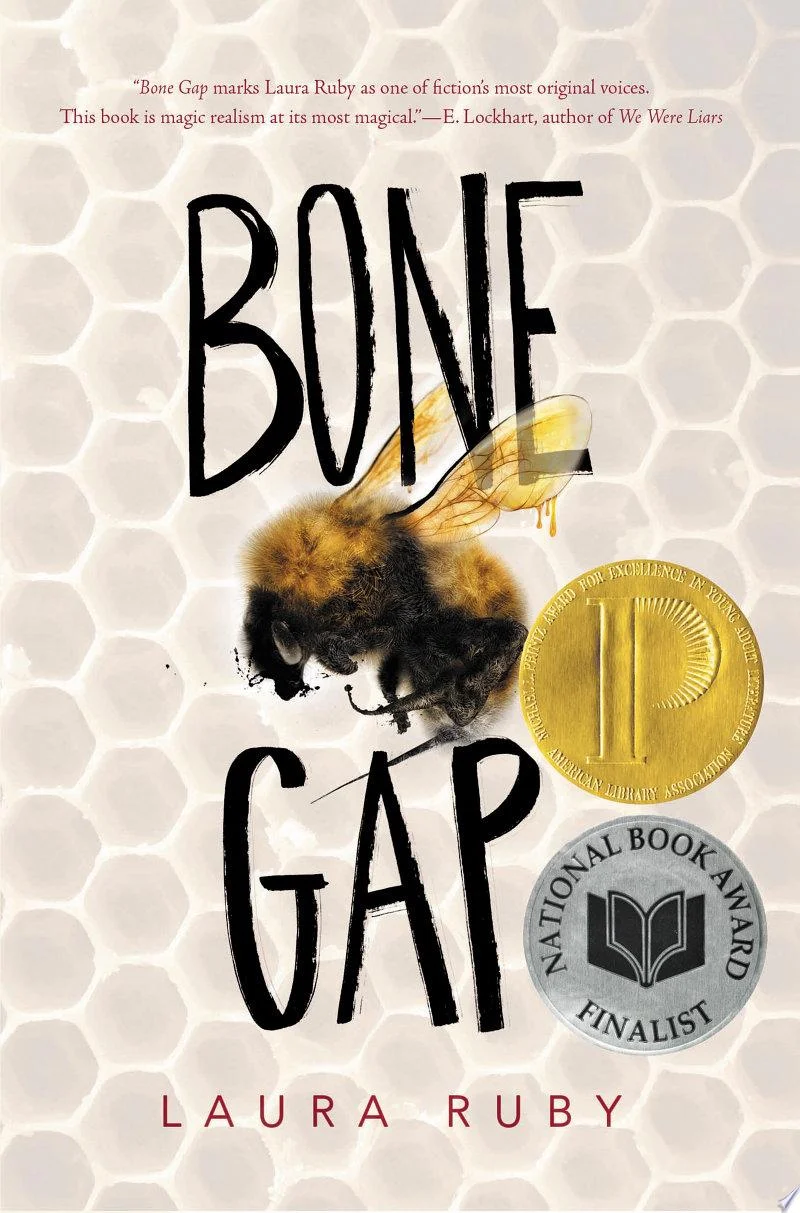
Bone Gap
by Laura Ruby
- Publication Date:
- March 3rd, 2015
- Publisher:
- Harper Collins
- ISBN-13:
- 9780062317636
- ISBN-10:
- 0062317636
- Pages:
- 210
Why Bone Gap Has Been Challenged
Much of the pushback against this novel centers on its unflinching portrayal of a young woman's abduction and the predatory control she endures while held captive. See more ↓
Challenged or banned in 2 states across 5 school districts.
Overview
Laura Ruby's novel opens with an absence: Roza, a young woman new to the small town of Bone Gap, has vanished, and almost no one seems troubled enough to look very hard for her. The town's residents settle quickly into the assumption that she simply left, the way people in Bone Gap tend to explain away anything that doesn't fit a tidy story.
Finn, one of the few people who witnessed Roza's abduction, knows better, but he cannot describe the man responsible, and his halting, uncertain account only deepens the town's doubt in him. The narrative moves between Finn's search for the truth, Roza's own experience in captivity, and the surrounding community's habit of seeing people as simpler and flatter than they really are.
Ruby builds the story around the unreliability of appearances, using elements of magical realism to blur the line between the town's folklore and its everyday cruelties. The result is a coming-of-age narrative that resists easy resolution even as it moves toward one.
A Story About Perception and Its Failures
Bone Gap is less interested in solving a mystery than in examining why the people around Finn and Roza fail to truly see either of them. Finn's difficulty recognizing faces becomes a lens for the book's larger concern: how quickly communities reduce individuals to surface impressions, and how much is lost, or endangered, when that surface reading is mistaken for the whole truth.
The novel arrived amid growing attention to the way contemporary young adult fiction handles trauma and identity with more ambiguity than earlier generations of the genre allowed. Its recognition with the Michael L. Printz Award and a National Book Award nomination reflected a critical appetite for YA writing that trusts teenage readers with structural complexity and emotional unease rather than resolving both neatly by the final chapter. Within Ruby's body of work, the book marked a turn toward blending realist small-town settings with fable-like logic, a mode she would continue to explore in later fiction.
Why Bone Gap Has Been Challenged
Sexual content and violence tied to Roza's abduction sit at the center of most objections to the book. Because the narrative depicts her captivity and the coercive control exerted over her, some reviewing committees have flagged the material as too mature or too disturbing for younger readers encountering it in a school setting. The novel's handling of gendered violence, including the vulnerability Roza faces as a young woman viewed primarily through her appearance, has also drawn scrutiny from those who feel the subject matter requires more guidance or context than a classroom or library shelf provides on its own. In the catalog tracked here, Bone Gap has been the subject of challenges in 2 states and 5 districts, generally arising from these concerns about mature themes rather than from objections to the book's literary technique.
Where to Buy




Affiliate links may generate a small commission at no extra cost to you, which helps support this site.
Banned in Schools
Banned or challenged in 2 states across 5 school districts.
Florida 4 districts
- Escambia County Public Schools Banned pending investigation
- Hillsborough County Public Schools Banned Pending Investigation
- Union County School District Banned
- Volusia County Schools Banned Pending Investigation