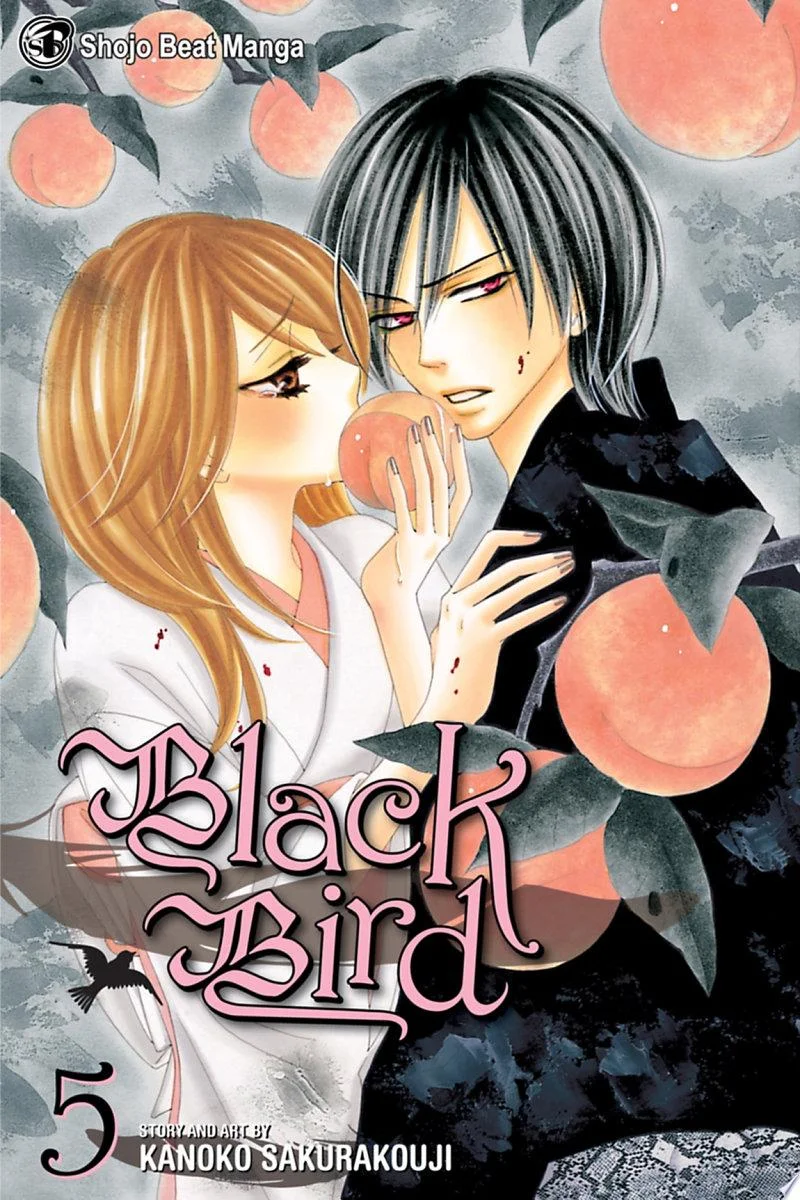
Black Bird, Vol. 5
- Publication Date:
- July 7th, 2011
- Publisher:
- VIZ Media LLC
- ISBN-13:
- 9781421546827
- ISBN-10:
- 1421546825
- Pages:
- 196
Why Black Bird, Vol. 5 Has Been Challenged
Debate over this installment centers on a manga aimed at teen readers depicting a young woman's intimacy and fertility being treated as bargaining chips in a family succession dispute. See more ↓
Challenged or banned in 1 state across 1 school district.
Overview
"Black Bird, Vol. 5" continues the story of Misao Harada, a teenager whose rare blood marks her as the destined bride in an old tengu prophecy. Pursued by demons who covet her for the power and fortune she can grant them, Misao has placed her safety in the hands of Kyo, the tengu clan leader who both protects her and claims her as his future wife. By this point in the series, the two have settled into an uneasy domestic rhythm, but the demands of Kyo's world keep intruding on anything resembling a normal relationship.
In this installment, that intrusion takes a sharper form. Kyo's grandfather, anxious to lock in the prophecy's benefits and settle the question of succession, pushes for Misao to bear a child, and makes clear he has no particular preference for which of his grandsons fathers it. The ultimatum forces Kyo into a corner: delay too long and he risks losing both Misao and his claim to lead the clan, yet he remains strangely reluctant to take the one step that would seal their bond.
That reluctance becomes the volume's central tension. Kyo's hesitation is tied to a looming consequence hinted at but not yet explained, giving the romance a shadow of foreboding even as external pressures from the clan close in around the couple.
Themes and Context
"Black Bird" belongs to a long tradition of shojo and josei manga that pairs supernatural world-building with the conventions of romance: a vulnerable heroine, a powerful and possessive love interest, and a fated bond that overrides ordinary courtship. Kanoko Sakurakōji uses the prophecy framework to raise questions the genre often sidesteps gently and this volume confronts more directly, namely what it means for a young woman's body and future to be treated as an asset by the people around her, including the man who loves her.
The grandfather's demand for an heir turns succession politics into a pressure applied directly to Misao's autonomy, and the manga is candid about the discomfort that creates, even as it stays within the register of a romantic drama rather than a social critique. Kyo's own hesitation complicates the usual rescue-and-claim dynamic of the genre, suggesting that desire and duty pull against each other even for the character holding the most power in the relationship. The series has remained a durable presence in English-language manga catalogs for its blend of melodrama, family intrigue, and slow-building romantic stakes, and this volume sits at a hinge point where those elements converge most directly.
Why Black Bird, Vol. 5 Has Been Challenged
Much of the dispute over this volume comes down to where it belongs on a shelf rather than whether it has value at all: librarians and parents have disagreed over whether a manga marketed to older teens, but illustrated in a style often associated with younger readers, is suited to school library collections. The series is formally cataloged for mature teen or adult audiences, and the objections raised tend to center on that boundary.
The substance of the concern focuses on the volume's sexual content and the circumstances surrounding it. Critics point to the explicit framing of pregnancy as a political obligation, with Misao's body discussed by Kyo's grandfather as a vessel for securing clan succession rather than as her own choice to make, and to the intimate scenes between Misao and Kyo that result from this pressure. Some readers have also raised concerns about the power imbalance embedded in the premise itself, given that Misao's relationship with Kyo began from a position of dependency and protection rather than equal footing. These objections have translated into a small number of formal challenges, with the book recorded as challenged in one state and one school district in this catalog's tracking.
Where to Buy




Affiliate links may generate a small commission at no extra cost to you, which helps support this site.
About Kanoko Sakurakōji
Kanoko Sakurakōji is a Japanese manga artist who writes shōjo manga for Shogakukan's magazine Betsucomi. She is best known for Backstage Prince and Black Bird, which won a Shogakukan Manga Award in 2009. Black Bird was published in English by Viz Media, and sixteen of its volumes appear in this database of challenged books.
Also by Kanoko Sakurakōji

Banned in Schools
Banned or challenged in 1 state across 1 school district.
Florida 1 district
- Escambia County Public Schools Banned pending investigation