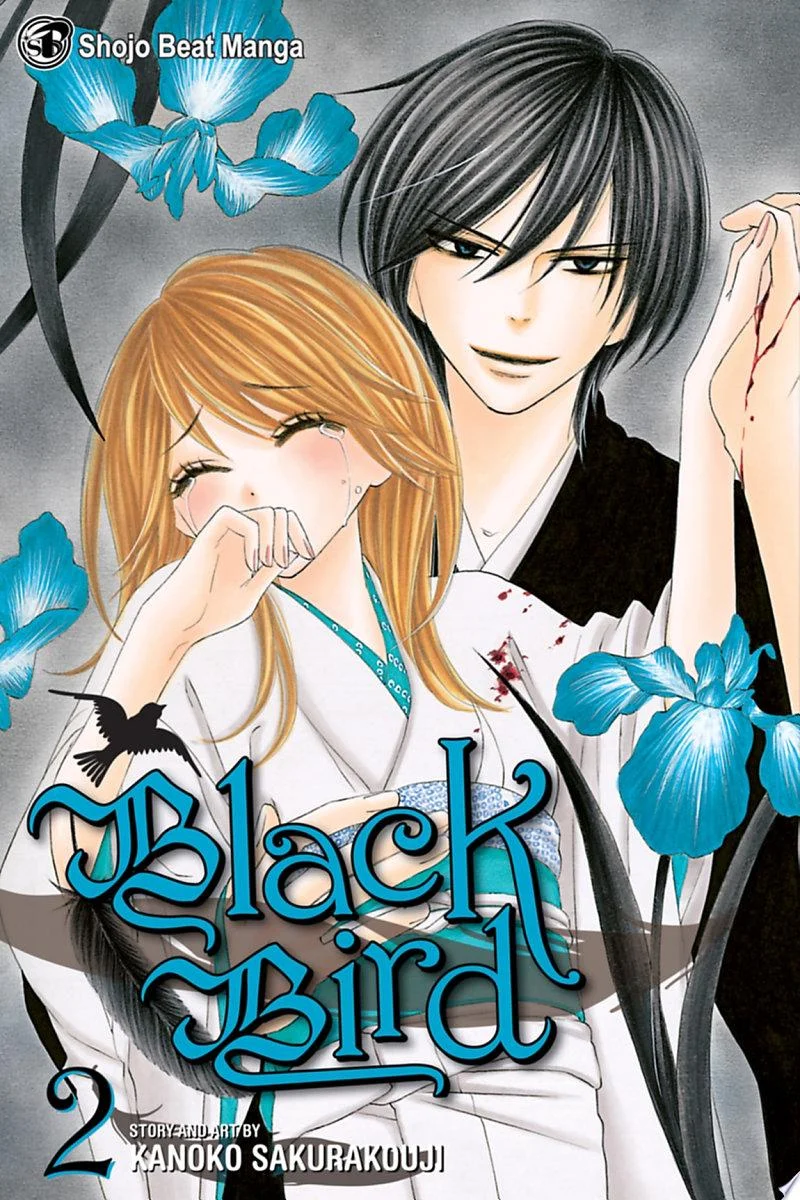
Black Bird, Vol. 2
- Publication Date:
- July 7th, 2011
- Publisher:
- VIZ Media LLC
- ISBN-13:
- 9781421548524
- ISBN-10:
- 1421548526
- Pages:
- 196
Why Black Bird, Vol. 2 Has Been Challenged
Critics have taken issue with pairing a graphic-novel format popular among younger teens with a storyline that treats a controlling, sexually charged relationship as romantic rather than alarming. See more ↓
Challenged or banned in 1 state across 1 school district.
Overview
The second volume of Black Bird continues Misao Harada's uneasy alliance with Kyo, the leader of the Tengu demon clan and the one figure standing between her and the many spirits who covet her rare, prophetic blood. Their bond stretches back to childhood, but the boy she remembers bears little resemblance to the commanding, possessive demon lord now at her side.
Sakurakōji builds the volume around that gap between memory and present reality. Misao is drawn to Kyo in ways she can't fully explain, even as she recognizes that his protection comes bundled with an agenda: fulfilling a prophecy that ties her fate to his. The romance and the danger are inseparable, and neither Misao nor the reader is meant to feel entirely at ease with that arrangement.
As new demons and rivals complicate the story, the volume keeps circling a single question — whether affection offered alongside self-interest can still be called genuine, and whether Misao has any real power to choose in a situation designed to make choice feel beside the point.
A Romance Built on Uneven Ground
Black Bird belongs to a tradition of supernatural shojo romance in which human heroines are pursued by powerful, otherworldly men whose desire is entangled with possession and consequence. What distinguishes Sakurakōji's series within that tradition is how openly it acknowledges the imbalance: Kyo's interest in Misao is never presented as uncomplicated devotion, and the story repeatedly asks readers to sit with the discomfort of a heroine whose safety and romantic life are controlled by the same figure.
The series found a wide readership in serialized form and in English-language translation, part of a broader wave of manga that brought darker, more adult-inflected romance narratives to shelves alongside lighter teen fare. That crossover positioning — a story with horror-tinged stakes and mature relationship dynamics, packaged in a format long associated with younger manga readers — is central to how the book has been received and, at times, contested.
Why Black Bird, Vol. 2 Has Been Challenged
Much of the disagreement over this volume centers less on whether it belongs in a library system at all than on where it should sit — whether a title with this level of sexual content and coercive relationship dynamics is appropriately shelved among general teen or young-adult graphic novels. Critics point to the volume's depiction of a relationship in which affection, danger, and sexual pursuit are tightly interwoven, arguing that its romanticized framing of a controlling, more powerful partner sends an unhealthy message to younger readers who may not have the context to read it critically. Others raise concerns about explicit sexual content appearing in a visual medium that can be skimmed quickly and out of context. The volume has been formally challenged in one state and one district tracked in this catalog, disputes that reflect this broader tension between the manga's popularity with teen readers and unease about the material itself.
Where to Buy



Affiliate links may generate a small commission at no extra cost to you, which helps support this site.
Also by Kanoko Sakurakōji
Banned in Schools
Banned or challenged in 1 state across 1 school district.
Florida 1 district
- Escambia County Public Schools Banned pending investigation