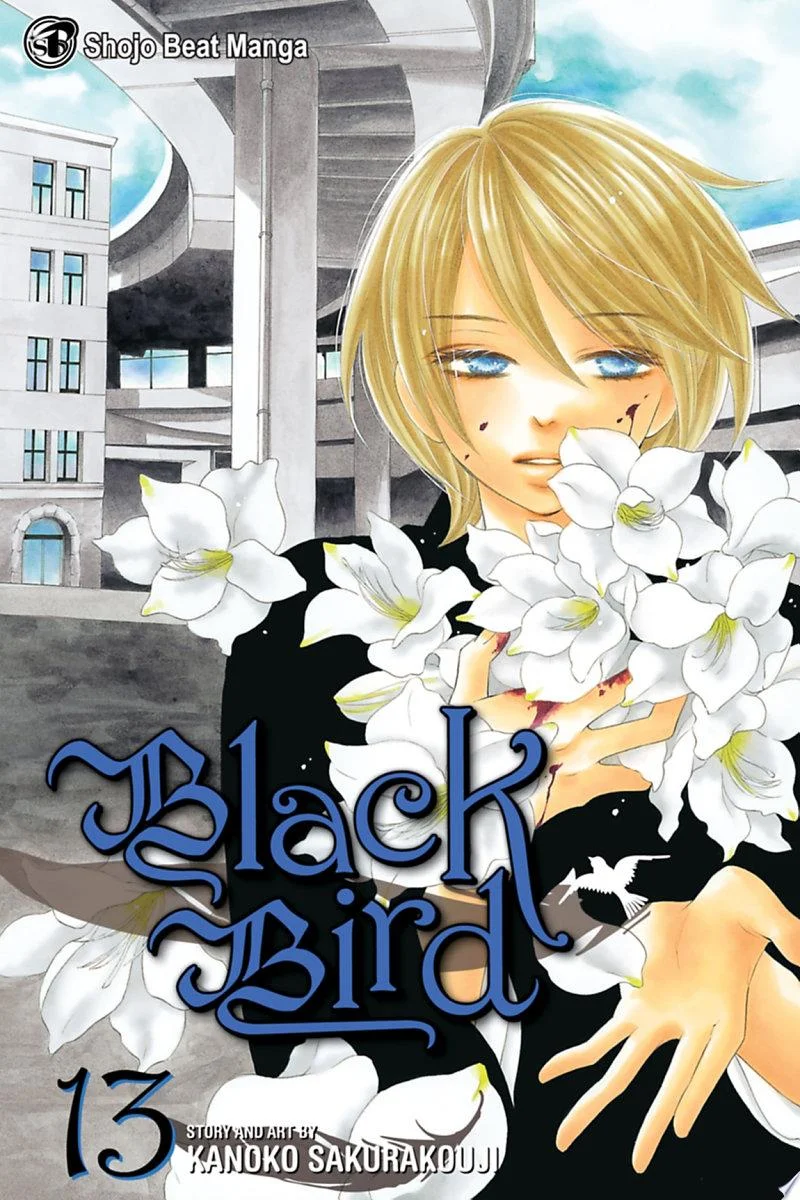
Black Bird, Vol. 13
- Publication Date:
- March 19th, 2012
- Publisher:
- VIZ Media LLC
- ISBN-13:
- 9781421550381
- ISBN-10:
- 1421550385
- Pages:
- 196
Why Black Bird, Vol. 13 Has Been Challenged
Objectors to this volume have generally focused on its blending of romantic fantasy with coercive, sexually charged power dynamics, arguing the material is unsuited to the young readers the series attracts. See more ↓
Challenged or banned in 1 state across 1 school district.
Overview
Volume 13 continues the long-running conflict at the heart of Kanoko Sakurakōji's Black Bird, as the scheming Sho advances his campaign against his brother Kyo by systematically dismantling the circle of guardians around him. Having already worn down several of the Eight Daitengu, Sho now turns his attention to Hoki, whose obscured history makes him a uniquely vulnerable target.
The volume centers on whether Hoki can resist the pressure Sho brings to bear, or whether the very loyalty that binds him to Kyo will be twisted into a liability. As with earlier entries in the series, the tension is built less around physical confrontation than around manipulation, divided allegiances, and the slow unearthing of a character's past.
Readers already invested in the series' central romance and its supernatural power struggles will find the stakes narrowed here to a single, intimate battle of will, even as the larger war between the two brothers looms over every decision.
Power, Loyalty, and the Cost of Protection
Across its run, Black Bird has used its tengu mythology as a framework for exploring what protection actually costs the people who provide it. The Eight Daitengu are not incidental muscle; each has a personal history that Sakurakōji gradually reveals, and Sho's strategy of isolating them one by one turns the series' worldbuilding into a character study by attrition. Hoki's arc in this volume fits that pattern, using a concealed past not merely as a plot twist but as a way of asking how much of a person's devotion can survive being weaponized against them.
The series occupies a particular niche within shoujo manga: it pairs a conventional destined-romance premise with a much darker undercurrent of coercion and possessiveness, which has made it both a commercial success in serialization and a recurring point of debate among readers and critics about where the genre's romantic tropes shade into something more troubling. Volume 13 arrives deep enough into that run that its meaning depends heavily on the accumulated history of Kyo, Sho, and the Daitengu established in prior volumes.
Why Black Bird, Vol. 13 Has Been Challenged
Critics of the series have often praised Sakurakōji's confident pacing and her ability to sustain a sprawling ensemble conflict over many volumes, even as the same qualities that drive its popularity have made it a target for restriction. Challenges to this volume, as with the series generally, center on its handling of sexual content and coercive relationship dynamics, which some parents, educators, and library boards consider inappropriate for the teen readers who make up much of its audience. The concern is less about isolated language than about a broader pattern in the series of blending romantic and sexual material with scenes of manipulation and non-consensual pressure, presented within a fantasy structure that some reviewers argue normalizes those dynamics rather than critiquing them. This volume has drawn one recorded challenge, spanning one state and one school district in this catalog, reflecting the narrower, title-specific scrutiny that individual entries in long manga series sometimes receive even when the objections trace back to concerns about the series as a whole.
Where to Buy




Affiliate links may generate a small commission at no extra cost to you, which helps support this site.
Also by Kanoko Sakurakōji
Banned in Schools
Banned or challenged in 1 state across 1 school district.
Florida 1 district
- Escambia County Public Schools Banned pending investigation