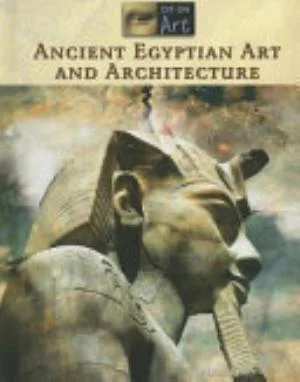
Ancient Egyptian Art and Architecture
by Don Nardo
- Publication Date:
- September 23rd, 2011
- Publisher:
- Lucent Press
- ISBN-13:
- 9781420506747
- ISBN-10:
- 1420506749
Why Ancient Egyptian Art and Architecture Has Been Challenged
Some parents and reviewers have questioned whether a children's book should reproduce ancient statues and tomb art that include unclothed figures, even though such imagery is standard in scholarly treatments of Egyptian culture. See more ↓
Challenged or banned in 1 state across 1 school district.
Overview
Ancient Egyptian Art and Architecture by Don Nardo surveys the visual and built legacy of one of history's most studied civilizations, from monumental tombs and temples to painted reliefs and carved statuary. As an entry in the "Eye on Art" series, the book is pitched at student readers encountering art history for the first time, walking through how Egyptian artisans worked, what materials and techniques they relied on, and how their output has survived for millennia.
Rather than treating pyramids and sculpture as isolated curiosities, Nardo frames them as expressions of a specific worldview, one bound up with religious belief, royal authority, and ideas about the afterlife. The book moves chronologically and thematically, connecting famous structures and artifacts to the social and spiritual systems that produced them.
The result is an introductory reference meant to give younger readers a coherent entry point into ancient art, pairing descriptive text with visual examples so that abstract historical concepts become grounded in recognizable images.
Art as a Record of Belief and Power
The "Eye on Art" series positions itself around a broader argument: that art is never purely decorative, but functions as a lens onto the values of the people who made it. Applied to Egypt, that premise carries particular weight, since so much of what survives from the period exists precisely because it was created for religious or dynastic purposes rather than everyday aesthetic enjoyment.
Nardo's volume sits within this framework by treating Egyptian art and architecture as inseparable from the civilization's preoccupation with mortality, divine kingship, and cosmic order. Temples, tomb paintings, and statuary are presented not merely as objects to admire but as tools that ancient Egyptians used to secure favor with their gods and ensure continuity after death. This approach reflects a common move in educational art-history writing for young audiences: using a single, visually striking culture to introduce broader questions about why societies make art at all, and what that art reveals once the civilization itself is gone.
Why Ancient Egyptian Art and Architecture Has Been Challenged
Most objections to this book have centered on its suitability for elementary and middle-school readers, the age group the "Eye on Art" series is designed for. Critics raising concerns have pointed to the book's reproductions of ancient statuary and tomb paintings, some of which depict unclothed human figures in keeping with Egyptian artistic and religious convention. For readers accustomed to evaluating books by contemporary standards around nudity, these images have been flagged as inappropriate for a young audience regardless of their historical or educational context.
The underlying tension is one familiar to challenges of illustrated art-history titles: material that is standard within academic or museum presentation of ancient cultures can still draw scrutiny when placed in a school library aimed at children. In the catalog tracked here, this title has been the subject of a challenge recorded in 1 state and 1 school district, reflecting a localized rather than widespread concern rather than a broad pattern of rejection.
Where to Buy




Affiliate links may generate a small commission at no extra cost to you, which helps support this site.
Also by Don Nardo
Banned in Schools
Banned or challenged in 1 state across 1 school district.