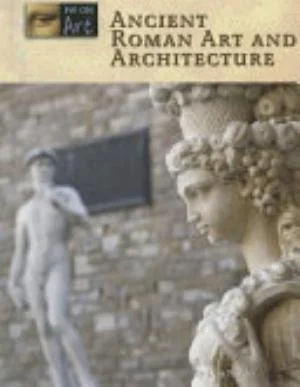
Ancient Roman Art and Architecture
by Don Nardo
- Publication Date:
- December 1st, 2011
- Publisher:
- Lucent Press
- ISBN-13:
- 9781420507140
- ISBN-10:
- 1420507141
Why Ancient Roman Art and Architecture Has Been Challenged
Some communities have balked less at the book's history lessons than at the bare marble and painted figures that classical art has always included. See more ↓
Challenged or banned in 2 states across 2 school districts.
Overview
Part of a series devoted to opening up specific artistic traditions for younger readers, this volume turns its attention to the visual and architectural legacy of ancient Rome. Don Nardo surveys the sculpture, wall painting, mosaics, and engineering feats that defined Roman civilization, tracing how these forms evolved from earlier Etruscan and Greek models into something distinctly Roman in scale and purpose.
Rather than treating art as decoration alone, the book frames Roman visual culture as functional and political: temples, forums, aqueducts, and amphitheaters were built to project authority and serve a sprawling empire, while portrait busts and relief carvings recorded the likenesses and achievements of emperors and ordinary citizens alike. Nardo walks through major building types and artistic techniques with an eye toward explaining how form followed the practical and ideological needs of Roman society.
Illustrations and photographs of surviving structures and artifacts accompany the text, grounding the narrative in objects readers can still see today, from the Colosseum to domestic frescoes preserved at sites like Pompeii.
Art History as a Lens on Power and Society
The book belongs to a broader educational tradition that treats art history not as an isolated aesthetic subject but as a window into how societies organize themselves, project authority, and record their own values. By pairing engineering innovations like the arch and concrete vaulting with the propagandistic use of portraiture and public monuments, Nardo's account situates Rome's artistic output within its political machinery. This approach reflects a long-standing argument among historians and educators that understanding a civilization's buildings and images is inseparable from understanding its power structures, religious life, and social hierarchies. For a young readership, the volume also serves as an entry point into classical studies more broadly, using visual evidence as a bridge into questions of empire, labor, and cultural exchange across the ancient Mediterranean.
Why Ancient Roman Art and Architecture Has Been Challenged
As an educational title aimed at introducing young readers to classical civilization, the book has generally been regarded as a straightforward reference work rather than a controversial one. Even so, it has drawn objections in a small number of schools and libraries, reflecting a pattern seen with other art-history titles aimed at children: discomfort with the unclothed figures common in classical sculpture and painting. Depictions of nude or partially nude statuary and frescoes, long treated by art historians as standard features of Roman visual tradition, have at times been flagged by parents or reviewers as inappropriate for the age group the book targets, without regard to the historical or educational context in which the images appear. The book has been the subject of 2 state and 2 district challenges recorded in this catalog, arising from this tension between academic treatment of classical nudity and differing community standards about what imagery is suitable for younger audiences in school and library settings.
Where to Buy




Affiliate links may generate a small commission at no extra cost to you, which helps support this site.
Also by Don Nardo
Banned in Schools
Banned or challenged in 2 states across 2 school districts.
Tennessee 1 district
- Oak Ridge Schools Banned