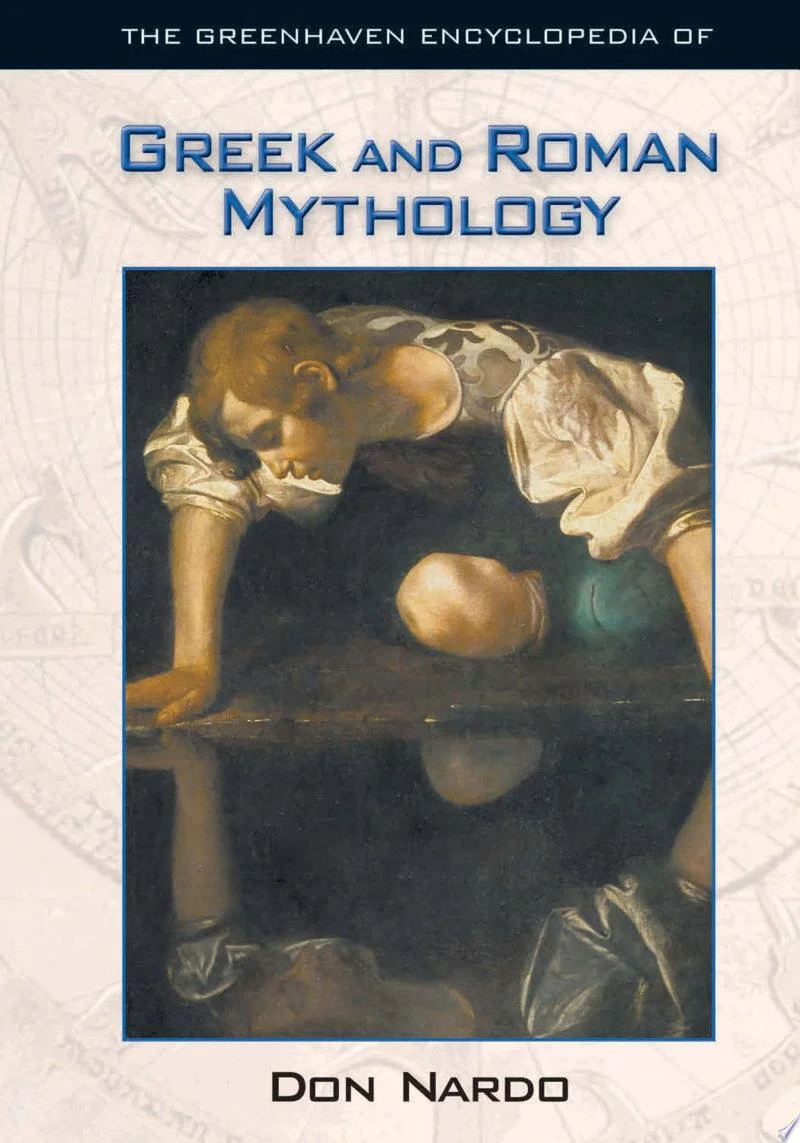
Greek and Roman Mythology
by Don Nardo
- Publication Date:
- June 24th, 2009
- Publisher:
- Greenhaven Publishing LLC
- ISBN-13:
- 9780737746280
- ISBN-10:
- 0737746289
- Pages:
- 306
Why Greek and Roman Mythology Has Been Challenged
Critics have raised concerns that presenting these ancient stories in reference form, without softening their darker elements, exposes young readers to graphic violence and sexual content under the banner of classroom-ready scholarship. See more ↓
Challenged or banned in 1 state across 1 school district.
Overview
This reference work breaks Greek and Roman mythology into its component parts rather than telling it as a single continuous narrative. Don Nardo, working with consultant editor Barbette Spaeth, organizes the material into entries on rulers, heroes, and other mortal figures, alongside separate categories for major and minor deities, animals, monsters, and the spirits and natural forces that populate the classical imagination.
Beyond the cast of characters, the volume catalogs the physical and conceptual landscape of myth: notable locations, significant objects, and the ancient writers whose works preserved these stories for later generations. A set of twelve myths is retold in fuller form, giving readers extended narrative examples alongside the more encyclopedic entries.
The result functions less like a storybook and more like a reference shelf, suited to looking up a specific figure or concept rather than reading start to finish.
A Reference Point for an Enduring Tradition
Classical mythology has remained a fixture of school curricula and popular culture for centuries, supplying vocabulary, archetypes, and allusions that recur across literature, art, and language. Compendiums like this one answer a practical need: students encountering references to figures such as Zeus, Athena, or the Furies in other texts need a quick, organized way to orient themselves.
That utility comes with an inherent tension. The myths themselves were not composed for a young audience; they are the inherited stories of an ancient religious and cultural system, full of capricious gods, brutal punishments, and morally ambiguous outcomes. A reference work that aims to be comprehensive cannot simply omit the material that makes those stories distinctive, even when that material is uncomfortable by modern standards.
Why Greek and Roman Mythology Has Been Challenged
As a resource, this volume is valued for its organizational clarity and its usefulness as a study aid, yet that same thoroughness is precisely what has drawn objection: in compiling entries faithfully across its categories, it necessarily preserves the violence and sexual content embedded in the original myths rather than softening or omitting them. Figures central to the mythology, including various gods and monsters, are associated with stories involving assault, abduction, and bodily transformation as punishment, and these elements surface in entries covering the deities and in the retold myths themselves.
Some objections have also centered on the book's treatment of pagan religious belief as a subject of serious study, with concerns raised about presenting polytheistic worship and ritual without added context or caveats for younger readers. The book has been challenged in 1 state and 1 district tracked in this catalog, reflecting the broader difficulty that mythology reference works face: the source material predates modern sensibilities about violence, consent, and religious content, and a faithful compendium inherits those elements along with the stories' enduring cultural value.
Where to Buy




Affiliate links may generate a small commission at no extra cost to you, which helps support this site.
Banned in Schools
Banned or challenged in 1 state across 1 school district.