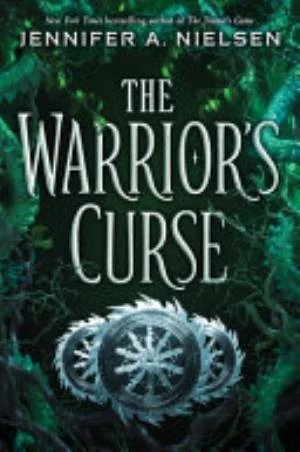
The Warrior's Curse
- Publication Date:
- January 1st, 2020
- Publisher:
- Scholastic Inc.
- ISBN-13:
- 9781338045451
- ISBN-10:
- 1338045458
Why The Warrior's Curse Has Been Challenged
Some reviewers have balked less at the story's politics than at its fantasy trappings, treating the book's curses and forest sorcery as the kind of supernatural content that doesn't belong on a young reader's shelf. See more ↓
Challenged or banned in 1 state across 1 school district.
Overview
The closing volume of Jennifer A. Nielsen's trilogy picks up with its two leads scattered to opposite corners of Antora. Kestra is held within the All Spirits Forest, a once-vital woodland now withering under an old curse, where the sorceress Loelle sees in her a means of restoring what has been lost — if only Kestra can master a power she barely understands and still survive the forest's demands.
Simon, meanwhile, finds himself thrust onto a throne he never sought, ruling the Halderian people at a moment when unity is most needed and least available. His men follow him uneasily: his bond to Kestra marks him, in their eyes, as tied to the Dallisor line they have long resented, and that suspicion threatens to undo his authority before it has taken hold.
Looming over both struggles is Lord Endrick, whose reach into the fates of Antora's kingdoms has not loosened. With Kestra confined and Simon isolated by his own crown, the novel follows two people forced to lead and endure separately, each uncertain whether reunion — or victory — is still possible.
Themes and Context
As the conclusion to a trilogy that began with The Traitor's Game, this novel resolves threads Nielsen has been tightening since its opening pages: inherited guilt, the burden of names and bloodlines, and whether loyalty earned under duress can become loyalty freely given. Simon's predicament as a reluctant king distrusted for his associations echoes a concern that runs through much of Nielsen's work, including her Ascendance series — the idea that legitimate rule is built through character and choice rather than birthright alone, and that a crown can isolate as easily as it empowers.
Kestra's arc inside the All Spirits Forest shifts the story's register toward something more elemental, framing her personal transformation as inseparable from the land's own capacity to heal or decay. That pairing of individual agency with ecological restoration gives the finale a different texture than the political maneuvering of the earlier books, closing the trilogy on a note that is as much about renewal as it is about conflict. Reviewers and young readers drawn to the series have generally pointed to this blend of romance, political intrigue, and fantasy world-building as the throughline that distinguishes Nielsen's storytelling across her body of work.
Why The Warrior's Curse Has Been Challenged
Nielsen's fantasy writing is often praised for its accessibility and brisk pacing, qualities that have made the trilogy popular with middle-grade and young-adult readers alike; yet that same popularity has occasionally placed the book in front of reviewers screening library and classroom shelves for content thought unsuitable to younger audiences. The concerns raised have centered less on the political plotting than on the novel's fantasy apparatus — curses, forest magic, and a captive heroine whose power is bound up with supernatural ritual — which some challengers have categorized as occult or witchcraft-adjacent material inappropriate for the age group reading it.
Additional objections have pointed to the book's wartime backdrop and the physical and psychological toll of captivity depicted in Kestra's imprisonment, viewed by some as too intense for the intended readership despite the genre's established conventions around peril and conflict. In the one state and one district where this record shows the title formally challenged, the underlying complaint reflects a broader, recurring pattern in how fantasy fiction for young readers is evaluated: discomfort with magical systems and threat-laden plots outweighing consideration of the genre norms in which they are conventionally presented.
Where to Buy




Affiliate links may generate a small commission at no extra cost to you, which helps support this site.
About Jennifer A. Nielsen
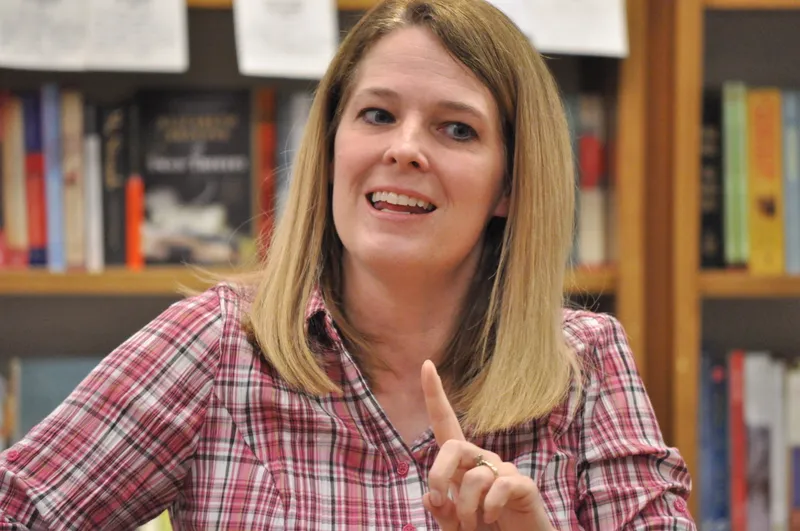
Jennifer A. Nielsen is an American author of young adult fiction, best known for the Ascendance series that begins with The False Prince. She won Whitney Awards for Best Middle-Grade Novel in 2013 and 2014. Seven of her titles appear in this catalog, with six recorded bans in Florida and one in Wisconsin.
Also by Jennifer A. Nielsen
Banned in Schools
Banned or challenged in 1 state across 1 school district.
Florida 1 district
- Escambia County Public Schools Banned pending investigation