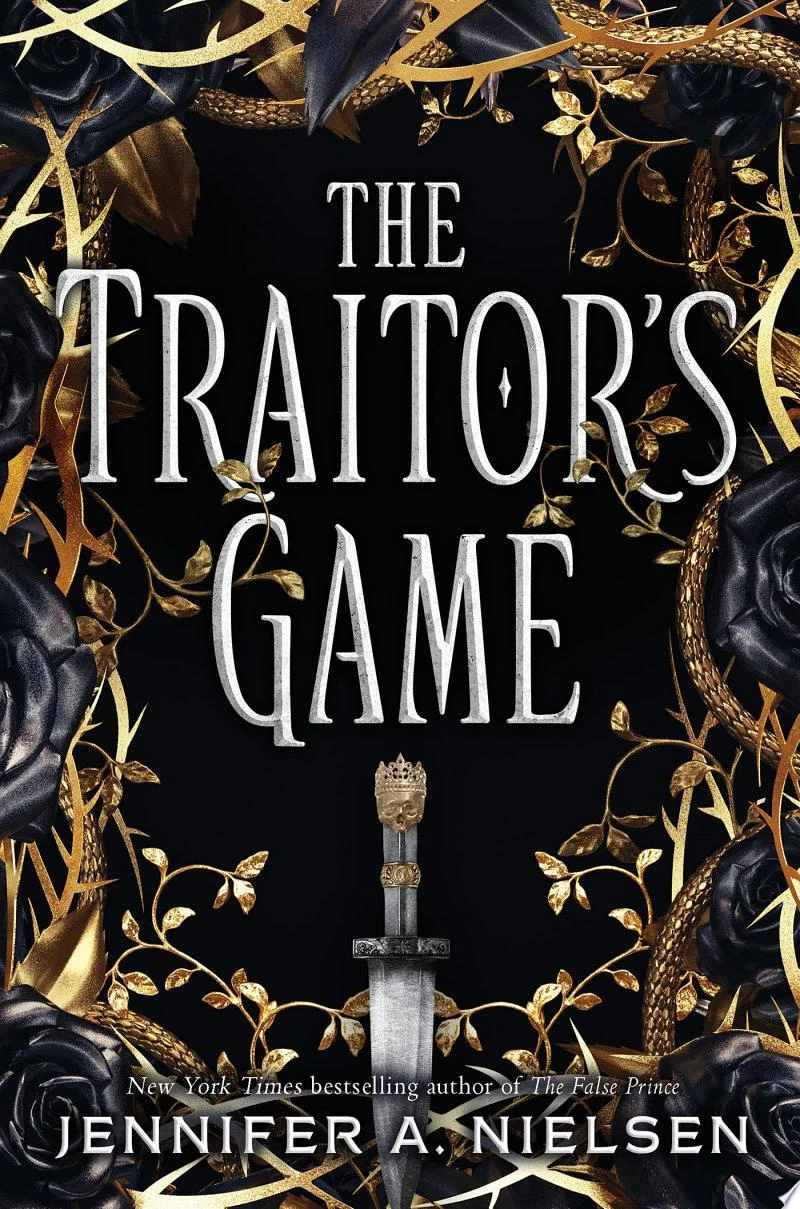
The Traitor's Game
- Publication Date:
- February 27th, 2018
- Publisher:
- Scholastic Inc.
- ISBN-13:
- 9781338045390
- ISBN-10:
- 1338045393
- Pages:
- 377
Why The Traitor's Game Has Been Challenged
A single complaint in this catalog targets the novel's kidnapping plot and its violent, authoritarian ruler as inappropriate for the age group assigned the book. See more ↓
Challenged or banned in 1 state across 1 school district.
Overview
Three years after being sent away from court, Kestra Dallisor is summoned back to the capital, where her father serves as second-in-command to a king whose rule rests on cruelty and fear. The journey home is interrupted before it starts: a band of rebels seizes her carriage, recognizing that a disgraced noble's daughter makes useful leverage against the throne.
The rebels have a narrow purpose in taking her — they need the Olden Blade, a weapon rumored to be the only thing capable of ending the king's reign, and they believe Kestra can lead them to it. What they do not anticipate is a captive who refuses to play her assigned role, working against her captors' plans even as she is forced to depend on them.
Told through the uneasy standoff between Kestra and Simon, one of the rebels tasked with managing her, the novel builds its tension less through battle than through the slow unraveling of each side's assumptions about the other. Allegiances that seemed fixed at the outset begin to bend as both characters confront what their loyalties are actually costing them.
Context and Reception
Nielsen wrote The Traitor's Game as the opening volume of a trilogy, positioning it within a wave of YA fantasy built around court intrigue, morally compromised rulers, and protagonists caught between rival factions. Its premise — a captive who manipulates her captors as much as they manipulate her — distinguishes it from stories of straightforward rescue or revenge, since neither Kestra nor Simon is positioned as simply good or simply loyal to a cause.
The book arrived as part of Nielsen's broader body of work in political fantasy for young readers, following earlier series that similarly centered deception, succession, and the price of power. Readers and critics discussing the series have noted its interest in ambiguous motive: characters on both sides of the conflict justify their actions in ways that complicate any easy read of hero and villain, a structural choice that carries through the rest of the trilogy.
Why The Traitor's Game Has Been Challenged
A parent raising concerns about the book pointed to its central premise — a teenage girl abducted from her carriage and held against her will by armed rebels — as too intense a scenario for the shelf it was placed on, arguing that the abduction and the menace surrounding King Endrick normalize violence toward a young protagonist. The complaint treated the novel's fantasy-world brutality, including the king's willingness to rule through terror, as a reason to restrict access rather than as context within a larger political story.
This catalog records the title as challenged in 1 state and 1 school district. The objection reflects a broader unease some reviewers have expressed about violence and captivity themes in YA fantasy more generally, even when, as here, the violence serves to establish the stakes of a rebellion rather than to dwell on harm for its own sake.
Where to Buy




Affiliate links may generate a small commission at no extra cost to you, which helps support this site.
About Jennifer A. Nielsen

Jennifer A. Nielsen is an American author of young adult fiction, best known for the Ascendance series that begins with The False Prince. She won Whitney Awards for Best Middle-Grade Novel in 2013 and 2014. Seven of her titles appear in this catalog, with six recorded bans in Florida and one in Wisconsin.
Also by Jennifer A. Nielsen



Banned in Schools
Banned or challenged in 1 state across 1 school district.
Florida 1 district
- Escambia County Public Schools Banned pending investigation