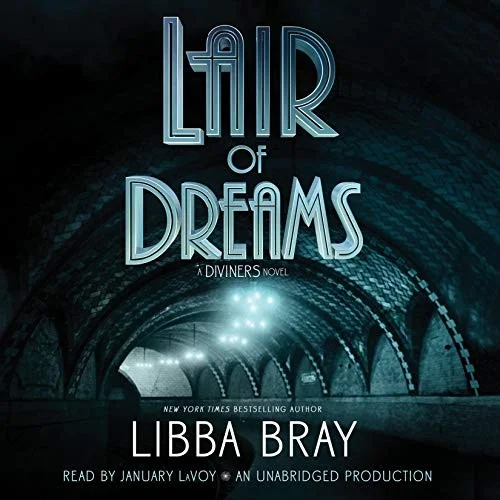
Lair of Dreams
by Libba Bray
- Publication Date:
- August 25th, 2015
- Publisher:
- Listening Library (Audio)
- ISBN-13:
- 9780449808771
- ISBN-10:
- 0449808777
Why Lair of Dreams Has Been Challenged
Parents and administrators objecting to this novel have generally centered their concerns on its frank handling of sexuality, violence, and queer characters within a horror framework aimed at teens. See more ↓
Challenged or banned in 2 states across 2 school districts.
Overview
Lair of Dreams continues Libba Bray's Diviners series, set in a Jazz Age New York City where a circle of young people discover they possess supernatural gifts. Evie O'Neill, having revealed her power to read objects and people's hidden pasts, has become a celebrity psychic, basking in a fame that sits uneasily with the quieter, more private abilities of her peers.
Two other Diviners, Henry Dubois and Ling Chan, share a rarer and more dangerous talent: the ability to enter and move through dreams. As a strange sleeping sickness begins spreading through the city, their nightly journeys into the dream world bring them face to face with forces that blur the line between comfort and danger, memory and nightmare.
Beneath the glamour of speakeasies and tabloid fame, the novel builds toward a citywide reckoning, as a mysterious figure watches from the margins with intentions that reach well beyond the immediate crisis. The book balances a sprawling ensemble cast with an escalating supernatural threat that forces its characters to decide what they owe to each other and to a city that doesn't fully understand them.
A City of Outsiders and Hidden Selves
Much of the novel's energy comes from its attention to who gets to be seen and believed in 1920s America. Evie's rise to celebrity is contrasted pointedly with the experiences of Henry, a gay man navigating a world hostile to who he is, and Ling, a Chinese American teenager contending with both the era's racism and a physical disability. Bray uses the Diviners' hidden powers as a recurring metaphor for identities that characters must conceal to survive, while the dreamworld itself becomes a space where desire, grief, and self-knowledge surface more honestly than they can in waking life.
The book also engages with the period's anxieties about disease, immigration, and who counts as a true New Yorker, using the sleeping sickness as a vehicle for examining how fear spreads through a community and who gets blamed for it. This layering of social commentary beneath genre horror is characteristic of the series, which has drawn attention for pairing ghost-story atmosphere with sustained interest in marginalized perspectives of the era.
Why Lair of Dreams Has Been Challenged
Readers who have raised objections to the novel often point to its depiction of sexual content and romantic relationships among teenage characters, as well as its sustained use of horror imagery, including violence and disturbing dream sequences involving the dead. Some challenges have also focused on Henry's storyline, in which his identity as a gay character and the same-sex longing woven into his search for a lost love are treated as inappropriate for the intended teen audience. Critics of the book's inclusion in school settings have additionally cited its frank language and its unflinching treatment of mortality and bodily harm within the dream sequences. In the two states and two districts where this title has been formally challenged within this catalog, these concerns have typically centered less on any single scene than on the combined presence of queer representation, horror elements, and sexual content in a book marketed to young adult readers.
Where to Buy




Affiliate links may generate a small commission at no extra cost to you, which helps support this site.
Also by Libba Bray


Banned in Schools
Banned or challenged in 2 states across 2 school districts.
Florida 1 district
- Clay County School District Banned by restriction