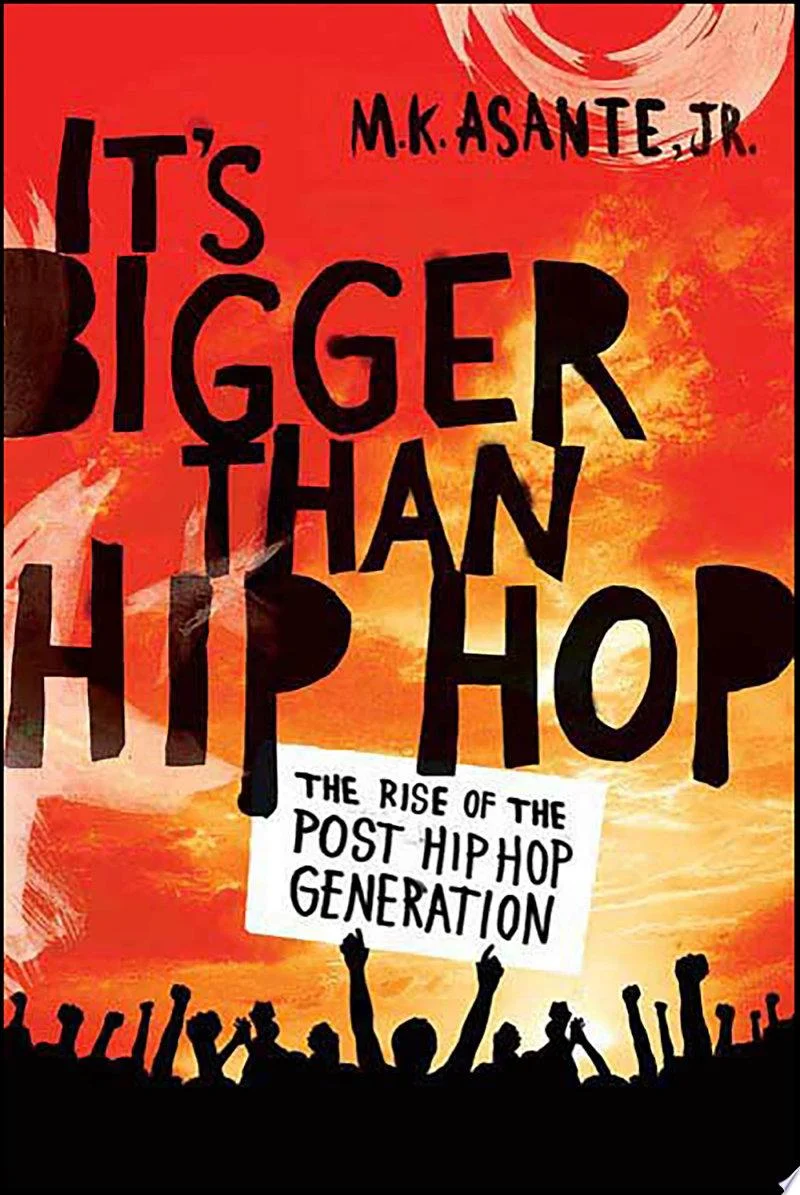
It's Bigger Than Hip Hop
- Publication Date:
- September 16th, 2008
- Publisher:
- Macmillan + ORM
- ISBN-13:
- 9781429946353
- ISBN-10:
- 1429946350
- Pages:
- 306
Why It's Bigger Than Hip Hop Has Been Challenged
Critics have taken issue with the book's blunt language and its portrayal of drugs, violence, and sexuality within hip hop culture, viewing material intended for college-age and adult readers as unsuited to younger students. See more ↓
Challenged or banned in 1 state across 1 school district.
Overview
M. K. Asante Jr.'s It's Bigger Than Hip Hop examines what the author calls the post-hip-hop generation: young people coming of age after the genre's absorption into mainstream commerce, and searching for something more substantial beneath its branding. Asante, writing as a poet, filmmaker, professor, and organizer himself, treats hip hop less as a finished cultural product than as a starting point for talking about race, poverty, education, and political power.
The book moves between reporting and personal reflection, drawing on conversations with young activists and artists alongside established figures such as Chuck D and Maya Angelou. Asante uses scenes from spoken-word venues in New Orleans after Hurricane Katrina and grassroots youth organizing efforts to argue that a cultural shift is already underway, even if it rarely makes it onto the radio or television.
Rather than offering a tidy manifesto, the book reads as an extended argument in progress, stitching together anecdote, cultural criticism, and firsthand testimony to make the case that something larger than entertainment is at stake in how young people relate to hip hop.
Context and Significance
Asante's book arrived as part of a broader conversation, carried on by scholars and critics in the 2000s, about the gap between hip hop as a billion-dollar industry and hip hop as a vehicle for grassroots political consciousness. Where much popular commentary at the time focused on debates over lyrical content or commercial success, Asante's contribution is distinguished by its generational framing: he writes as a member of, and advocate for, the audience he describes, rather than as an outside observer cataloguing a trend.
The book fits into Asante's larger body of work, which spans poetry, documentary filmmaking, and academic writing on African American culture and youth movements. Read in that context, It's Bigger Than Hip Hop functions as something of a founding statement, laying out the concerns about identity, self-determination, and media representation that recur throughout his later projects. Its interviews with elder figures of Black political and artistic life alongside younger organizers also position it as an attempt to bridge generations within a single tradition of cultural activism.
Why It's Bigger Than Hip Hop Has Been Challenged
A parent raising concerns about the book in a school setting has pointed to its unflinching discussion of racism, poverty, and systemic inequity as inappropriate for assigned reading, arguing that the material is more suited to adult audiences than to a classroom. Objectors have specifically cited the book's candid language and its references to drugs, violence, and sexual content within the broader hip hop culture it describes, contending that these passages overshadow its analytical purpose.
Underlying many of these complaints is a discomfort with the book's explicitly political framing: its critique of corporate media, its assessment of institutional racism, and its sympathetic account of youth-led activism have struck some reviewers as advocacy rather than education. Supporters of keeping the book in circulation counter that its frank treatment of these subjects is inseparable from its purpose, and that sanitizing its account of hip hop culture would undercut the very argument Asante is making. The title appears in the challenge records tracked here in one state and one district.
Where to Buy




Affiliate links may generate a small commission at no extra cost to you, which helps support this site.
Banned in Schools
Banned or challenged in 1 state across 1 school district.
Florida 1 district
- Lee County Schools Banned by restriction