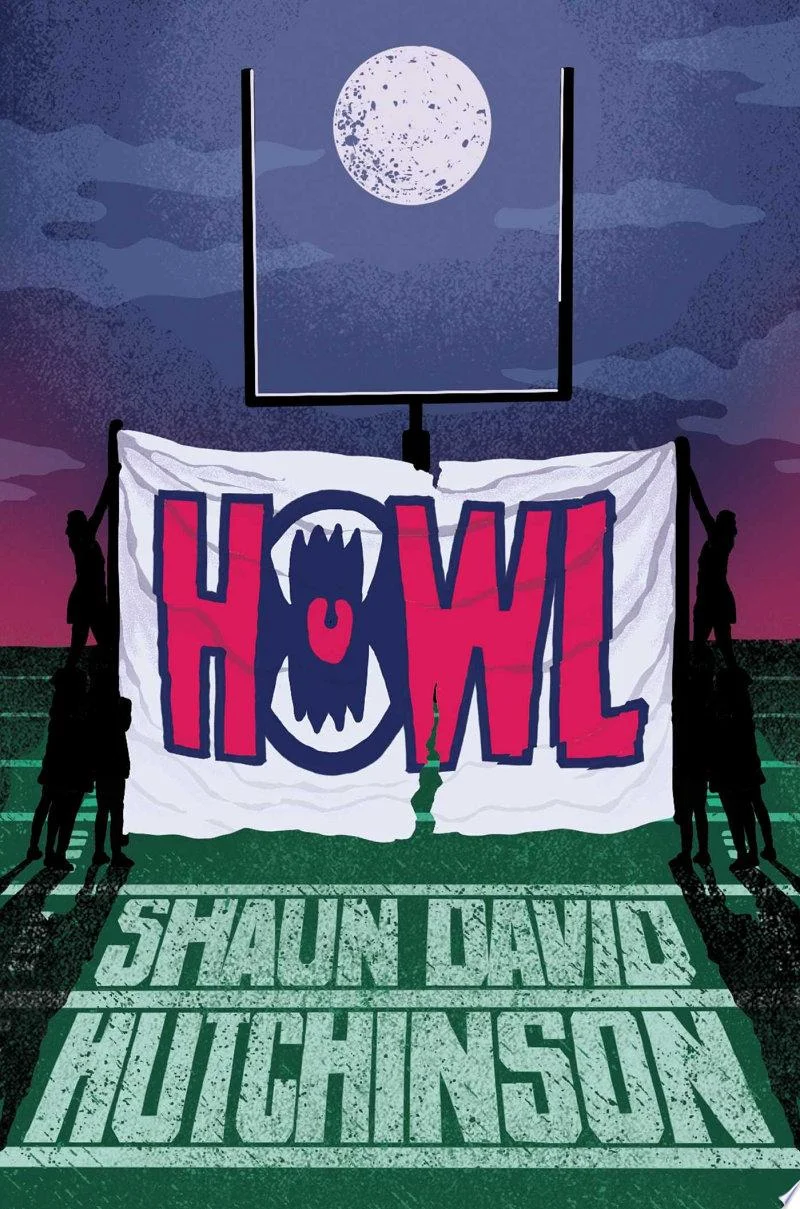
Howl
- Publication Date:
- April 19th, 2022
- Publisher:
- Simon and Schuster
- ISBN-13:
- 9781534470927
- ISBN-10:
- 1534470921
- Pages:
- 432
Why Howl Has Been Challenged
Some reviewers have balked at pairing a body-horror premise with the psychological weight of a teenager questioning his own nature, arguing the combination is too intense for the shelves where it's typically found. See more ↓
Challenged or banned in 1 state across 4 school districts.
Overview
Virgil Knox survives something no one in Merritt, Florida is willing to accept: a night attack he insists came from a creature that shouldn't exist. Wounded and shaken, he tries to explain what happened, only to be met with polite disbelief from the adults around him and a town that would rather move on than investigate.
The dismissal doesn't make Virgil feel safer. If anything, it isolates him further, leaving him to face the aftermath alone. He becomes convinced the thing that hurt him is still out there, waiting for a chance to return and finish what it started.
But as the days pass, Virgil's fear takes a stranger turn. The changes he starts noticing in himself suggest that the danger he needs to worry about most may not be an outside predator at all, but something taking root within his own body and mind.
A Town That Won't Look Closely
Shaun David Hutchinson builds the novel around a familiar horror premise, an unbelieved survivor, and uses it to explore something more personal: what happens when a teenager's account of his own body and experience is treated as unreliable by the people who are supposed to protect him. Merritt's collective shrug becomes its own kind of threat, one built from small-town complacency and a reluctance to entertain anything that disrupts the ordinary.
That premise gives the book room to work as both a creature story and a coming-of-age narrative. Virgil's uncertainty about his own transformation echoes a broader adolescent anxiety about becoming someone unrecognizable, whether that shift is framed as monstrous, sexual, or simply the unsettling process of growing into a self that no longer matches what others expect. Hutchinson, known for centering queer teenage protagonists across his work, uses the horror genre here as a vehicle for questions about identity, isolation, and who gets believed when their experience falls outside the norm.
Why Howl Has Been Challenged
Much of the pushback against Howl centers on whether its horror content belongs on shelves aimed at younger teen readers, with some objectors favoring a more restricted or upper-grade placement rather than outright removal. The concerns tend to focus on the book's visceral descriptions of injury and physical transformation, which push further into body horror than many expect from a young adult title.
Other objections trace back to the psychological undercurrent running through Virgil's arc, where the fear of becoming something monstrous is entangled with themes of identity and difference that some reviewers read as carrying sexual or queer subtext. Combined with the novel's darker tone and violent set pieces, that pairing has been enough to draw scrutiny in a handful of communities. Within the scope of this catalog, Howl has been challenged in 1 state and 4 districts, with the objections consistently rooted in concerns about age-appropriate horror content and its thematic implications rather than any single passage in isolation.
Where to Buy


Affiliate links may generate a small commission at no extra cost to you, which helps support this site.
About Shaun David Hutchinson
Shaun David Hutchinson is an American author of queer young adult speculative fiction known for We Are the Ants (2016), a novel about depression and survival that blends science fiction with raw emotional honesty. He is openly queer, has ADHD, and draws on his own experiences to write characters navigating identity, mental health, and belonging.
Also by Shaun David Hutchinson

Banned in Schools
Banned or challenged in 1 state across 4 school districts.
Florida 4 districts
- Clay County School District Banned
- Hillsborough County Public Schools Banned Pending Investigation
- Union County School District Banned
- Volusia County Schools Banned Pending Investigation