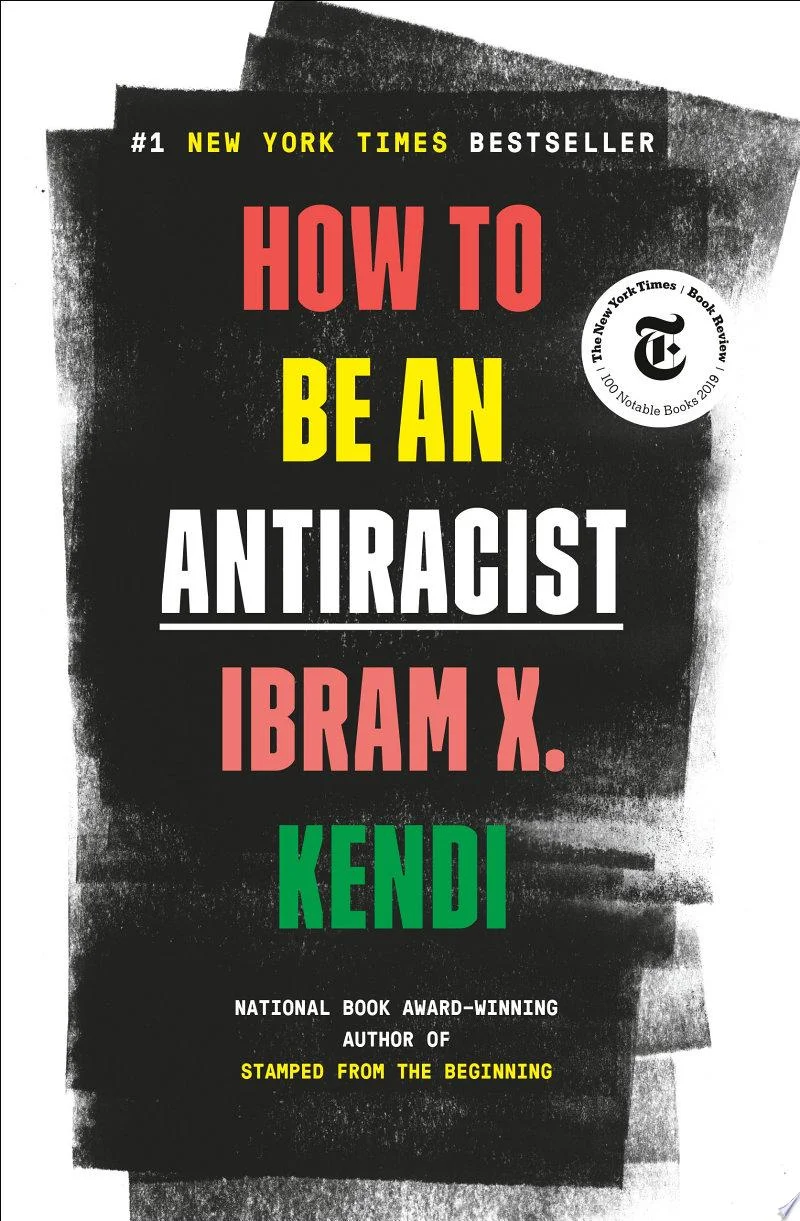
How to Be an Antiracist
- Publication Date:
- August 13th, 2019
- Publisher:
- One World
- ISBN-13:
- 9780525509288
- ISBN-10:
- 0525509283
- Pages:
- 322
Why How to Be an Antiracist Has Been Challenged
Critics have taken aim at the book's central framework, arguing it moralizes political disagreements and promotes a one-sided view of race and fairness that some say has no place in required reading. See more ↓
Challenged or banned in 1 state across 1 school district.
Overview
How to Be an Antiracist builds its case around a deceptively simple claim: there is no such thing as "not racist," only racist or antiracist. Ibram X. Kendi uses that distinction to walk readers through a series of linked ideas, each one expanding the scope of the last, showing how bias operates not just between individuals but through policy, law, and institutional design.
The book moves outward from definitions of race and racism into territory that includes class, gender, sexuality, and body size, arguing that the same hierarchical logic recurs across all of them. Kendi folds his own biography into this argument, describing how his thinking on race shifted over time, which gives the book's theoretical chapters a confessional, first-person throughline rather than a purely academic one.
Rather than ending on diagnosis, the book pushes toward application, asking readers to treat antiracism as a continual practice of noticing, naming, and correcting rather than a fixed identity to claim once and set aside.
A Personal Argument with Public Stakes
What distinguishes this book from a conventional survey of racial history is its insistence on turning the analytical lens back on the reader. Kendi is less interested in cataloguing examples of racism "out there" than in equipping people to recognize it in their own assumptions, language, and choices, including his own missteps along the way. That structure made the book resonate well beyond readers already fluent in academic discussions of race, and it arrived at a moment of heightened public attention to systemic inequality, which helped push it onto bestseller lists and into school and workplace reading programs alike.
Alongside his earlier history Stamped from the Beginning, this book forms part of Kendi's broader project of tracing how racist ideas take root and persist, and of insisting that undoing them requires active, ongoing effort rather than passive goodwill. Its popularity also made it a lightning rod: a text used both as a classroom tool for discussing bias and as a flashpoint in broader debates over how, or whether, American institutions should teach about race.
Why How to Be an Antiracist Has Been Challenged
Disputes over this book have tended to center less on any single passage and more on whether its framework belongs in school curricula or classroom libraries at all, with some objectors arguing it is more suited to optional or upper-grade reading than required coursework. The substance of the pushback generally falls into two camps. Some critics object to Kendi's core argument itself, contending that his binary framing of racist versus antiracist assigns moral judgment based on policy positions rather than individual conduct, and that his proposals for addressing inequality venture into contested political territory unsuited to a required text. Others take issue with the book's frank treatment of racial identity and its discussion of discrimination as a tool for remedying past inequality, viewing those sections as divisive or as advancing a particular ideological stance under the guise of education. According to the records compiled for this catalog, the book has drawn a challenge in 1 state and 1 school district. Supporters of the book counter that these objections mistake an invitation to self-examination for an accusation, and that removing the book forecloses exactly the kind of reflective conversation it is designed to start.
Where to Buy




Affiliate links may generate a small commission at no extra cost to you, which helps support this site.
Also by Ibram X. Kendi
Banned in Schools
Banned or challenged in 1 state across 1 school district.
Georgia 1 district
- Cobb County School District Banned pending investigation