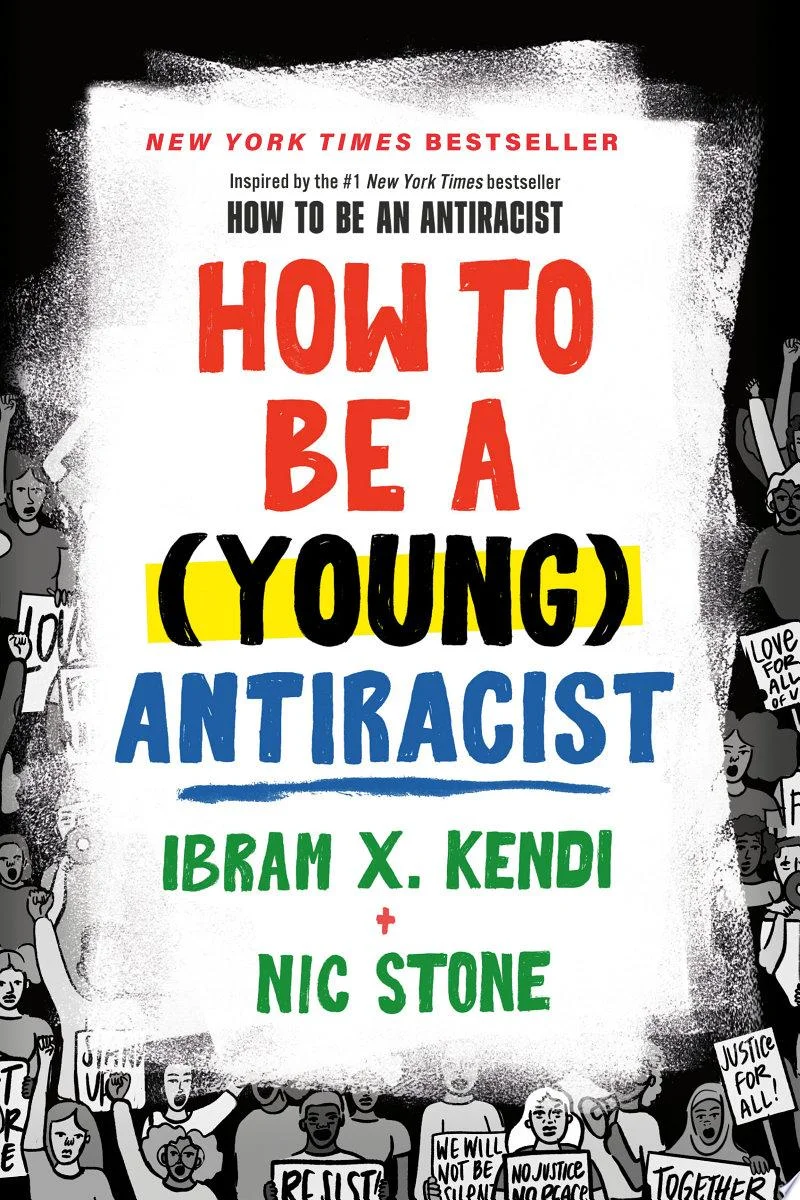
How to Be a (Young) Antiracist
- Publication Date:
- September 12th, 2023
- Publisher:
- Penguin
- ISBN-13:
- 9780593461617
- ISBN-10:
- 0593461614
- Pages:
- 209
Why How to Be a (Young) Antiracist Has Been Challenged
Critics of this title generally argue that its ideas about systemic racism and personal complicity ask more of adolescent readers than they can fairly be expected to weigh on their own. See more ↓
Challenged or banned in 1 state across 1 school district.
Overview
How to Be a (Young) Antiracist adapts Ibram X. Kendi's widely read work on race for a middle-grade and early-teen audience, with novelist Nic Stone joining as co-author to translate its arguments into language and examples suited to younger readers. The book keeps the central premise of the original: that there is no neutral position on racism, and that people are either working to dismantle it or, through inaction, allowing it to persist.
Rather than presenting a single narrative, the book moves through a series of ideas and definitions, pairing each with historical background and scenarios drawn from school, family, and social life. It asks readers to examine their own assumptions and experiences as a way of making abstract concepts concrete.
The result is less a memoir than a guided exercise in self-examination, built around the idea that recognizing racism is a first step that must be followed by deliberate, ongoing action rather than a one-time realization.
Antiracism as a Framework for Young Readers
The book arrives as part of a broader wave of writing that followed renewed national attention to racial inequity in the early 2020s, when schools, libraries, and publishers sought material that could introduce younger students to concepts previously confined to academic or adult nonfiction. Kendi's original book had already become a touchstone in that conversation, and this adaptation reflects an effort to extend its reach into classrooms and school libraries where the adult edition might be considered too dense or mature.
Pairing a scholar known for his research on racial policy with an established author of fiction for young people is itself notable: the collaboration suggests an intent to make the material accessible without diluting its central claims. In the context of Kendi's larger body of work, the book functions as a companion text, restating his framework of antiracist versus racist action for readers still forming their understanding of history, identity, and civic responsibility.
Why How to Be a (Young) Antiracist Has Been Challenged
Most objections point to the book's placement with readers around age twelve and up, arguing that concepts like structural racism and complicity are too abstract or too politically charged to introduce to students at that age without more guided context. Critics contend that the book asks young readers to categorize themselves and others using a framework they may not be equipped to evaluate critically, and that its treatment of racism as embedded in institutions rather than only individual behavior echoes debates over critical race theory in education.
Other objections focus on tone rather than substance, with some critics describing the book as advocacy aimed at shaping students' political views rather than presenting history and social analysis for independent judgment. Some have also raised concern that discussions of privilege and personal responsibility could make certain students feel singled out or blamed based on race. In the catalog tracked here, these concerns have resulted in a challenge recorded in one state and one school district.
Where to Buy




Affiliate links may generate a small commission at no extra cost to you, which helps support this site.
Banned in Schools
Banned or challenged in 1 state across 1 school district.