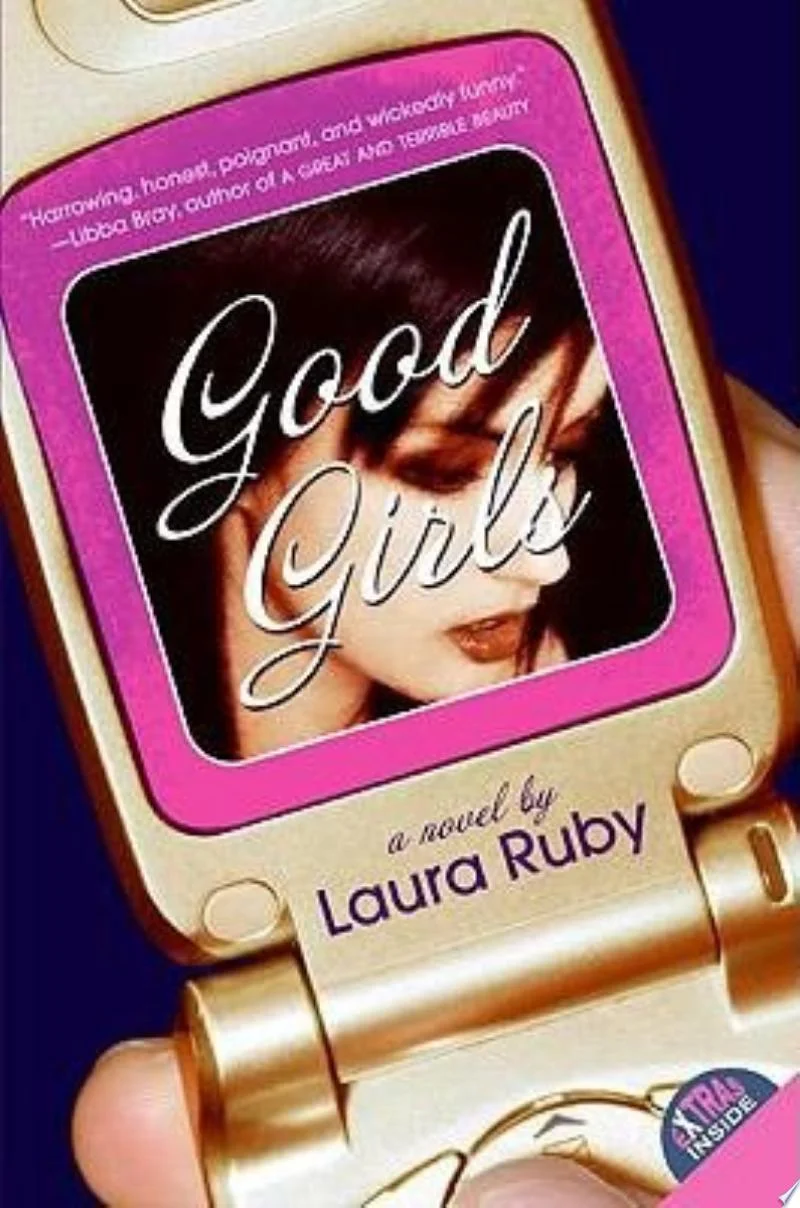
Good Girls
by Laura Ruby
- Publication Date:
- March 17th, 2009
- Publisher:
- Harper Collins
- ISBN-13:
- 9780061884139
- ISBN-10:
- 0061884138
- Pages:
- 310
Why Good Girls Has Been Challenged
Objectors have mainly pushed back on how openly the novel depicts the circulation of a sexual image and the shaming that follows, arguing the material belongs in older hands than the ones typically reaching for young adult fiction. See more ↓
Challenged or banned in 1 state across 1 school district.
Overview
Laura Ruby's novel opens with its narrator fully aware of how most people will frame her story: as the girl in the photograph. A single image, once private, has made its way to a wide and unforgiving audience, and from that moment on, strangers believe they already know who she is.
The book follows what happens after that exposure rather than dwelling on the image itself, tracking the narrator's effort to hold onto a sense of self while classmates, family, and the wider public assign her a reputation she never chose. Ruby is less interested in scandal for its own sake than in the mechanics of judgment: who gets blamed, who gets excused, and how quickly a person can be reduced to a single moment.
What emerges is a portrait of resilience under scrutiny. The narrator insists, in her own voice, that the picture circulating without her consent is not the whole of her, and the novel builds its narrative around proving that claim to the reader even as the people around her refuse to grant it.
A Story About Being Seen and Being Known
Good Girls belongs to a strand of contemporary young adult fiction that grapples directly with how digital exposure reshapes a young person's identity. The novel treats the viral photograph less as a plot device than as a lens for examining a much older problem: the uneven way society assigns shame, particularly to young women, when private moments become public property.
Ruby's narrator pushes back against the flattening effect of this exposure, insisting on complexity in a culture that prefers simple labels. The book sits alongside other recent YA titles that interrogate slut-shaming, consent, and the double standards applied to boys and girls caught up in the same incident, using one character's ordeal to ask broader questions about empathy, rumor, and who controls a person's story once it leaves their hands. In Ruby's body of work, which often returns to teenagers navigating institutions and expectations larger than themselves, this novel stands out for its unflinching focus on a single, escalating act of exposure and its long aftermath.
Why Good Girls Has Been Challenged
Most objections to the novel cite its suitability for high school readers, arguing that the material is too mature for the teenage audience the book is otherwise aimed at. Critics point to its frank treatment of a sexual image shared without consent, along with the surrounding conversations about sex, bodies, and reputation, as more explicit than they believe appropriate for school libraries or classrooms.
Underlying these objections is discomfort with the novel's candor: rather than softening the circumstances that lead to the photograph's exposure, the book describes the fallout in direct terms, including the language peers use to shame the narrator and the double standards she confronts. Some challengers have also expressed concern that depicting the incident in detail, even critically, risks normalizing the behavior it portrays rather than condemning it. According to records maintained in this catalog, the book has drawn a formal challenge in 1 state and 1 school district.
Where to Buy




Affiliate links may generate a small commission at no extra cost to you, which helps support this site.
Also by Laura Ruby
Banned in Schools
Banned or challenged in 1 state across 1 school district.
Florida 1 district
- Escambia County Public Schools Banned pending investigation