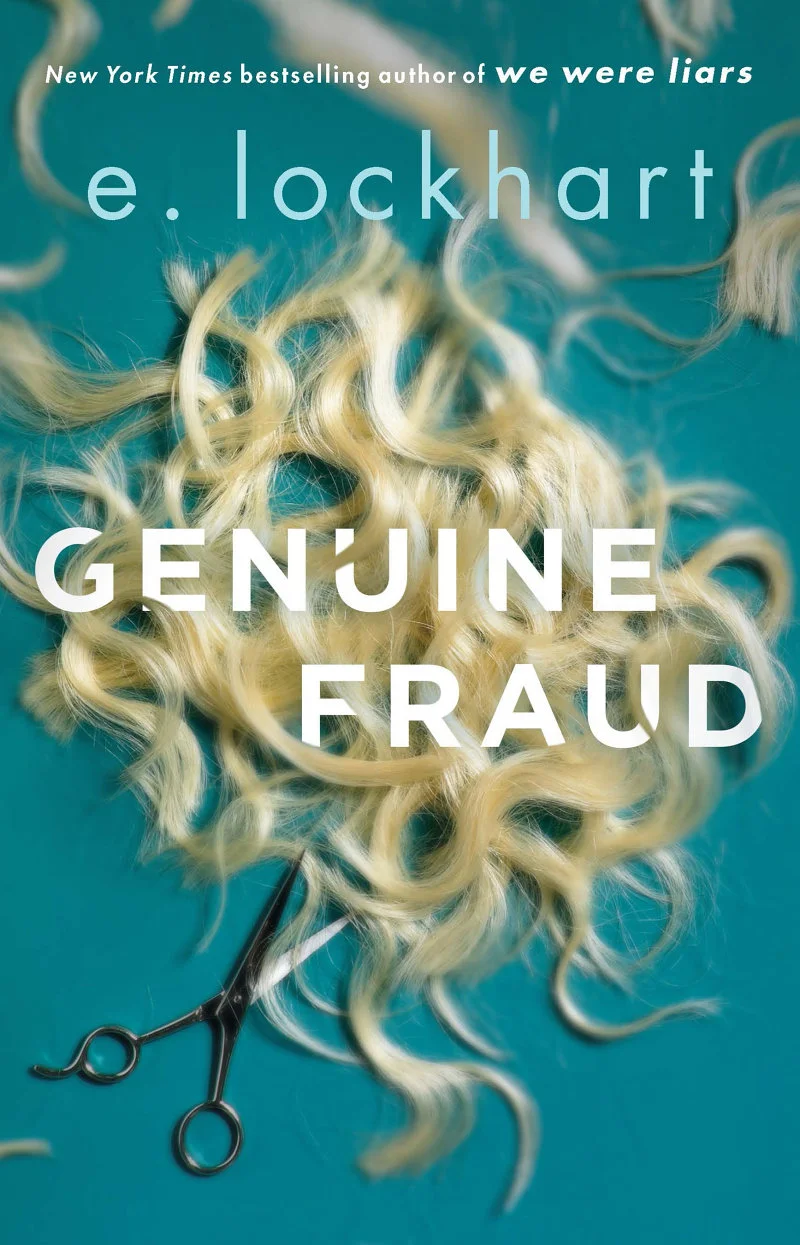
Genuine Fraud
by E. Lockhart
- Publication Date:
- September 6th, 2017
- Publisher:
- Allen & Unwin
- ISBN-13:
- 9781760638559
- ISBN-10:
- 1760638552
- Pages:
- 221
Why Genuine Fraud Has Been Challenged
Readers have pushed back on a narrator whose lies and violent choices are rendered with more understanding than judgment, unsettling expectations about how a young protagonist's wrongdoing should be framed. See more ↓
Challenged or banned in 2 states across 2 school districts.
Overview
Told in reverse chronology, the novel follows Jule West, a young woman with a gift for becoming whoever a situation requires, and Imogen, the wealthy young woman she attaches herself to. The story opens near its own conclusion and works backward, letting the reader piece together how a friendship built on borrowed identities and half-truths arrived at violence.
The setting moves between the moneyed enclaves of the East Coast and the resort towns of coastal Mexico, tracing the pair's relationship as it curdles from admiration into something closer to obsession and rivalry. Jule's talent for mimicry and reinvention becomes both her means of survival and her undoing.
Lockhart, known for We Were Liars, again builds a plot around an unreliable narrator and a structure designed to withhold and then reveal. The result is less a mystery to be solved than a character study of two young women testing how far a self-made identity can be stretched before it breaks.
Identity, Class, and the Cost of Reinvention
The novel draws loosely on the premise of The Talented Mr. Ripley, transplanting a story of impersonation and class envy into a contemporary, female-driven frame. Jule's fluency at disappearing into other people's lives raises questions about what identity even is when it can be assembled from watched behavior, borrowed money, and stolen names.
Imogen's inherited ease and Jule's constructed one sit in constant tension, and the book uses their friendship to examine how proximity to wealth can distort a person's sense of who they're allowed to become. Its backward structure reinforces this theme: readers are asked to judge actions before they understand motives, mirroring the way Jule herself is judged as a fraud before anyone asks what drove her there.
Within Lockhart's body of work, the novel continues an interest in narrators who reshape the truth to survive their circumstances, and it has been read both as a taut genre thriller and as a darker meditation on ambition and self-erasure.
Why Genuine Fraud Has Been Challenged
Much of the unease around the novel centers on Jule herself: a protagonist who lies fluently, steals identities, and commits acts of violence without the narrative pausing to condemn her outright. Readers accustomed to clearer moral signposting have objected to a book that lets a manipulative, sometimes dangerous character narrate her own justifications persuasively enough to earn sympathy.
Some challenges also point to the story's frank treatment of deception as a survival strategy and to scenes of physical danger and violence that arrive with little warning, given the book's reverse timeline. Critics of its inclusion in school settings have argued that its ambiguity toward wrongdoing makes it a poor fit for younger readers, while others have countered that this same moral ambiguity is what makes it worth discussing. The title appears in this catalog's records with a combined 4 challenges across the states and districts tracked here.
Where to Buy




Affiliate links may generate a small commission at no extra cost to you, which helps support this site.
Also by E. Lockhart
Banned in Schools
Banned or challenged in 2 states across 2 school districts.
Florida 1 district
- Escambia County Public Schools Banned pending investigation
Wisconsin 1 district
- Elkhorn Area School District Banned by restriction