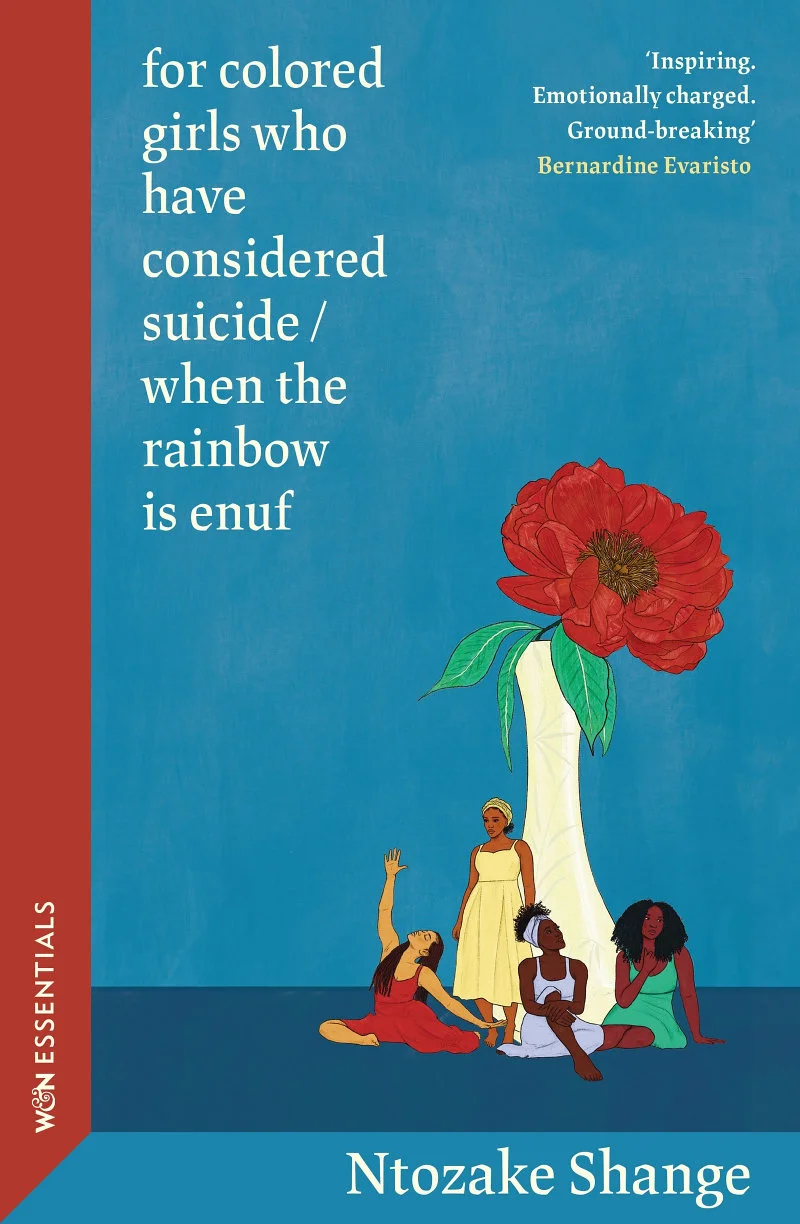
for colored girls who have considered suicide / when the rainbow is enuf
- Publication Date:
- June 5th, 2025
- Publisher:
- Hachette UK
- ISBN-13:
- 9781474621991
- ISBN-10:
- 1474621996
- Pages:
- 78
Why for colored girls who have considered suicide / when the rainbow is enuf Has Been Challenged
Shange's unsparing portrayal of assault, abortion, and a young woman's first sexual encounter has made some educators and parents question whether its honesty is appropriate for younger readers. See more ↓
Challenged or banned in 1 state across 1 school district.
Overview
Ntozake Shange's "for colored girls who have considered suicide / when the rainbow is enuf" is not a conventional play or poetry collection but a "choreopoem" — a hybrid form that fuses verse, music, and choreography into a single theatrical experience. First staged in the mid-1970s, it quickly became recognized as a defining work of American theater and Black feminist literature.
The piece is built from a series of interlocking monologues delivered by women identified only by the colors they wear rather than by given names. Through these voices, the work moves through an intimate catalogue of experience: a lover's departure after months of devotion, a solitary decision to end a pregnancy, a night of sexual initiation following a graduation, and a turn to dance as a way of staving off despair. The effect is cumulative rather than narrative, building a shared emotional landscape out of individual testimony.
Rather than resolving into a single story, the work functions as a chorus — distinct women, distinct wounds, but a common reckoning with what it means to survive as a Black woman in a world that frequently fails to protect or see her.
Why This Work Still Resonates
Shange wrote the piece at a moment when Black women's interior lives were rarely centered on the American stage, and its genre-blurring form was itself an argument: that conventional theater could not hold the full weight of what she was trying to say. The choreopoem format — treating movement and sound as inseparable from language — became one of her most influential contributions to American drama, opening space for later writers to similarly refuse tidy categorization.
Thematically, the work sits at the intersection of racial and gendered harm, tracing how systemic neglect and intimate betrayal compound one another in the lives of its speakers. It does not offer easy consolation; instead, it insists on naming pain directly — abandonment, violation, grief — as a precondition for the self-affirmation suggested by its title. That tension between devastation and resilience is part of why the work has remained a fixture of Black feminist literary study and continues to be revived on stage decades after its debut.
Why for colored girls who have considered suicide / when the rainbow is enuf Has Been Challenged
Sexual content and frank depictions of violence against women are the most frequently cited grounds for objection. Several monologues describe assault, an abortion, and early sexual experience in unflinching terms, and challengers have argued that this material is too explicit or too mature for school-age readers. Language and the emotional intensity of scenes depicting abuse and suicidal despair have also drawn criticism from those who view the work as unsuitable for classroom use regardless of its literary standing. In the records tracked by this catalog, the book has been challenged in one state and restricted or removed from one school district, reflecting a narrower but persistent pattern of concern centered on its treatment of sexuality and trauma rather than any single incident.
Where to Buy




Affiliate links may generate a small commission at no extra cost to you, which helps support this site.
Banned in Schools
Banned or challenged in 1 state across 1 school district.
Florida 1 district
- Lee County Schools Banned by restriction