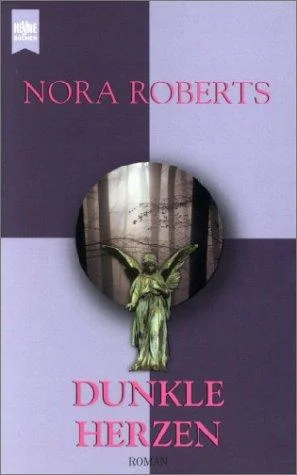
Divine Evil
by Nora Roberts
- Publication Date:
- January 1st, 2010
- Publisher:
- Little, Brown Book Group Limited
- ISBN-13:
- 9780748121212
- ISBN-10:
- 0748121218
- Pages:
- 576
Why Divine Evil Has Been Challenged
Readers have taken issue with the novel's frank depiction of a hidden cult performing occult rites in an otherwise ordinary town, viewing the material as too dark or explicit for unrestricted shelving. See more ↓
Challenged or banned in 1 state across 1 school district.
Overview
Clare Kimball has built a career as a sculptor in New York, but she cannot shake a recurring nightmare: masked figures gathered in a clearing outside her Maryland hometown, enacting some ritual she can neither fully see nor forget. When the dream refuses to loosen its grip, she does the thing everyone around her advises against and goes home to Emmitsboro to confront it.
What she finds is a town that looks, on the surface, like nowhere in particular — quiet streets, familiar faces, the kind of place that prides itself on nothing ever happening. Clare's search for the source of her nightmare draws her toward Cameron Rafferty, the town's newly arrived sheriff, who has his own reasons to distrust the town's calm surface.
As the two piece together fragments of memory, rumor, and half-buried history, it becomes clear that Emmitsboro is hiding something considerably darker than small-town secrets, and that Clare's return has put her within reach of it.
A Small Town's Hidden Face
Divine Evil belongs to the long tradition of romantic suspense that pairs a slow-building investigation with an equally slow-building relationship, a structure Nora Roberts has used across many of her novels to explore how intimacy forms under pressure. Here, that pairing is set against a specific American anxiety: the fear that the ordinary, familiar community — the one that seems safest precisely because it seems unremarkable — is the one most capable of concealing real harm.
The novel taps into a strain of suspense fiction from the late twentieth century preoccupied with hidden ritual and secret societies operating beneath respectable small-town life, a subgenre that found wide popular appeal even as it drew periodic scrutiny for its subject matter. Roberts uses the device less to make a statement about religion or belief than to dramatize the gap between appearance and reality, using Clare's fractured memory as a way of letting the reader discover the town's true character at the same pace she does.
Why Divine Evil Has Been Challenged
The image at the center of Clare's recurring nightmare — a masked assembly performing what reads as a black-mass ritual in the woods — is the detail most often cited by readers uneasy with the book. Because the ceremony is explicitly framed as satanic and is depicted with ritual and sexual overtones, some have argued the passages are inappropriate for younger or more casual readers to encounter, particularly given the novel's packaging as mainstream genre fiction rather than material clearly marked as adult content.
Beyond the ritual scenes themselves, objections have also centered on the novel's broader atmosphere of occult menace and its violent undercurrents, with critics contending that the combination of cult activity, threat, and suspense is too intense or unsettling for shelving without restriction. In the catalog tracked here, that discomfort has translated into a single recorded challenge, spanning one state and one school district, rather than a broad or coordinated pattern of removal.
Where to Buy




Affiliate links may generate a small commission at no extra cost to you, which helps support this site.
Also by Nora Roberts
Banned in Schools
Banned or challenged in 1 state across 1 school district.
Florida 1 district
- Lee County Schools Banned by restriction