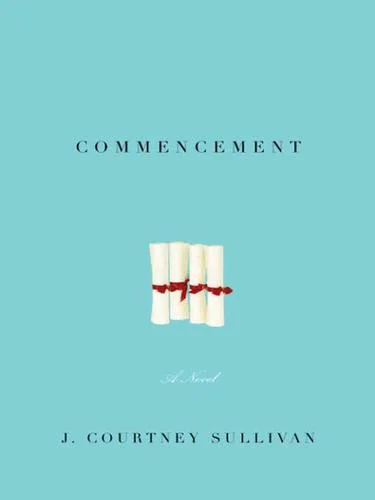
Commencement
- Publication Date:
- January 1st, 2009
- Publisher:
- Knopf Doubleday Publishing Group
- ISBN-13:
- 9780307271983
- ISBN-10:
- 0307271986
Why Commencement Has Been Challenged
Critics have pushed back on the novel's unflinching scenes of assault, drinking, and student-professor involvement, along with its sympathetic framing of radical feminist activism. See more ↓
Challenged or banned in 1 state across 1 school district.
Overview
J. Courtney Sullivan's debut novel opens with an unlikely roommate assignment at Smith College: Celia, a lapsed Catholic who packs a rosary alongside a bottle of vodka; Bree, a Savannah debutante already engaged; Sally, grieving her mother and dressed for a different decade; and April, a fierce young feminist bristling at the arrangement from day one. Little in their backgrounds suggests they'll become close, but the four spend their undergraduate years learning from, and testing, one another.
The novel tracks each woman through the ordinary wreckage of early adulthood—a devastating betrayal, a love that complicates family loyalty, a dangerous attachment to a professor, the slow discovery of real friendship—before jumping forward to their reunion at Sally's wedding four years later. By then the easy certainties of college have given way to harder questions about marriage, work, and identity.
Sullivan uses the wedding as a hinge point, letting old intimacies resurface even as the women's lives have diverged. Three of them wrestle with the mundane friction of adult compromise; the fourth has taken her convictions somewhere far more consequential, setting up tensions the novel carries through to its close.
Feminism, Friendship, and a Generation in Transition
Commencement is less interested in plot mechanics than in generational inheritance: these are young women raised on the promises of feminism who must decide, individually, what those promises actually require of them. Sullivan uses the Smith setting—a women's college steeped in its own activist history—as a lens for examining how theory taught in a classroom holds up against the compromises of a dating life, a career, or a wedding.
The novel also doubles as a campus comedy, mining the rituals and self-seriousness of elite liberal arts culture for wry observation even as it takes its characters' inner lives seriously. That balance—affectionate satire alongside real emotional stakes—became a hallmark of Sullivan's subsequent fiction, and Commencement is often read as the first entry in her recurring interest in women's friendships tested by time, class, and shifting cultural expectations.
Why Commencement Has Been Challenged
Most objections to Commencement cite its suitability for high school readers, arguing that the novel's frank treatment of sex and its aftermath belongs with an adult, rather than adolescent, audience. Critics raising challenges have pointed specifically to a depiction of sexual assault and its emotional fallout, scenes of casual drinking and sexual encounters among the central characters, and an extramarital relationship between a student and a professor, all described as inappropriate for a school library's general shelves.
A smaller strand of criticism targets the novel's politics rather than its content, taking issue with April's escalating activism and the radical feminist rhetoric she embraces, which some reviewers have framed as advocacy rather than characterization. Taken together, these concerns—about sexual content, substance use, and ideological messaging—have led to the book's removal or restriction in one school district within one state tracked in this catalog, reflecting a narrower but still notable pattern of challenge compared to more frequently targeted titles.
Where to Buy




Affiliate links may generate a small commission at no extra cost to you, which helps support this site.
Banned in Schools
Banned or challenged in 1 state across 1 school district.
Florida 1 district
- Lee County Schools Banned by restriction