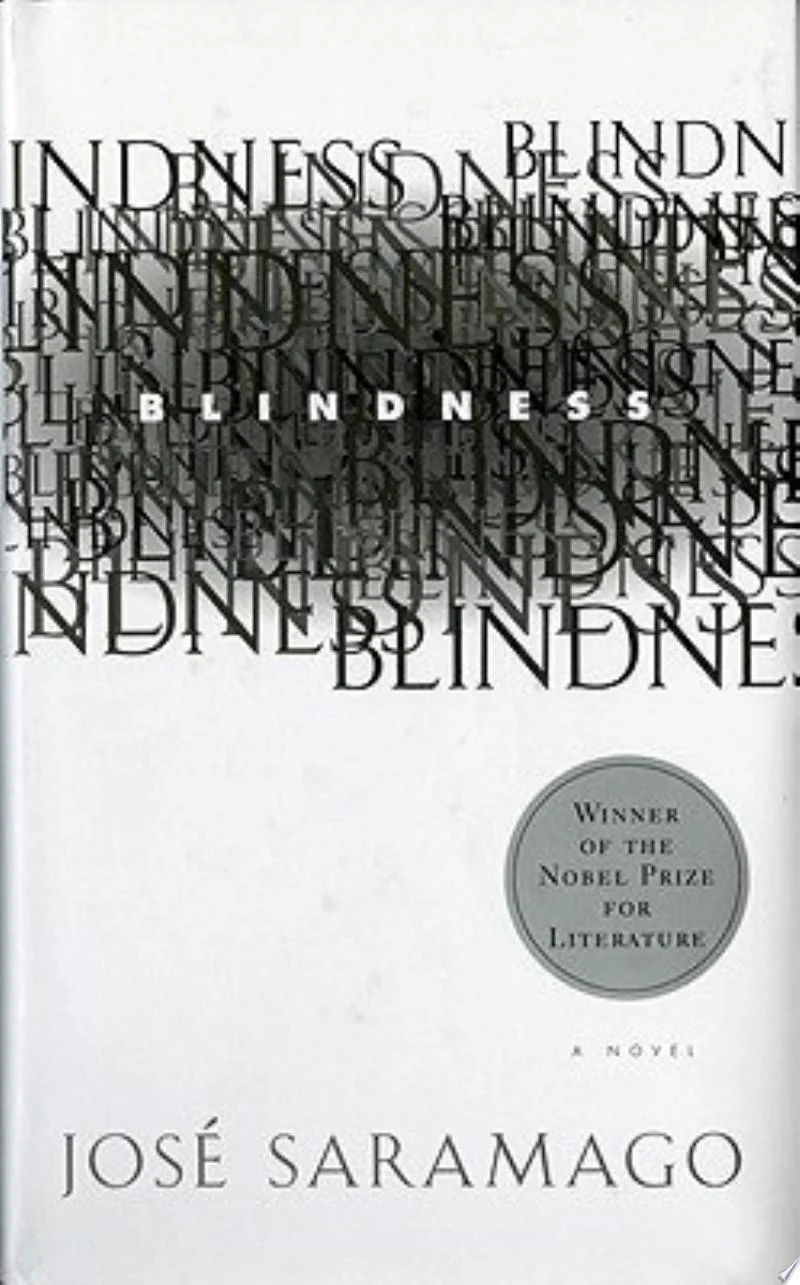
Blindness
- Publication Date:
- January 1st, 1998
- Publisher:
- Houghton Mifflin Harcourt
- ISBN-13:
- 9780151002511
- ISBN-10:
- 0151002517
- Pages:
- 312
Why Blindness Has Been Challenged
Some readers have pushed back against the novel's unflinching scenes of violence and sexual coercion, arguing the material is too disturbing for the shelves where it was shelved. See more ↓
Challenged or banned in 2 states across 2 school districts.
Overview
José Saramago's novel opens with a single driver struck blind at a traffic light, and the affliction spreads through the unnamed city like contagion, sparing no one who comes near its victims. Authorities respond by rounding up the blind into an abandoned asylum, hoping to contain what they cannot explain, but quarantine only concentrates the collapse they meant to prevent.
Inside the makeshift ward, the ordinary machinery of daily life — food, sanitation, authority, trust — breaks down within days. Saramago follows a small group of internees, held together by one woman who, for reasons never explained, keeps her sight, and who becomes both witness and reluctant guide through the squalor and cruelty that take hold.
As the epidemic spreads beyond the asylum walls and overwhelms the city itself, the novel widens its focus from one institution's failure to a whole civilization's. What began as a clinical mystery becomes a sustained study of how fragile the agreements are that keep people from turning on one another.
A Fable About Seeing and Being Seen
Saramago, who went on to win the Nobel Prize in Literature, wrote in a famously dense style — long sentences, minimal punctuation, dialogue folded into narration without quotation marks — that mirrors the disorientation his characters experience. The effect is immersive rather than decorative: readers lose the usual visual cues of a page the same way the characters lose the visual cues of the world.
The blindness itself is pointedly strange — it arrives not as darkness but as a blinding whiteness, an inversion that resists easy symbolism even as the book invites it. Critics have read the novel as commentary on bureaucratic indifference, on the thinness of civility once its enforcement mechanisms vanish, and on the moral cowardice that can masquerade as self-preservation. The one sighted character's forced complicity, watching horrors she alone can perceive, has drawn particular attention as a meditation on the burden of knowledge and the limits of individual conscience against collective breakdown.
The book occupies a central place in Saramago's body of work and in late-twentieth-century allegorical fiction more broadly, often discussed alongside other literature of epidemic and social collapse, though its bleakness and refusal of easy redemption set it apart from more consoling entries in that tradition.
Why Blindness Has Been Challenged
Disputes over this title have tended to center on where, and for whom, it belongs on a shelf — whether a novel this stark in its depiction of human cruelty is appropriate for high school collections or classroom use rather than adult literary sections. Saramago does not soften the asylum's descent into disorder, and the book includes scenes of sexual violence, physical degradation, and brutality among the internees that some parents and community members have found too graphic for younger readers to encounter without guidance. The objections tend to focus less on language or theme in the abstract than on the sustained, unsparing nature of specific passages depicting assault and dehumanization.
Other challenges have framed the novel's bleakness itself as the concern, arguing that its portrait of societal collapse offers little moral counterweight to the violence it depicts. In the handful of instances tracked in this catalog, the book has been formally challenged in two states and two districts, reflecting a narrower but persistent pattern of concern over its suitability for school settings rather than a broad rejection of the work's literary standing.
Where to Buy




Affiliate links may generate a small commission at no extra cost to you, which helps support this site.
Banned in Schools
Banned or challenged in 2 states across 2 school districts.
Florida 1 district
- Orange County Public Schools Banned by restriction
Texas 1 district
- Fort Bend Independent School District Banned by Restriction