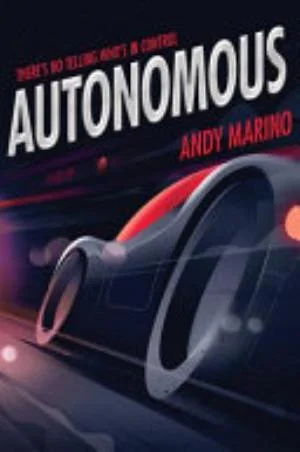
Autonomous
by Andy Marino
- Publication Date:
- April 2nd, 2019
- Publisher:
- Freeform
- ISBN-13:
- 9781484775639
- ISBN-10:
- 1484775635
Why Autonomous Has Been Challenged
Critics have pushed back on this road-trip thriller mainly over its mature teen content — underage drinking, sexual situations, and strong language — and over unease about a story built around teenagers' private digital lives being laid bare. See more ↓
Challenged or banned in 1 state across 3 school districts.
Overview
Andy Marino's Autonomous follows William Mackler, a thrill-seeking high school senior who survives a near-fatal mishap during a contest and walks away with an unlikely prize: a self-driving car called Autonomous that seems to anticipate exactly where its passengers want to go. For a restless teenager counting down the days until graduation, it's the ultimate parting gift.
William invites three people along for a final cross-country send-off before everyone scatters: his best friend Daniel, Daniel's girlfriend Melissa, and Christina, the girl who grew up next door. What begins as a celebratory last adventure quickly turns uneasy once the group realizes Autonomous is doing more than driving — it has quietly pulled each passenger's digital footprint and is steering the trip toward places and people tied to buried secrets.
As the itinerary forces old wounds and hidden histories into the open, William is pushed to confront his own recklessness and the consequences it has had on the people closest to him. The novel moves between road-trip camaraderie and mounting tension as technology designed to serve its users instead exposes them.
Technology, Trust, and the Cost of Being Known
Marino's novel sits at the intersection of two familiar young adult traditions: the bittersweet friend-group road trip and the tech-thriller built around a device that knows too much. By giving a car access to its passengers' search histories, messages, and social media activity, the book turns a symbol of teenage freedom — the open road — into a mechanism of exposure, asking what happens when convenience and surveillance become indistinguishable.
That premise lets the story explore how digital records can outlast the moments that created them, resurfacing choices characters assumed were private or forgotten. The friendships at the center of the book are tested not by the destinations Autonomous chooses but by what its itinerary reveals about who these characters really are beneath their curated online lives. The book drew a starred trade review on publication, which noted its blend of social commentary with fast-paced, high-stakes plotting, placing it among young adult thrillers that use genre conventions to probe anxieties about data privacy and the permanence of a digital past.
Why Autonomous Has Been Challenged
Most objections to Autonomous have centered on its fit for middle school readers, with critics arguing that the book's frank handling of teenage relationships, risk-taking, and coarse language is better suited to an older, high-school-age audience. Reviewers who have raised concerns point to scenes of underage drinking and sexual content involving the teenage characters, as well as profanity that recurs throughout the dialogue, as material they consider inappropriate for younger adolescents to encounter without guidance.
Some challenges have also focused on the book's premise itself, questioning whether a story in which teenagers' private digital histories are exposed and dissected sends a troubling message about surveillance and consent, even as the narrative frames that exposure as a source of conflict rather than endorsement. Taken together, these concerns have led to the book being challenged in 1 state and 3 school districts represented in this catalog, generally as part of broader efforts to restrict titles featuring mature teen content from middle school library shelves.
Where to Buy




Affiliate links may generate a small commission at no extra cost to you, which helps support this site.
Banned in Schools
Banned or challenged in 1 state across 3 school districts.
Florida 3 districts
- Hillsborough County Public Schools Banned Pending Investigation
- Union County School District Banned
- Wakulla County School District Banned