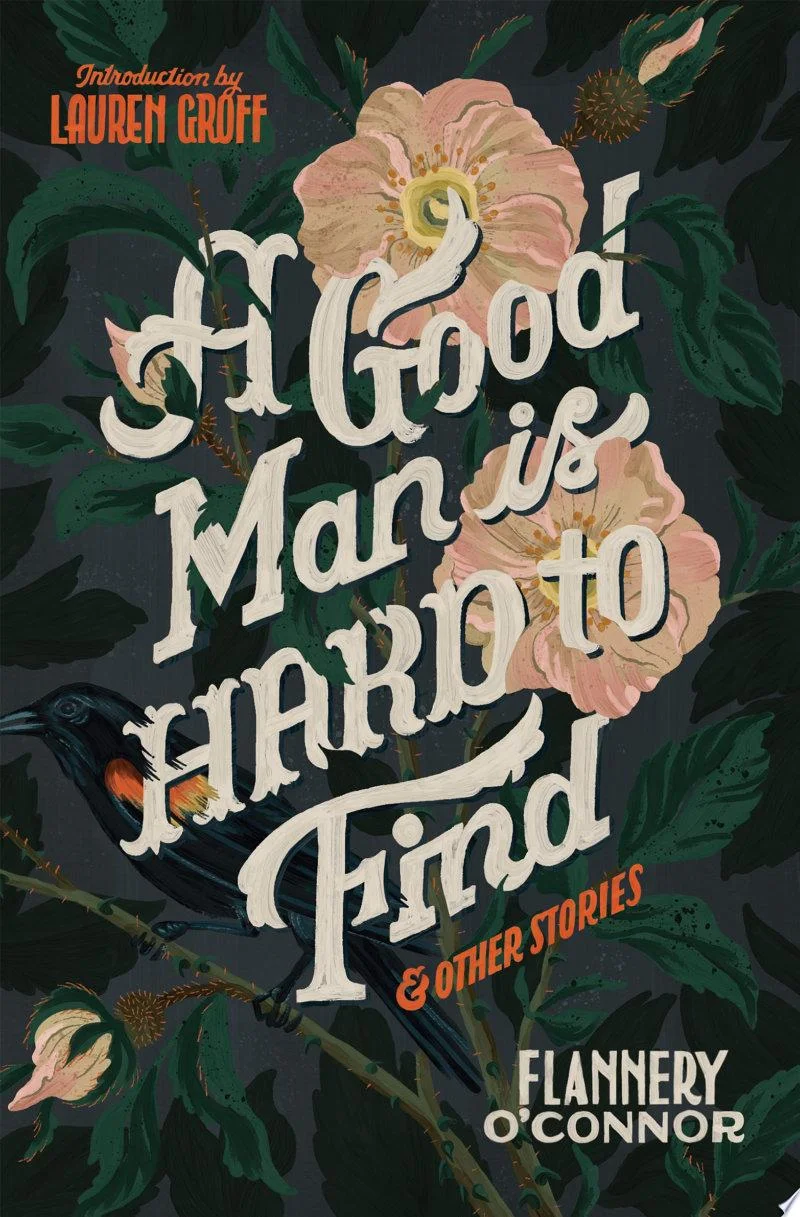
A Good Man Is Hard To Find And Other Stories
- Publication Date:
- October 15th, 1992
- Publisher:
- HarperCollins
- ISBN-13:
- 9780547543703
- ISBN-10:
- 0547543700
- Pages:
- 279
Why A Good Man Is Hard To Find And Other Stories Has Been Challenged
Critics of the book have focused less on any single scene than on how casually its violent turns are delivered, worrying that readers may absorb the brutality without grasping the moral framework behind it. See more ↓
Challenged or banned in 1 state across 5 school districts.
Overview
Published in 1955, this collection gathered ten stories that announced Flannery O'Connor as a singular voice in postwar American fiction. The title story, along with companion pieces such as "Good Country People," "The Life You Save May Be Your Own," and "The Displaced Person," established a body of work built from rural Southern settings, flawed and often self-deceived characters, and moments of sudden, disorienting violence.
O'Connor's fiction resists easy comfort. Her protagonists are frequently prideful, small-minded, or morally blind, and the narratives push them toward reckonings they neither expect nor welcome. Humor runs alongside menace throughout the collection, producing a tone that can feel darkly comic and unsettling within the same paragraph.
Taken together, the stories form a tightly unified statement of purpose rather than a loose assortment, each one circling back to questions of grace, self-delusion, and the limits of human decency.
A Catholic Writer in the Southern Gothic Tradition
O'Connor wrote as a devout Catholic working within a largely Protestant Southern milieu, and much of the critical attention paid to this collection has focused on how her religious convictions shape stories that, on their surface, often read as bleak or even nihilistic. She described her use of shocking, grotesque imagery as a deliberate strategy: for readers she considered spiritually complacent, distortion and violence served as a kind of forced awakening rather than mere shock value.
This tension between surface brutality and underlying theological intent has made the collection a recurring subject of literary debate. Scholars continue to disagree over how optimistic or despairing her vision of redemption really is, and that ambiguity is part of why the book has remained a fixture of American literature courses and anthologies for decades, studied as much for its craft and control of narrative voice as for its moral seriousness.
Why A Good Man Is Hard To Find and Other Stories Has Been Challenged
The title story ends with a family's roadside encounter with an escaped convict known as the Misfit, a sequence that culminates in the killing of every family member, narrated with a flatness that some readers find more disturbing than any graphic description would be. Other stories in the collection turn on cruelty, manipulation, or physical violence delivered with similar matter-of-factness, and it is this juxtaposition of severe content with an unflinching, sometimes comic narrative tone that has drawn the most scrutiny. Readers and parents who have raised objections tend to describe the violence as gratuitous when read outside its literary and theological context, arguing that the stories' bleakness could be misread by younger or unprepared readers as endorsing despair or cruelty rather than examining it. The collection has been challenged or restricted in 1 state and 5 districts tracked in this catalog, with concerns most often centering on the intensity of the violent scenes and the difficulty of separating O'Connor's grotesque imagery from the religious argument it is meant to serve.
Where to Buy



Affiliate links may generate a small commission at no extra cost to you, which helps support this site.
Banned in Schools
Banned or challenged in 1 state across 5 school districts.
Florida 5 districts
- Clay County School District Banned
- Collier County Public Schools Banned
- Hillsborough County Public Schools Banned Pending Investigation
- Union County School District Banned
- Volusia County Schools Banned Pending Investigation