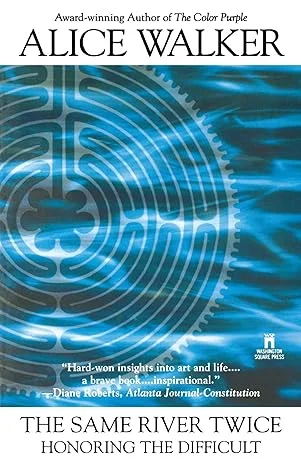
The Same River Twice
by Alice Walker
- Publication Date:
- January 1st, 1997
- Publisher:
- Simon and Schuster
- ISBN-13:
- 9780671003777
- ISBN-10:
- 0671003771
- Pages:
- 308
Why The Same River Twice Has Been Challenged
The Same River Twice has been challenged primarily in the context of broader challenges to Alice Walker's work, which has faced sustained scrutiny in school districts and libraries. See more ↓
Challenged or banned in 1 state across 1 school district.
About The Same River Twice
The Same River Twice: Honoring the Difficult is a book by Alice Walker, published in 1996 by Scribner. It is part memoir, part journal, part creative artifact — a collection of journal entries, letters, essays, and screenplay fragments written during the period when Walker's novel The Color Purple was being adapted into a film by Steven Spielberg. Walker recounts the process of surrendering creative control of her most celebrated work, the public attention that followed the Pulitzer Prize, and the spiritual and political thinking that occupied her during one of the most scrutinized periods of her life.
The book is not a linear narrative. It is a document of a particular consciousness working through a complicated moment: the collision of artistic integrity and commercial adaptation, the experience of being a Black woman author navigating Hollywood in the early 1980s, the spiritual practice Walker developed to sustain herself through public life, and the personal relationships that both supported and strained her during the period. She includes the full screenplay she wrote for the film — which Spielberg did not use — as a way of making visible what was lost in translation.
Walker is one of the most celebrated American writers of the twentieth century, and The Same River Twice is both a companion to her better-known work and a significant document in its own right for scholars of Black women's writing, women's spirituality, and the literature of artistic process.
Spiritual Practice, Art, and Political Life
Throughout the book, Walker moves between the material realities of her career and a deep engagement with spiritual questions. She draws on African spiritual traditions, Buddhism, and her own evolving theology. This mixture of the political and the spiritual has been misread by some readers as vague or evasive; Walker has always argued that they are not separable — that the work of social justice and the work of inner life draw on the same source.
The journal sections give the book an immediate, unguarded quality that is different from Walker's more polished essays. The writing is not always resolved. That is part of the point: this is what it looks like to be in the middle of a creative and political life, not having arrived anywhere but moving.
Why the Book Has Been Challenged
The Same River Twice has been challenged primarily in the context of broader challenges to Alice Walker's work, which has faced sustained scrutiny in school districts and libraries. Challenges have cited mature thematic content, Walker's spiritual and political writing, and in some cases her views on various political issues. The book is not a YA title and has appeared primarily in challenges aimed at removing Alice Walker's work from general library collections.
Defenders of the book have argued that the work of one of America's most honored writers belongs in any serious library collection, and that readers who want to understand the making of one of the most significant American novels of the twentieth century need access to Walker's firsthand account of that process.
Where to Buy




Affiliate links may generate a small commission at no extra cost to you, which helps support this site.
About Alice Walker
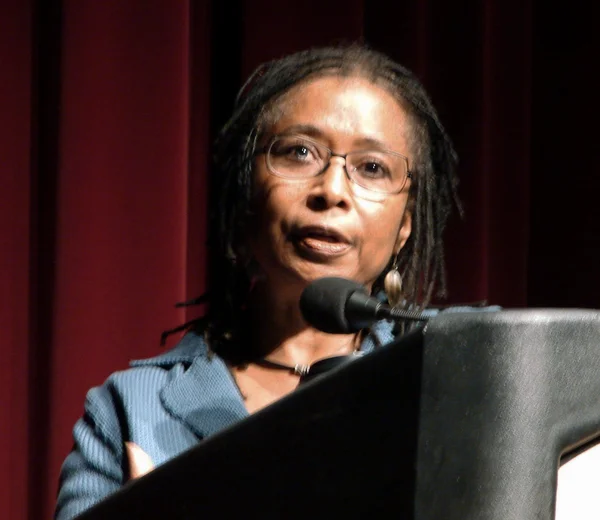
Alice Walker is an American novelist, poet, and activist who won the Pulitzer Prize and the National Book Award for her 1982 novel The Color Purple. Her work, which centers on the experiences of Black women in the American South, has been widely celebrated and repeatedly challenged in schools and libraries.
Also by Alice Walker
Banned in Schools
Banned or challenged in 1 state across 1 school district.
Florida 1 district
- Escambia County Public Schools Banned pending investigation