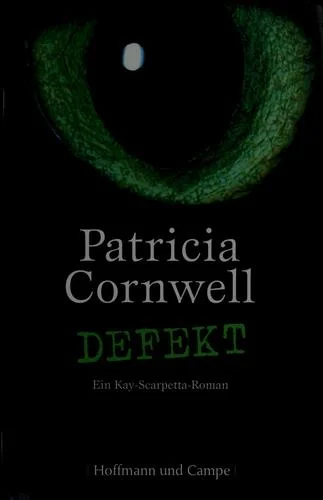
Predator
- Publication Date:
- January 1st, 2006
- Publisher:
- Hoffmann und Campe
- ISBN-13:
- 9783455400113
- ISBN-10:
- 3455400116
- Pages:
- 412
Why Predator Has Been Challenged
Critics have pointed to the novel's graphic forensic and autopsy detail alongside its depiction of a killer with unsettling sexual undertones, arguing the combination makes the book too disturbing for unrestricted access in school settings. See more ↓
Challenged or banned in 1 state across 1 school district.
Overview
Predator finds forensic investigator Kay Scarpetta working independently through the National Forensic Academy in Florida, a step away from the government posts that anchored earlier books in the series. The case that pulls her back into the field begins in the Florida heat and eventually stretches north to a wintry Boston, forcing her and her longtime collaborators to work across jurisdictions and climates alike.
As she reassembles her core team — investigator Pete Marino, profiler Benton Wesley, and her tech-savvy niece Lucy Farinelli — the seemingly straightforward case reveals a pattern of behavioral clues that resist easy explanation. What looks at first like a contained, if unsettling, investigation gradually exposes the outline of an offender who has operated undetected for some time, manipulating the very systems meant to catch him.
The novel builds its tension less through action than through accumulation: fragments of evidence, psychological profiling, and institutional friction slowly narrow in on a suspect whose methods are calculated rather than impulsive.
A Long-Running Series Turns Inward
By the time Predator appeared, Cornwell's Scarpetta novels had spent over a decade shaping how popular fiction imagines forensic science — autopsy detail, trace evidence, and behavioral analysis rendered with procedural specificity rather than as backdrop. This entry leans further into that tradition, using Scarpetta's shift to academic and consulting work as a way to explore how criminal investigation functions once it's untethered from a single agency's authority.
The book is also notably concerned with technology and surveillance, reflecting Lucy Farinelli's expanding role as a digital and forensic specialist. That interest in how offenders exploit networks and data systems, paired with Wesley's psychological profiling, positions the novel at the intersection of two anxieties the series returns to repeatedly: the fallibility of institutions and the difficulty of reading intent from behavior alone. Within Cornwell's broader body of work, it marks a period where the Scarpetta franchise was consciously modernizing its portrayal of both crime-solving methods and its recurring characters' personal lives.
Why Predator Has Been Challenged
A complaint that led to the book's removal from open shelves centered on its autopsy and crime-scene passages, arguing that the level of anatomical and forensic detail went beyond storytelling necessity and risked normalizing graphic violence for younger or unprepared readers. The objection framed the book less as unsuitable fiction and more as material whose clinical descriptions of injury and death demanded restricted access.
Related concerns focused on the novel's portrayal of a predatory offender whose behavior carries disturbing psychological and sexual dimensions, with challengers contending that the combination of violence and implied sexual menace made the book inappropriate for shelving without age restrictions. Taken together, the book has been challenged or restricted in 1 state and 1 school district tracked in this catalog, reflecting concerns rooted in content rather than any dispute over its literary craftsmanship.
Where to Buy




Affiliate links may generate a small commission at no extra cost to you, which helps support this site.
Banned in Schools
Banned or challenged in 1 state across 1 school district.
Florida 1 district
- Orange County Public Schools Banned by restriction