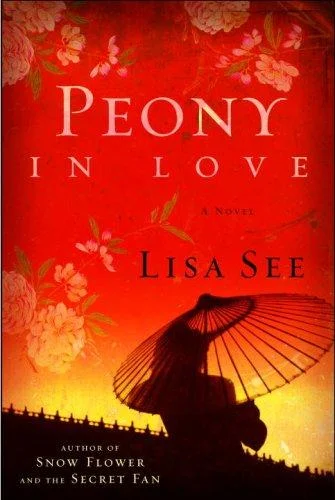
Peony in Love
by Lisa See
- Publication Date:
- June 26th, 2007
- Publisher:
- Random House
- ISBN-13:
- 9781400064663
- ISBN-10:
- 140006466X
- Pages:
- 304
Why Peony in Love Has Been Challenged
A formal complaint in this catalog targeted the novel's frank treatment of a young woman's sexual longing and its unflinching depiction of the physical toll her desire takes on her body. See more ↓
Challenged or banned in 1 state across 1 school district.
Overview
Lisa See's novel centers on Peony, a sixteen-year-old daughter of a prosperous family in seventeenth-century China, confined to the inner quarters of her household and promised in marriage to a man she has never met. When her family stages a private performance of the opera "The Peony Pavilion" in their garden, Peony watches from behind a screen, as propriety demands, and in that brief, half-glimpsed encounter with a young man in the audience, something in her breaks open.
What follows is less a conventional romance than a meditation on what happens when desire has nowhere sanctioned to go. Peony's fixation on the opera's story of a girl who dies of lovesickness and is later restored to life becomes entangled with her own fate, blurring the line between the world of the living and the elaborate, rule-bound realm of ancestors and spirits that See constructs around her.
The novel moves fluidly between the domestic constraints of a wealthy household and a richly imagined afterlife, using both to examine how a woman's inner life persists, and insists on being heard, even when every external structure is designed to contain it.
Spirit, Devotion, and the Limits Placed on Women
See builds the novel around a real historical phenomenon: the women known as the "lovesick maidens" who were said to have become so absorbed in "The Peony Pavilion" that they wasted away. Rather than treating this as mere legend, the book takes it as a lens for exploring how intensely women's emotional lives could be funneled into art and story when nearly every other avenue of expression was closed to them.
The afterlife See depicts is not an afterthought but a parallel society with its own bureaucracy, etiquette, and consequences, allowing the novel to keep examining Peony's choices and regrets long after her physical story would otherwise have ended. This structure lets the book treat death not as a conclusion but as another, equally confining, set of rooms to navigate.
Threaded through all of this is an interest in authorship and voice: who gets to write, who gets credited, and how women's creative and emotional work has historically been absorbed, edited, or erased by the families and traditions around them. The novel's attention to female friendship and collaborative writing functions as a quiet counterweight to its scenes of isolation.
Why Peony in Love Has Been Challenged
A complaint lodged against the novel centered on the argument that its portrayal of a teenage girl's escalating infatuation, and the bodily wasting that accompanies it, crosses from literary metaphor into material unsuitable for a school library's younger readers. The objection framed the book's handling of longing and physical decline as more appropriate for adult audiences than for the students who might encounter it on a shelf.
Underlying this complaint is a broader discomfort with the novel's unsentimental treatment of female desire, including passages addressing a young woman's romantic and physical yearning without softening or deflecting from it. Critics of the book's inclusion have also pointed to its depictions of the afterlife, arranged marriage, and the era's rigid control over women's bodies and choices as elements that warrant restricted access rather than open shelving.
In this catalog, that objection has resulted in the book being challenged in 1 state and 1 school district, reflecting a localized rather than widespread pattern of concern, even as the underlying arguments echo broader national debates over how candidly literature for teenagers may treat sexuality, mortality, and the inner lives of young women.
Where to Buy




Affiliate links may generate a small commission at no extra cost to you, which helps support this site.
Banned in Schools
Banned or challenged in 1 state across 1 school district.
Florida 1 district
- Orange County Public Schools Banned by restriction